
Choosing a Full Body Traction Device in 2026 requires more than comparing prices and polished product photos. This guide focuses on practical fit, safety, adjustability, and evidence-informed design. Traction may ease symptoms for some people, but it is not a universal cure. That matters.
We examine frames, harnesses, load controls, padding, setup space, and maintenance. A device should feel stable when entering, reclining, and returning upright. Small details count, such as readable markings and an emergency release within reach.
Reliable buying decisions should begin with professional guidance, especially for diagnosed spinal conditions, recent injuries, osteoporosis, pregnancy, or unexplained pain. A licensed clinician can help determine whether traction is appropriate and set reasonable limits. Manufacturer claims deserve scrutiny. Look for transparent specifications, warranty terms, independent testing, and instructions explaining contraindications. Certifications can support confidence, but they do not replace medical assessment or strong evidence.
This 2026 guide compares home and professional options through a safety-first lens. We consider body-size ranges, noise, portability, cleaning, user support, and long-term ownership costs. A cheaper model may become expensive if adjustments slip or replacement parts disappear. Conversely, advanced features may add complexity without meaningful benefit. No ranking is perfect. Comfort, diagnosis, supervision, and technique can change the outcome. Measure your room, read critically, and discuss your shortlist with a qualified healthcare professional before purchasing.
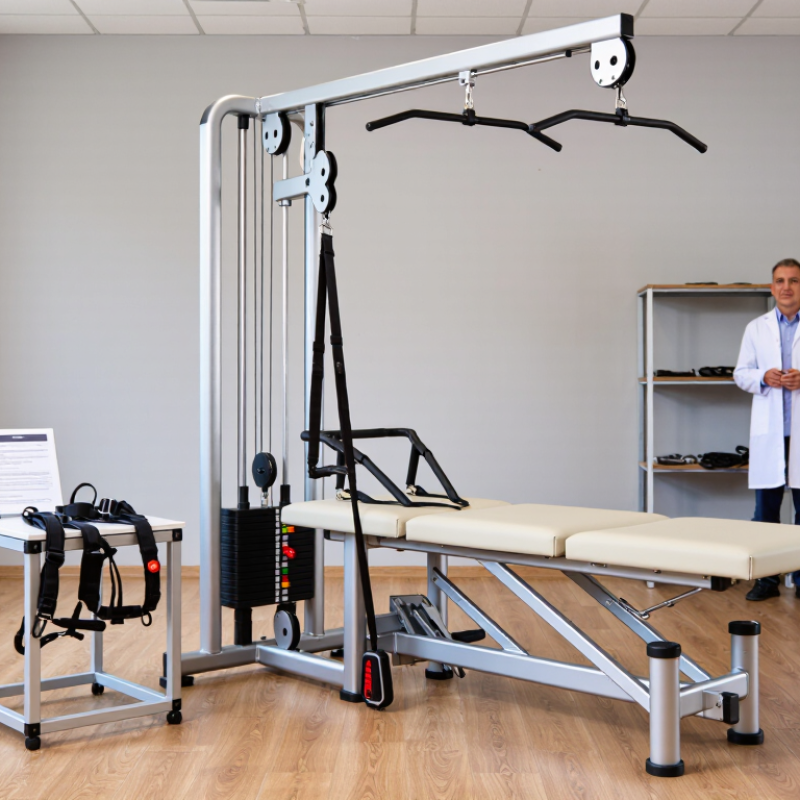
Full Body Traction devices are mechanical systems designed to create a gentle lengthening force along the spine.
Most use a padded platform, pelvic harness, and upper-body support. Some operate horizontally, while others use controlled body angles. The aim is simple: reduce compressive loading temporarily and create space between spinal segments.
It is not the same as permanently “putting the spine back.”
The pulling force may be static, intermittent, or adjusted through a motor. A trained clinician usually begins with low tension, checks comfort, and watches for leg pain, numbness, or dizziness.
The Cochrane review on traction for low-back pain found limited evidence of meaningful long-term benefit. That matters. A strong pulling sensation does not prove better treatment.
The World Health Organization reported that 619 million people lived with low-back pain in 2020, showing the scale of demand, not proof that traction suits everyone.
A buying decision should consider weight limits, harness fit, emergency release, angle control, and published safety testing.
The FDA’s medical-device guidance emphasizes risk management, labeling, and performance evaluation, although consumer equipment may not offer identical clinical evidence.
People with osteoporosis, recent fractures, spinal instability, pregnancy, or unexplained neurological symptoms need professional assessment first.
Stop immediately if symptoms spread down the leg.
I would also question vague promises of “decompression.” The term sounds precise, but device settings and patient responses vary widely.
Full-body traction devices aim to reduce spinal loading through controlled, gentle stretching. Some users report less pressure, easier movement, and temporary relief after long sitting. The evidence is not tidy. A 2023 systematic review in the Journal of Orthopaedic & Sports Physical Therapy found possible benefits from traction for selected cervical radiculopathy cases, but confidence remained limited. Traction is not a cure.
The World Health Organization estimates that low back pain affected 619 million people globally in 2020. It also projects 843 million cases by 2050. This scale explains the interest in home devices, not proof that every device works. A suitable model should offer adjustable force, stable support, clear instructions, and an emergency release. Avoid aggressive stretching. More force is not automatically better.
Tips: Start with the lowest setting and a short session. Keep your neck neutral, not sharply bent. Stop immediately if numbness, weakness, dizziness, breathing difficulty, or increasing pain appears. Seek professional advice before use if you have osteoporosis, spinal instability, fractures, infection, cancer, recent surgery, or pregnancy. A clinician should also review persistent leg or arm symptoms. I would question any product promising permanent alignment. That claim is too simple. Real progress usually requires assessment, movement training, and careful monitoring.
2026 Top Full Body Traction Device Buying Guide
Main Types of Full Body Traction Devices in 2026
The term full body traction can be misleading. Most devices target the spine, not every joint or muscle. Buyers should check the actual support areas, movement range, and adjustment method.
Inversion tables use body weight to create a gentle lengthening effect. They require secure ankle supports, stable frames, and enough clearance around the table. Motorized traction tables offer controlled pulling through timed cycles. These systems may include adjustable pelvic and chest supports, making positioning more precise. They are usually better suited to clinics or supervised home programs.
Portable lumbar traction units use straps, cushions, or air pressure around the waist. They are easier to store, but their force distribution can feel uneven. Cervical traction devices focus on the neck and may use over-door systems, inflatable collars, or powered frames. These products are not interchangeable with full-spine equipment.
Look for measurable tension settings, clear weight limits, washable contact surfaces, and emergency release controls. A quiet motor is useful, but it does not prove safe performance. Reviews can help, though they may hide poor fitting experiences. The word “medical” also deserves scrutiny. It does not replace professional assessment.
People with osteoporosis, recent surgery, fractures, severe numbness, or unexplained weakness should seek clinical advice before use. Stop if pain, dizziness, or tingling increases. The ideal device is not always the strongest one. It is the one that fits the user, the treatment goal, and the available supervision.
Main Types of Full Body Traction Devices in 2026
The chart compares the typical number of body regions addressed by each major device type. Motorized traction tables generally provide the broadest adjustment range, while inversion tables mainly focus on whole-spine decompression through body positioning. Actual coverage, load limits, and adjustment options vary by configuration, so buyers should verify the product specifications and consult a qualified healthcare professional when necessary.
Comparing a full body traction device starts with fit, not the highest advertised force. The World Health Organization reported that 619 million people lived with low back pain in 2020. It expects this figure to reach 843 million by 2050. That scale makes careful product selection important. Measure your height, torso length, hip width, and shoulder position before buying. A frame should support your body evenly without pressing sharply against the ribs or pelvis. Small gaps can become painful during longer sessions.
Comfort depends on more than thick padding. Look for breathable materials, stable ankle or pelvic supports, and smooth contact surfaces. Adjustability should include gradual angle changes, secure locking points, and an easy release mechanism. I prefer controls that remain reachable while lying down. A device that needs another person every time may become difficult to use consistently. Keep the setup simple.
Evidence deserves equal attention. A Cochrane review found little or no clinically important benefit from traction for many cases of low back pain. That does not make every device useless, but it limits confident claims. The U.S. National Center for Complementary and Integrative Health also advises discussing complementary approaches with a qualified clinician. Ask whether traction suits your symptoms, especially after injury, surgery, or with numbness. Marketing often sounds cleaner than real life. Test slowly, record comfort and symptom changes, and stop if pain spreads or intensifies.
Choosing a full-body traction device begins with your actual needs, not its appearance. Decide whether you want gentle stretching, posture support, or supervised rehabilitation. A device should match your height, body weight, and available floor space. Measure the room before buying. Some frames feel stable but become awkward beside a bed or desk. Look for adjustable supports, clear force settings, padded contact points, and an easy release mechanism. Your neck, hips, and lower back should feel supported without pressure or numbness.
Tips: Check the instruction manual before purchase. Confirm the adjustment range. Test whether you can enter and exit without twisting. A quiet frame matters in shared homes. Washable padding helps with regular use. Ask a licensed healthcare professional whether traction suits your condition, especially with spinal injuries, osteoporosis, recent surgery, nerve symptoms, or unexplained pain. Stop if symptoms worsen.
Reliability also depends on construction and guidance. Prefer strong joints, stable feet, readable controls, and specific maintenance instructions. Reviews can reveal problems that product photos hide, such as slipping straps or difficult assembly. Do not choose the strongest pulling force automatically. More force is not always better. A common mistake is buying for occasional discomfort, then abandoning a complicated device. Start with a simple routine approved by a professional, and record comfort, duration, and symptoms. Your first choice may still need reconsideration.
| Device Type | Typical Traction Method | Main Body Areas Addressed | Typical Adjustments | Typical Weight Capacity | Portability | Best Suited For | Important Limitations |
|---|---|---|---|---|---|---|---|
| Inversion Table | Uses body weight and controlled head-down positioning to create longitudinal spinal traction. | Primarily the spine; secondary stretching may involve the hips, shoulders, and posterior legs. | Usually adjustable inversion angles, ankle-lock position, user height, and rotation speed. | Commonly about 250–350 lb (113–159 kg); check the product rating before purchase. | Low to moderate; folds on some models but generally requires a stable floor area. | Users seeking gravity-assisted stretching and adjustable inversion at home. | May not be suitable for some people with glaucoma, uncontrolled hypertension, heart conditions, vertigo, or other contraindications. |
| Traction Bench | Applies a controlled pulling force while the user lies in a supported position. | Lower back and, depending on the configuration, the neck and upper spine. | May include body-length adjustment, pelvic or ankle restraints, angle settings, and manual force control. | Often about 250–400 lb (113–181 kg), but capacity varies significantly by frame design. | Moderate; typically larger and heavier than portable stretching frames. | Home users who prefer horizontal positioning and gradual, user-controlled traction. | Requires careful setup and correct body alignment; force should not be increased if pain, numbness, or weakness develops. |
| Motorized Decompression Table | Uses a motorized split-table or harness system to deliver programmed intermittent or static traction. | Spinal regions, with accessories that may support lumbar or cervical positioning. | Electronic force, treatment time, ramp-up speed, hold-and-release cycles, and body positioning. | Commonly about 300–500 lb (136–227 kg), depending on the table and clinical configuration. | Very low; designed mainly for clinics or dedicated treatment rooms. | Clinical environments requiring repeatable settings and professional supervision. | Higher purchase, installation, and maintenance costs; should be operated according to professional training and instructions. |
| Doorway or Bed-Mounted Traction Kit | Uses straps, a pulley, and controlled resistance to provide manual or gravity-assisted traction. | Usually the neck or upper back; some kits are designed for gentle lower-body traction. | Strap length, pulley position, resistance level, and session duration. | Often rated around 250–300 lb (113–136 kg), but the anchor and mounting surface may have separate limits. | High; lightweight and easy to store when disassembled. | Travelers or users with limited storage who need a simple, low-cost setup. | Anchor strength and correct installation are critical; it generally does not provide full-body positioning or precise force measurement. |
| Stretching and Traction Frame | Combines supported stretching with adjustable tension through handles, straps, or body-weight leverage. | May involve the spine, hips, shoulders, hamstrings, and other connected muscle groups. | Frame height, pad position, strap length, user alignment, and stretch intensity. | Typically about 250–350 lb (113–159 kg); verify the frame and attachment ratings separately. | Moderate to high; some designs fold or separate into smaller sections. | Users wanting broader mobility and stretching support rather than a purely spinal device. | Stretching is not equivalent to clinically measured spinal decompression; results depend strongly on technique and fit. |
| Portable Cervical Traction Device | Provides gentle upward traction to the neck using an inflatable, over-door, or manually adjusted support. | Cervical spine, neck muscles, and upper shoulder region. | Neck height, support angle, inflation level or resistance, and session duration. | Often supports users up to approximately 250–300 lb (113–136 kg), although neck-device ratings vary. | Very high; generally lightweight and suitable for storage or travel. | Users whose primary need is neck traction rather than whole-body traction. | It does not provide comprehensive full-body traction; incorrect height or excessive force may aggravate neck symptoms. |
© 2025 Grandmark International. All rights reserved.
© 2020 Grandmark. Grandmark International. All rights reserved. Proud shareholder of Temot International.