@alexaseleno

Choosing a Lipo Polymer Battery is not simply a matter of selecting the largest capacity. Real performance depends on voltage, discharge rate, size, connector quality, and daily operating conditions.
Battery researcher M. Stanley Whittingham once said, “We need to develop batteries that are safer, cheaper, and have a higher energy density.” His words remain practical for hobbyists, engineers, and product buyers. A battery may look powerful on paper, yet fail quickly inside a warm drone, compact robot, or remote-controlled vehicle. I have seen small differences in connector resistance create noticeable heat during demanding use. That detail is easy to overlook.
This guide presents seven practical tips for choosing a Lipo Polymer Battery with greater confidence. It examines cell count, nominal voltage, capacity, C-rating, physical dimensions, connectors, and supplier reliability. Safety receives equal attention, because damaged cells can swell, leak, or become dangerously hot. Storage voltage and balanced charging also deserve careful consideration. They are not optional details.
Some marketing claims need questioning. A very high C-rating may sound impressive, but testing methods can differ between manufacturers. Capacity ratings can also change under real loads. Measure twice.
Reliable selection requires more than reading one product label. Compare technical data, inspect the battery’s construction, and match every specification with your device. Mistakes still happen, especially when space is limited or current demand changes suddenly. The goal is not the most powerful battery. It is the safest, most compatible, and most dependable choice for the intended application.
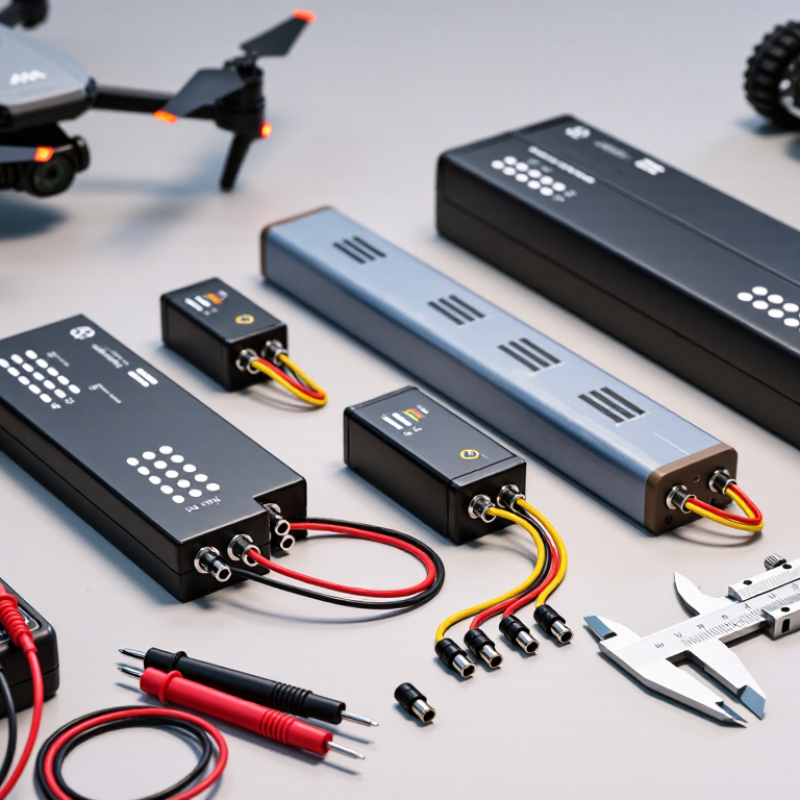
Choosing a LiPo battery starts with its voltage curve. A standard lithium-polymer cell is rated at 3.7 V nominal, but reaches 4.20 V when fully charged. The 3.7 V figure describes its average working voltage, not a constant output. For a two-cell pack, expect 7.4 V nominal and 8.40 V at full charge. The IEA’s Global EV Outlook 2024 reports that lithium-ion battery demand exceeded 750 GWh in 2023. That scale makes correct voltage selection more important, even for small devices.
Tip: Match the battery to the equipment’s voltage range. Check the controller, motor, and protection circuit separately. A device designed for 7.4 V may experience stress at 8.4 V. I have seen users compare only nominal voltage, which is an easy mistake. The charger must support the same cell count and use a constant-current, constant-voltage profile. Never charge beyond 4.20 V per cell unless the cell manufacturer specifies a different chemistry.
Tip: Read the technical datasheet, not only the product label. Confirm nominal voltage, maximum charge voltage, discharge cutoff, capacity, and temperature limits. IEC 62133-2 provides widely used safety requirements for portable lithium rechargeable cells and batteries. Its testing approach reinforces a practical point: voltage control and protection circuits work together. A balance connector is especially important in multi-cell packs. Small differences between cells can grow during charging. I still leave a margin for wiring resistance and sensor error, because real assemblies are rarely perfect.
| Tip | Selection Dimension | Verified Battery Data | What to Check Before Purchase | Why It Matters |
|---|---|---|---|---|
| 1 | Match the Cell Voltage | A standard lithium-polymer cell has a nominal voltage of 3.7 V and reaches 4.20 V when fully charged. Typical recommended discharge limits are around 3.0–3.2 V per cell, depending on the battery and application. | Confirm that the device, charger, and protection system support the battery's cell count and voltage range. Never connect a single-cell device to a multi-cell pack unless the electronics are specifically designed for it. | Incorrect voltage matching can cause malfunction, permanent damage, overheating, or a serious safety hazard. |
| 2 | Choose the Correct Series Count | Cells connected in series increase pack voltage. Common nominal values are: 1S = 3.7 V, 2S = 7.4 V, 3S = 11.1 V, and 4S = 14.8 V. Full-charge voltages are respectively 4.20 V, 8.40 V, 12.60 V, and 16.80 V. | Check the equipment's specified input voltage and verify whether it requires a 1S, 2S, 3S, or other series configuration. | The series count determines the total operating voltage and the charger required for safe charging. |
| 3 | Select Suitable Capacity | Capacity is measured in mAh or Ah. For example, a 2,000 mAh battery theoretically supplies 2 A for about one hour under ideal conditions; actual runtime varies with load, temperature, battery age, and discharge limits. | Estimate average current and desired runtime, then allow practical margin rather than selecting capacity solely from the device's peak rating. | Higher capacity generally increases runtime but may also increase the pack's size, weight, charging time, and cost. |
| 4 | Verify Continuous and Peak Current | The battery's continuous current capability is commonly estimated from capacity and the stated C-rating. For example, a 2,000 mAh pack rated at 10C has a theoretical continuous current of approximately 20 A (2 Ah × 10). Actual performance depends on temperature, wiring, connector resistance, and battery condition. | Compare the battery's continuous current rating with the device's continuous demand and check any separate short-duration peak rating. | An undersized battery may experience voltage sag, excessive heat, reduced cycle life, or cell damage. |
| 5 | Check the Charging Requirements | Standard LiPo cells use a constant-current/constant-voltage charging profile and are charged to 4.20 V per cell. Multi-cell packs require a charger designed for the exact series count and normally require cell balancing. | Use a compatible LiPo charger with the correct cell-count setting, charge current, connector, and balance function where applicable. A commonly used conservative charge rate is 1C, unless the battery manufacturer specifies otherwise. | Using the wrong charger or overcharging beyond 4.20 V per cell can cause swelling, fire, or permanent battery failure. |
| 6 | Confirm Physical and Electrical Compatibility | Important dimensions include length, width, thickness, connector type, wire gauge, polarity, and balance-lead configuration. A battery's dimensions and terminal arrangement are not standardized across all packs. | Measure the available battery compartment and verify connector polarity, cable length, mounting method, and whether the pack includes protection or balancing leads. | A physically incompatible pack can be difficult to install, restrict airflow, reverse polarity, or place stress on wires and terminals. |
| 7 | Review Temperature, Storage, and Safety Limits | LiPo batteries should be protected from puncture, crushing, moisture, and excessive heat. Charging below 0°C can cause lithium plating. For storage, many LiPo systems use approximately 3.80–3.85 V per cell, with the pack kept in a cool, dry, fire-resistant location. | Choose a pack with suitable operating-temperature guidance, inspect it for swelling or damage, and store it at the recommended storage voltage. Do not use or charge a swollen, leaking, or physically damaged pack. | Correct handling helps reduce the risk of thermal runaway and preserves capacity and cycle life. |



Proud shareholder of Temot International

© 2025 Grandmark International. All rights reserved.