@alexaseleno

Choosing the Best Audio Intercom System For Apartments in China depends on more than price or appearance. In a busy residential building, clear speech can matter when traffic, elevators, or neighboring doors create background noise. A dependable system should let residents hear visitors, confirm who is calling, and communicate without repeatedly asking, “Could you say that again?” Small details matter.
This guide looks at the Audio Intercom System For Apartments through practical criteria: voice clarity, durable entrance panels, simple indoor handsets, and compatibility with existing wiring. Some apartment buildings need a straightforward replacement; others require new cabling or support for many units. The difference affects installation time and cost. Ask suppliers about warranty terms, spare-part availability, and service support in your area. An experienced installer can also check wiring and building requirements before recommending a model.
A specification sheet is useful, but it cannot guarantee a good daily experience. A system may sound clear in a showroom and perform differently in a noisy entrance hall. That is worth remembering. Where possible, request a demonstration with realistic background noise and confirm that older residents can use the controls comfortably. This overview will compare key features and common trade-offs, helping property managers and homeowners make a more informed choice. No single model suits every building, and a lower initial price may not mean lower long-term costs.
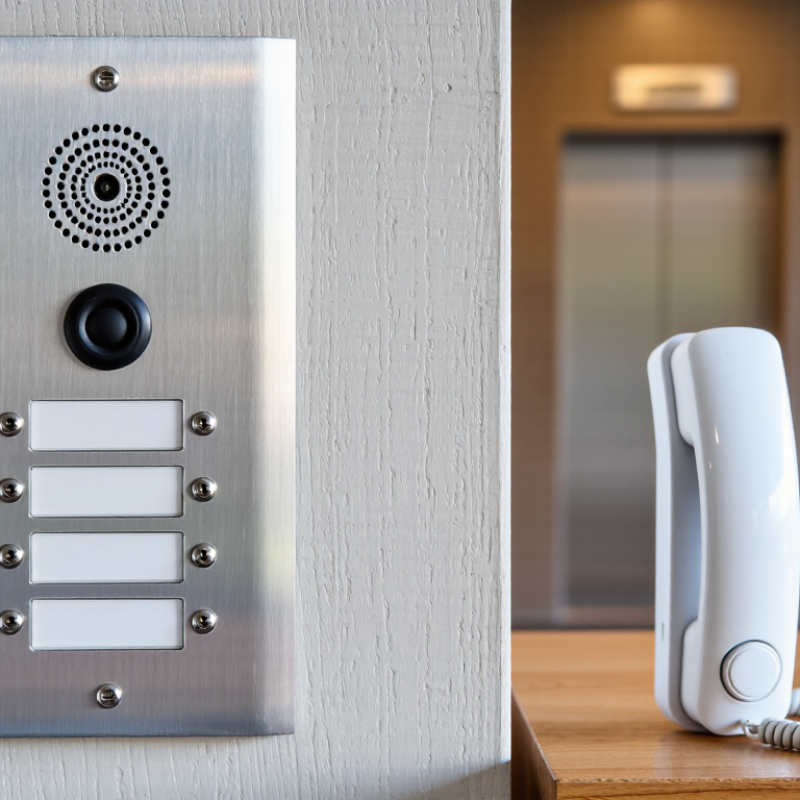
An apartment audio intercom lets residents speak with visitors before opening a shared entrance. Simple, but useful. China’s National Bureau of Statistics reported that 66.16% of the population lived in urban areas at the end of 2023, or about 933 million people. This is not an intercom sales figure, but it shows the scale of shared urban living. Clear speech and reliable door release matter more than a long feature list.
Common systems include analog, digital bus, and IP audio models. Analog handsets use dedicated wiring and suit basic installations, though aging cables can cause noise. Digital bus systems connect multiple apartments through shared risers, reducing wiring runs but needing careful setup. IP systems use network connections to link entrances, apartments, and sometimes concierge desks. CAICT’s 2024 China Digital Economy Development Report estimated China’s digital economy at 53.9 trillion yuan in 2023; this broad figure is not specific to intercoms, but reflects the expanding digital infrastructure behind networked systems. In practice, IP is not automatically better. A weak network or poorly placed microphone can make a modern system frustrating. The choice is rarely perfect.
| System Type | Typical Setup | Main Purpose | Advantages | Considerations for Apartments in China | Common Use Case |
|---|---|---|---|---|---|
| Wired audio intercom | Indoor handset or wall station connected to an entrance panel and, in some installations, a building management station by cable. | Enables residents to speak with visitors and release a controlled entrance door where the system supports access control. | Does not depend on home Wi-Fi; audio communication can remain available even when internet service is unavailable. | New cable routes can be disruptive in finished buildings. Existing wiring, building layout, and compatibility with door hardware should be checked before installation. | New residential projects or buildings with existing intercom cabling. |
| Two-wire audio intercom | Indoor stations and entrance equipment use a two-conductor connection; supported functions depend on the equipment and wiring design. | Provides basic visitor communication and may support door release without installing a conventional multi-core cable run. | Can be practical for some upgrades where existing two-wire cabling is usable. | Two-wire systems are not automatically compatible with every older installation. Cable condition, distance, and the required functions need to be verified. | Retrofits in apartments where suitable existing wiring is available. |
| Digital bus audio intercom | Multiple indoor stations communicate over a shared digital bus, with entrance panels and system controllers connected according to the design. | Supports resident-to-visitor calls and can provide centralized management for multi-unit buildings. | Can reduce the amount of individual wiring compared with some point-to-point designs and can be designed for larger buildings. | Device capacity, wiring topology, configuration, and maintenance procedures vary by system. Confirm expansion requirements before choosing a design. | Multi-storey apartment buildings with many households and shared entrances. |
| IP-based audio intercom | Network-connected entrance panels, indoor stations, or management terminals communicate using an IP network. | Provides audio calling and may integrate with network-based access control or property-management systems. | Can support centralized administration and integration where the building network and system design allow it. | Requires a suitable network, secure configuration, and ongoing maintenance. Internet access alone does not guarantee remote calling or cloud services. | New buildings or properties with managed network infrastructure. |
| Wireless or radio-linked audio intercom | Indoor and entrance units communicate over a supported wireless link; some models still require power or wired connections at particular points. | Offers visitor communication where installing signal cable is difficult. | May reduce the need for new communication cabling in suitable locations. | Signal range, interference, building materials, power supply, and local radio requirements should be assessed on site. Concrete structures can affect wireless coverage. | Limited retrofit situations where a reliable wired route is impractical. |
| Apartment audio intercom with door-release control | An indoor station connects to an entrance call panel and an electric lock or compatible door-release mechanism. | Lets residents identify a caller by voice and authorize entry through the connected entrance door. | Combines communication with controlled entry at a shared building entrance. | Lock type, emergency egress, fire-safety requirements, and building access policies must be considered. Installation should be coordinated with property management. | Apartment blocks with a controlled lobby or common entrance. |
| Property-management audio intercom system | Resident stations connect to one or more entrance panels and a management or security desk station. | Supports visitor calls and communication between residents and building staff, depending on system configuration. | Can provide a central point for handling calls and coordinating building access procedures. | Define who can answer calls, manage access credentials, and maintain the system. Resident privacy and access-control policies should be documented. | Residential compounds or apartment buildings with staffed management or security points. |
| Selection checklist | Review building age, existing wiring, number of units, entrance layout, power supply, network availability, and lock requirements. | Helps match the intercom design to the property rather than selecting by feature list alone. | Reduces the risk of choosing equipment that cannot use the existing infrastructure or meet building needs. | Confirm compatibility, installation scope, service arrangements, accessibility needs, and relevant local building and safety requirements with qualified professionals. | Useful when comparing systems for new construction or retrofit projects. |



Proud shareholder of Temot International

© 2025 Grandmark International. All rights reserved.