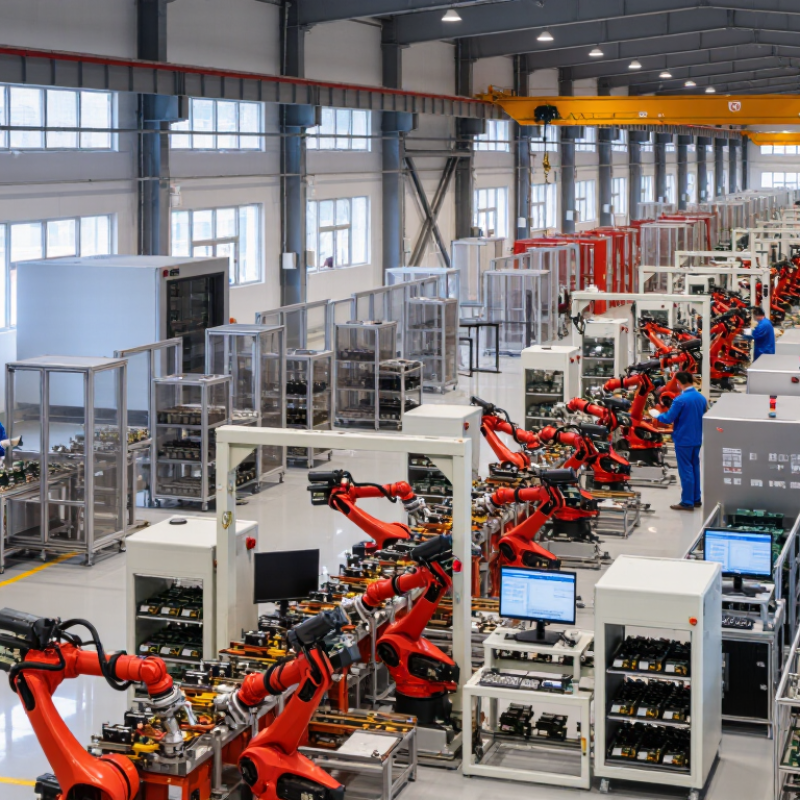
China has become a critical source of automotive electrical components, from wiring harnesses and relays to sensors, power modules, and vehicle control units. The International Energy Agency reported that global electric car sales exceeded 14 million in 2023. China represented nearly 60% of those sales. That scale matters. It supports faster product iteration, deeper supplier networks, and strong manufacturing experience.
Yet size does not guarantee reliability. A factory may show impressive equipment, but its real performance appears in test records, traceability, and field returns. The China Association of Automobile Manufacturers reported vehicle production above 30 million units in 2023. This volume creates valuable experience, although supplier capabilities still vary widely. Buyers should examine ISO 9001 and IATF 16949 systems, incoming inspection, thermal-cycle testing, connector sealing, and change-control procedures.
Charles F. Kettering, an automotive electrical pioneer, once said, “People are very open-minded about new things—as long as they’re precisely like the old ones.” His observation remains useful today. New suppliers must offer innovation without creating avoidable integration risks. This guide evaluates leading automotive electrical suppliers in China through engineering depth, manufacturing consistency, export experience, response speed, and evidence-based quality controls. No ranking is perfect. A spreadsheet cannot reveal every production problem. However, supplier audits, sample validation, and transparent technical communication can expose important differences before purchasing decisions become expensive.
Definition and Scope of Automotive Electrical Suppliers in China
Automotive electrical suppliers in China provide the hardware and services that distribute, control, sense, and process vehicle power. Their scope includes batteries, wiring harnesses, connectors, fuses, relays, sensors, electronic control units, inverters, chargers, and testing services. Some suppliers also produce software, embedded systems, and electronic manufacturing services.
The boundary is not perfectly clean. A factory making a battery-management board may serve passenger vehicles, commercial fleets, and industrial equipment. In practice, buyers should assess suppliers by function, certification, production scale, and traceability. China produced about 30.16 million vehicles in 2023, according to the China Association of Automobile Manufacturers. The same report recorded nearly 9.5 million new-energy vehicle sales, creating strong demand for high-voltage components and control electronics.
This market is becoming more technically demanding. The International Energy Agency reported that China accounted for about 60% of global electric-car sales in 2023. That figure explains the growing importance of suppliers with experience in thermal management, insulation, electromagnetic compatibility, and battery safety. Quality evidence matters: process audits, laboratory records, failure analysis, and stable delivery data reveal more than a polished catalogue.
Still, supplier classification can be confusing. Smaller specialists may offer excellent engineering but limited after-sales coverage. Large manufacturers may provide capacity but less flexibility. A careful definition should include both direct component makers and qualified service partners, while checking whether their claims match real production conditions.
China’s automotive electrical suppliers cover more than wiring harnesses. Their portfolios commonly include connectors, relays, sensors, body controllers, battery-management systems, and charging modules. Power semiconductors, including silicon-carbide devices, are also gaining attention in high-voltage platforms.
The scale is significant. The International Energy Agency’s Global EV Outlook 2024 reports that China sold over 8 million electric cars in 2023, representing about 60% of global electric-car sales. This demand supports rapid development in 400-volt and 800-volt systems, thermal monitoring, fast charging, and lightweight cable assemblies. OICA data also shows China produced more than 30 million motor vehicles in 2023. That volume requires stable supply, automated inspection, and traceable component testing.
Tips: Ask suppliers for IATF 16949 certification, PPAP records, salt-spray results, and thermal-cycle data. For battery components, review cell-voltage accuracy and failure-response testing. A supplier may show an impressive prototype, but production consistency matters more. ISO 26262 processes are useful for safety-related electronics, although certification alone does not prove real-world reliability.
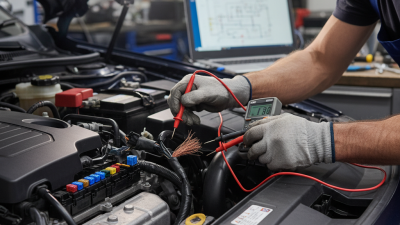
In practical audits, inspect crimp height, connector locking force, and terminal plating thickness. These small details can prevent intermittent faults inside a vibrating vehicle. Supplier claims still need independent verification. That part is often overlooked. The best sourcing decision should compare engineering depth, local testing capacity, change-control discipline, and after-sales response, not only unit price.
Automotive electrical suppliers in China commonly provide wiring harnesses, low-voltage power systems, hybrid components, EV high-voltage connectors, contactors, and charging-related components. The chart compares representative nominal or component-rated voltage levels used across these product categories; actual specifications vary by vehicle platform and application.
China’s automotive electrical supply base deserves careful, evidence-based evaluation. The International Energy Agency reported that China accounted for nearly 60% of global electric car sales in 2023. This scale supports strong manufacturing experience, but volume alone proves little. A capable supplier should demonstrate automotive quality systems, stable processes, and clear product traceability.
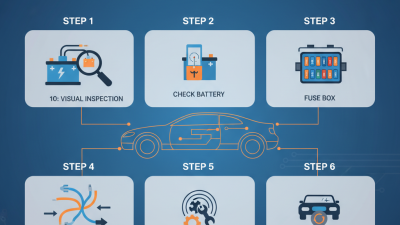
A practical audit should examine IATF 16949 certification, APQP records, PPAP approval, and recent customer complaint data. Review incoming copper, terminals, insulation, and electronic components at the warehouse. Ask for process capability results, not only presentation slides. Check crimp-height records beside actual production samples. Small details often reveal discipline. Data matters.
The supplier should also explain engineering-change control and failure analysis. Request an 8D report for a previous electrical defect, with corrective actions and verification evidence. Independent laboratory testing can confirm insulation resistance, thermal cycling, vibration, and electromagnetic compatibility. The United Nations Economic Commission for Europe identifies vehicle cybersecurity and software-related risks as growing regulatory concerns, so connected electrical products need documented update controls.
Financial resilience deserves attention too. The World Bank’s logistics indicators show that delivery reliability varies across markets and transport routes. Evaluate backup tooling, second-source materials, inventory policies, and export documentation. A polished factory tour can mislead. I would not select a supplier from certification alone. No scorecard is perfect; periodic audits and measurable service targets remain necessary after approval.
China’s automotive electrical supply base is easier to understand by supplier type. Wiring harness manufacturers support high-volume vehicle programs, while connector suppliers focus on terminals, seals, and vibration resistance. Sensor producers, relay makers, and power-control specialists serve both passenger cars and commercial vehicles. Testing laboratories and contract assemblers also matter because electrical quality depends on process control, not only component design. In practice, I would request sample harness cuts, terminal cross-sections, and test records before judging a supplier.
Regional industry clusters can shorten sourcing time. The Pearl River Delta, including Guangdong, is strong in connectors, wiring systems, electronics assembly, and export logistics. The Yangtze River Delta, covering areas around Shanghai, Jiangsu, and Zhejiang, offers broad capabilities in sensors, control modules, precision machining, and engineering services. Central China has growing capacity for vehicle wiring, molded parts, and large-scale assembly. These clusters are useful, but location alone cannot prove reliability. Some suppliers present polished facilities yet provide weak traceability. That is a lesson worth remembering.
Tips: Compare suppliers by process evidence, not catalog size. Check incoming inspection, crimp-force records, salt-spray results, and change-control procedures. Ask how they manage copper, plastics, and terminals during shortages. Confirm production capacity with a small pilot order. A factory visit helps, although one visit can still miss everyday problems. Use independent audits and clearly documented specifications before approving mass production.
What Are the Best Automotive Electrical Suppliers in China?
Sourcing reliable automotive electrical suppliers requires more than comparing online quotations. Check production capacity, engineering experience, component traceability, and export history. Request factory photographs, process maps, and recent inspection records. Price misleads. A very low offer may hide weak testing or unstable materials. During supplier discussions, ask how they manage design changes, sample approval, and urgent replacement parts.
Certification should support, not replace, your own verification. Look for relevant quality systems, such as ISO 9001 or IATF 16949, and confirm certificate validity with the issuing body. For each harness, connector, sensor, or control module, request test data covering insulation resistance, voltage endurance, temperature cycling, and vibration. PPAP documents can reveal process risks. However, paperwork is not proof of daily performance. An audit may miss problems between production shifts.
Quality control should include incoming inspection, first-piece approval, in-process checks, and final sampling. Ask for serial-number traceability and a clear nonconforming-product procedure. Independent pre-shipment inspection can reduce surprises, especially for a first order. Export planning also matters. Confirm product classifications, commercial invoices, packing lists, certificates of origin, labeling, and agreed Incoterms. Moisture barriers, shock protection, and carton drop testing are useful for long-distance transport. My practical concern is simple: even a capable supplier can make mistakes after rapid expansion, so keep communication records and review performance after every shipment.
| Supplier Segment | Typical Automotive Electrical Products | Best-Fit Purchasing Need | Relevant Certifications and Compliance | Recommended Quality-Control Evidence | Typical MOQ and Lead-Time Range* | Export and Logistics Considerations | Key Qualification Questions |
|---|---|---|---|---|---|---|---|
| Automotive Wiring-Harness Manufacturer | Low-voltage wiring harnesses, battery cables, fuse-box assemblies, connectorized cable assemblies, and custom looms. | Best for vehicle platforms requiring application-specific drawings, terminal specifications, routing controls, and repeatable assembly quality. | IATF 16949 ISO 9001 RoHS REACH Product-specific customer requirements may also apply. | 100% continuity and short-circuit testing; crimp-height records; terminal pull-force testing; first-article inspection; material traceability; control plans; process-FMEA records; capability studies for critical crimp dimensions. | Prototype quantities may start at 10–100 sets. Production MOQ commonly ranges from 500–5,000 sets. Sample approval may take 2–6 weeks; repeat production commonly takes 4–10 weeks. | Confirm carton protection, moisture control, part-number labeling, HS classification, country-of-origin documentation, and agreed Incoterms such as FCA, FOB, CIF, or DAP. | Can the supplier provide crimp data, terminal traceability, test reports, engineering-change control, and a signed inspection standard before mass production? |
| Connector and Terminal Supplier | Automotive connectors, terminals, seals, clips, housings, high-temperature plastic components, and repair kits. | Best for standardized or semi-custom connection systems used in power, body electronics, lighting, sensor, and control modules. | IATF 16949 ISO 9001 RoHS REACH Applicable electrical, flammability, and environmental requirements should be verified by product. | Dimensional inspection; insertion and extraction force testing; terminal retention testing; vibration and thermal-cycle testing; salt-spray testing where applicable; plating-thickness verification; resin-batch traceability. | Standard catalog items may have MOQs of 100–1,000 pieces. Custom tooling programs may require 10,000–100,000 pieces or more. Tooling and validation commonly require 6–16 weeks. | Protect terminals from oxidation and deformation. Confirm packaging by cavity, lot, and date code. Verify whether tooling remains supplier-owned or customer-owned under the contract. | What are the terminal-plating material, mating-cycle rating, operating-temperature range, sealing class, retention force, and tooling-revision procedures? |
| Automotive Lighting and LED Module Supplier | LED lamps, daytime-running-light modules, signal lamps, interior lighting, lamp control modules, and replacement lighting assemblies. | Best for aftermarket programs, fleet applications, specialty vehicles, and approved vehicle lighting projects requiring optical and environmental testing. | ISO 9001 IATF 16949 RoHS REACH Product-specific UNECE, E-mark, EMC, or market-approval requirements must be confirmed before shipment. | Photometric testing; color-temperature and luminous-flux checks; thermal management validation; ingress-protection testing where claimed; vibration and thermal shock testing; EMC test reports for applicable assemblies. | Stock or semi-standard products may start at 100–500 pieces. Custom modules commonly require 1,000–5,000 pieces. Development and validation may take 6–14 weeks. | Check whether destination-market approval is required. Confirm lens protection, anti-static packaging, lithium-battery restrictions if included, and correct customs descriptions for complete lamps or modules. | Are optical test reports, EMC results, photometric files, thermal data, product drawings, and destination-market approval documents available for the exact part number? |
| Automotive Sensor and Electronic Control Module Supplier | Temperature, pressure, position, speed, parking, current, and fluid-level sensors; small electronic control units and interface modules. | Best for projects needing electronic calibration, software or firmware control, environmental robustness, and stable communication with vehicle systems. | IATF 16949 ISO 9001 ISO 14001 RoHS EMC, functional-safety, cybersecurity, or software-process requirements may apply according to the vehicle program. | Calibration records; automated end-of-line testing; temperature and humidity testing; electrical overstress testing; EMC validation; firmware version control; component traceability; failure-analysis reports using documented corrective-action methods. | Engineering samples may begin at 20–100 pieces. Series-production MOQ commonly ranges from 500–5,000 pieces. Product development and validation typically require 8–24 weeks. | Use anti-static packaging and shock protection. Confirm software version labeling, warranty-return procedures, customs treatment of electronic assemblies, and whether technical files can be transferred securely. | Does the supplier control firmware revisions, calibration equipment, test limits, component obsolescence, cybersecurity responsibilities, and field-failure analysis? |
| Automotive Relay, Fuse, and Power-Distribution Supplier | Relays, fuse holders, circuit breakers, fusible links, power-distribution boxes, and battery-management accessories. | Best for vehicle power-management, protection, switching, and electrical-distribution applications requiring current-rating stability. | IATF 16949 ISO 9001 RoHS REACH Electrical and thermal requirements should be verified against the intended voltage, current, and duty cycle. | Contact-resistance testing; switching-life testing; dielectric-strength testing; overload and temperature-rise tests; fuse-time-current verification; terminal-retention testing; lot-based electrical inspection. | Standard items may have MOQs of 500–2,000 pieces. Customized power boxes may require 1,000–10,000 pieces. Standard products commonly ship in 3–8 weeks; custom assemblies may take 6–14 weeks. | Confirm current-rating derating at elevated temperatures, packaging against terminal damage, dangerous-goods status where applicable, and electrical safety documents required by the destination country. | Are ratings based on continuous or intermittent duty? Can the supplier provide temperature-rise curves, contact-resistance limits, switching-life data, and fuse coordination information? |
| Aftermarket Automotive Electrical Parts Supplier | Alternator components, starter-motor parts, ignition components, switches, sensors, wiring accessories, and replacement electrical assemblies. | Best for distributors and repair networks requiring broad coverage, flexible order quantities, packaging customization, and faster replenishment. | ISO 9001 RoHS REACH IATF 16949 is a strong advantage where products are manufactured for original-equipment-style applications. | Incoming inspection; sample-based dimensional checks; electrical functional testing; batch traceability; packaging verification; warranty-return analysis; barcode and label audits; pre-shipment inspection. | Common MOQs range from 50–500 pieces for stocked products and 500–3,000 pieces for customized packaging. Typical replenishment lead time is 2–8 weeks, subject to inventory. | Confirm multilingual labels, barcode standards, trademark authorization, product-liability responsibilities, warranty terms, carton counts, and compatibility-list accuracy. | How is cross-reference accuracy controlled? Are test procedures, warranty rates, inventory reports, packaging approvals, and product-change notifications available? |
| High-Voltage EV Electrical-System Supplier | High-voltage cables, charging inlets, busbars, battery connectors, junction boxes, insulation components, and electric-drive power assemblies. | Best for electric-vehicle, hybrid-vehicle, charging, and battery-system projects requiring controlled high-voltage design and safety validation. | IATF 16949 ISO 9001 ISO 14001 RoHS Product-specific high-voltage, EMC, insulation, environmental, and vehicle-approval requirements must be defined before design release. | Insulation-resistance and withstand-voltage testing; interlock verification; contact-resistance testing; thermal-cycle and vibration testing; ingress-protection testing; HVIL validation; traceability of conductive and insulating materials. | Prototype quantities may be 5–50 assemblies. Production MOQ commonly ranges from 100–1,000 assemblies. Development and validation often require 12–30 weeks. | Use clearly marked high-voltage packaging and handling procedures. Confirm dangerous-goods requirements for battery-containing shipments, export-control screening, technical-file confidentiality, and trained inspection personnel. | Can the supplier provide high-voltage safety procedures, insulation-test records, material declarations, PPAP-level documentation, change control, and traceable serial or lot identification? |

*MOQ and lead-time figures are indicative sourcing ranges rather than guaranteed quotations. Actual values depend on product complexity, tooling, validation scope, material availability, order volume, packaging requirements, and destination-market regulations. Before placing an order, obtain a written quotation, approved drawing, quality agreement, inspection plan, compliance declaration, warranty terms, and agreed Incoterms.
© 2025 Grandmark International. All rights reserved.
© 2020 Grandmark. Grandmark International. All rights reserved. Proud shareholder of Temot International.