
Choosing the best Carbon Steel Mesh Supplier in China is less about finding the lowest quote and more about confirming fit, consistency, and dependable communication. Mesh may be used in filtration, screening, reinforcement, or fabrication, and each application places different demands on wire diameter and opening size. A panel that looks uniform at first glance may still vary in aperture, flatness, or edge quality. Small differences matter. A useful comparison starts with measurable details: wire diameter, mesh opening, panel dimensions, surface finish, and required mechanical properties. Ask how these details are inspected during production, not only listed on a quotation. Good records help.
Who is the best supplier? The answer depends on your project and the evidence each manufacturer can provide. Request a sample, a written specification, and relevant inspection or material documents before placing a large order. Check that the sample matches the stated measurements, and clarify packaging, lead time, and how changes are handled. For repeat purchases, stable production and clear responses can be more valuable than a one-time discount. A professional supplier should explain limits plainly, including when a requested tolerance or finish needs confirmation. No checklist is perfect. A polished brochure cannot prove consistent output, and one sample cannot guarantee every batch. Compare practical evidence, ask specific questions, and leave room to reassess. That careful process makes it easier to identify a Chinese Carbon Steel Mesh partner suited to your actual needs.
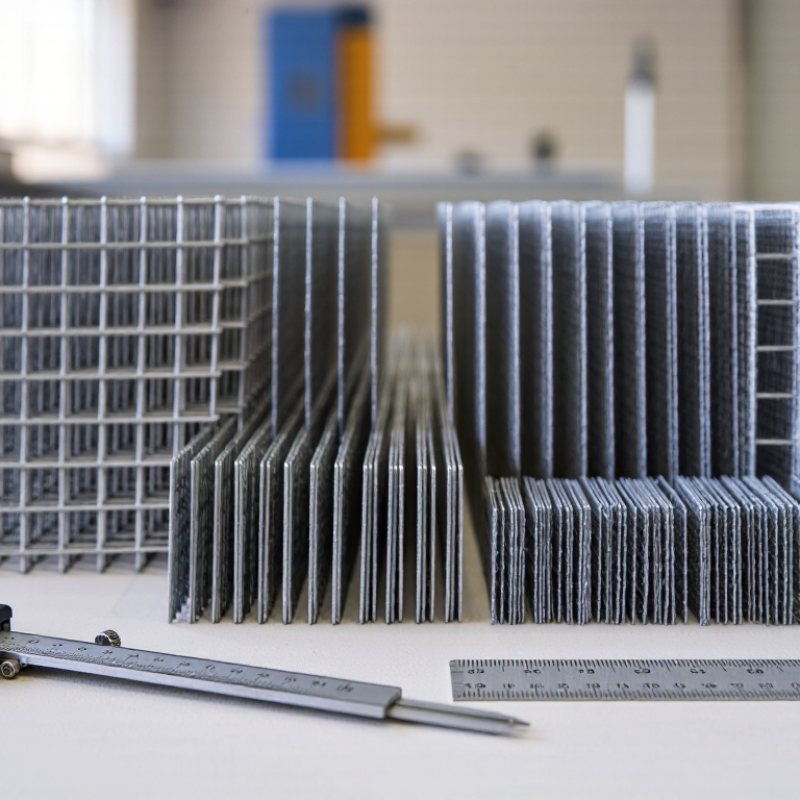
Carbon steel mesh is a grid of intersecting steel wires, joined by welding or weaving. Its open pattern helps concrete surround the reinforcement, while the steel helps resist tensile forces. Welded mesh is commonly supplied in sheets or rolls, with wire diameter and spacing selected for the design. Small details matter: a sheet that is hard to position may shift during a pour.
Its uses are practical and varied. Contractors place it in concrete slabs, floors, pavements, and precast panels to help control cracking and distribute loads. It also appears in fencing, machine guards, partitions, and industrial screens, where the grid provides a sturdy barrier or support. World Steel Association reporting identifies construction and infrastructure as roughly half of global steel demand, showing how central steel products are to the built environment. Mesh is only one part of that picture.
For concrete applications, the required mesh depends on slab thickness, expected loads, exposure, and support conditions. The U.S. Geological Survey reported global cement production of about 4.1 billion metric tons in 2023, reflecting the vast scale of concrete-related construction. That figure does not measure mesh use directly. It does, however, underline why correct reinforcement selection and placement deserve care. Even well-made mesh cannot compensate for poor cover or careless installation.
A dependable carbon steel mesh supplier should make quality measurable, not merely promise “high strength.” Request a material certificate identifying the steel grade, batch number, and relevant test results. Then compare the stated wire diameter and aperture with a caliper and mesh gauge on a sample. Small details matter.
For welded mesh, inspect intersections for even spacing, secure joints, cracks, or distortion. For woven mesh, check uniform openings, straight edges, and wires that do not shift during light handling. If the mesh is coated, ask how coating thickness and corrosion resistance are tested. Ask for proof. Confirm which product standard and tolerances apply to your intended use; an ISO certificate alone does not show that every shipment meets them.
A credible supplier can provide an inspection plan, traceable batch records, and reports from qualified testing facilities. Ask whether production samples use the same process as bulk orders. A factory visit may reveal practical issues, such as damp bundles or mixed labels. Paperwork helps, but it cannot catch every handling problem. That deserves a second look.
When evaluating a carbon steel mesh supplier, look beyond the stated monthly output. Ask which machines handle your required wire diameter, mesh opening, and roll or sheet width. Check whether production capacity is supported by current equipment and staffing, not just a catalog figure. For repeat orders, ask how the supplier controls wire tension and dimensional consistency between batches. Small deviations matter. Request inspection records showing aperture and wire-diameter checks, and ask how defects are recorded and corrected. A polished brochure alone proves little.
Customization should be discussed with drawings, not vague promises. Share the mesh dimensions, edge treatment, surface finish, quantity, and packaging needs. Ask which specifications can be adjusted without changing the delivery schedule or creating excessive scrap. A pre-production sample can reveal uneven openings, rough edges, or a finish that does not suit your application. Clarify sample approval, production lead time, and how changes are confirmed in writing. I would not assume every requested detail is practical at the quoted price; some trade-offs deserve a second look. A capable supplier explains those limits clearly. That matters.
| Evaluation Area | What to Check | Reliable Evidence | Why It Matters |
|---|---|---|---|
| Manufacturing process | Confirm whether the product is woven, welded, or produced by another process, and whether the supplier operates the relevant production equipment. | Process flow, current equipment list, production-floor video, and a sample made using the proposed process. | Different processes create different mesh structures and are suited to different applications. |
| Production capacity | Ask for output capacity for the specific mesh type, wire diameter, aperture, and roll or panel format—not a general factory-wide figure. | Recent production records, machine-level capacity details, and a written schedule for the requested order quantity. | Capacity varies with product specifications, changeovers, and current workload. |
| Wire and material control | Specify the carbon steel grade or agreed material properties, wire diameter, and any required mechanical or chemical limits. | Material certificates linked to production lots, incoming inspection records, and wire-diameter measurement results. | Traceable material records help confirm consistency and support investigation of defects. |
| Mesh dimensions and tolerances | Agree on aperture or mesh count, wire diameter, width, length, and dimensional tolerances on the purchase specification. | A signed technical drawing or specification sheet, inspection method, and sample measurement report. | Clear, measurable requirements reduce ambiguity when products are inspected or installed. |
| Customization capability | Check whether the supplier can make the requested combination of mesh opening, wire diameter, sheet or roll size, edge finish, and packaging. | A feasibility review, confirmed tooling or setup requirements, prototype sample, and written approval of final specifications. | A supplier may offer customization in some dimensions but not every combination. |
| Weld or weave quality | For welded mesh, inspect weld consistency and alignment. For woven mesh, check the weave pattern, uniformity, and edge condition. | Pre-shipment inspection records, representative samples, and agreed acceptance criteria for visible defects and construction. | Construction defects can affect handling, fit, strength, and service performance. |
| Corrosion protection | Confirm whether the mesh is supplied uncoated, galvanized, or with another specified finish; define coating requirements where applicable. | Finish specification, coating inspection records, and samples showing the agreed surface condition. | Carbon steel can rust when exposed to moisture; the suitable finish depends on the operating environment. |
| Quality management and inspection | Review inspection stages, measurement equipment, lot identification, nonconformance handling, and any applicable quality-management certification. | Quality procedures, sample inspection reports, calibration records, and certification documents verified with the issuing body where relevant. | Documented controls make quality claims easier to verify and repeat across orders. |
| Standards and acceptance criteria | Identify the product standard or project-specific requirements. ISO 9044 addresses technical requirements and testing for industrial woven wire cloth when applicable. | The agreed standard edition, purchase specification, inspection plan, and test results relevant to the product. | A named standard is useful only when it applies to the product and its requirements are agreed by both parties. |
| Packaging and delivery readiness | Confirm roll or panel protection, labeling, packing dimensions, delivery schedule, and export-document responsibilities. | Packing photographs or drawings, a shipment plan, and a checklist of required documents. | Suitable packing helps limit transport damage and makes goods easier to identify on arrival. |
Supplier selection should be based on documented performance against the product specification. Request a sample and verify the agreed dimensions, material, finish, and inspection records before placing a production order.
Who Is the Best Carbon Steel Mesh Supplier in China?
How to Compare Chinese Suppliers on Price, Delivery, and Service
The best supplier is not always the one with the lowest quote. Compare offers using the same wire diameter, aperture, sheet size, edge finish, and coating requirements. Ask whether the price includes packing, export preparation, and transport to your destination. A low unit price can look less attractive once these costs appear. Check sample measurements against the specification, too. Small differences matter when mesh must fit a frame or production line.
Delivery needs more than a promised date. Ask for the production lead time, dispatch estimate, and shipping method separately. Request updates at clear milestones, such as material confirmation and packing. For custom sizes, confirm how the supplier handles delays or rejected pieces. Service is easier to judge through response quality: do answers address your drawing, tolerances, and inspection needs? One vague reply is not proof of poor service, but repeated gaps deserve attention.
Tips: Send every supplier the same written specification. Compare itemized quotes, sample results, and realistic delivery plans side by side. Keep a little room for uncertainty; supplier comparisons are rarely perfect.
Compare Chinese suppliers on price, delivery, and service using consistent, verifiable criteria.
Suggested buyer-defined evaluation weights—not market survey data or a ranking of specific suppliers. Compare like-for-like mesh specifications, request itemized landed-cost quotations, verify quality documents, confirm production and shipping schedules, and assess response and after-sales support.
Who Is the Best Carbon Steel Mesh Supplier in China?
How to Choose the Best Supplier for Your Project
There is no single best supplier for every project. Start with your drawing: specify wire diameter, mesh opening, sheet size, steel grade, and coating. A difference of just a few millimeters can affect fit and load performance. The World Steel Association reported approximately 1.89 billion tonnes of crude steel production worldwide in 2024. That scale shows why production volume alone is not proof of consistent mesh quality.
Ask suppliers for material certificates, dimensional inspection records, and production samples. Compare measurements against your required specification and the relevant product standard, such as ASTM A1064/A1064M for carbon-steel wire and welded wire reinforcement. Ask how batches are identified and whether inspection results can be traced to a shipment. Details matter. Check packaging too: bent panels or exposed edges can create problems before installation.
For a real comparison, request the same quotation details from each supplier, including tolerances, lead time, packing, and testing costs. Review a sample under practical conditions, not just in a product photo. I would be cautious about choosing the lowest quote; yet, a polished certificate is not enough either. One supplier’s sample may look excellent, while repeat orders vary. Check how production consistency is verified, and record any unanswered questions before placing an order.
© 2025 Grandmark International. All rights reserved.
© 2020 Grandmark. Grandmark International. All rights reserved. Proud shareholder of Temot International.