
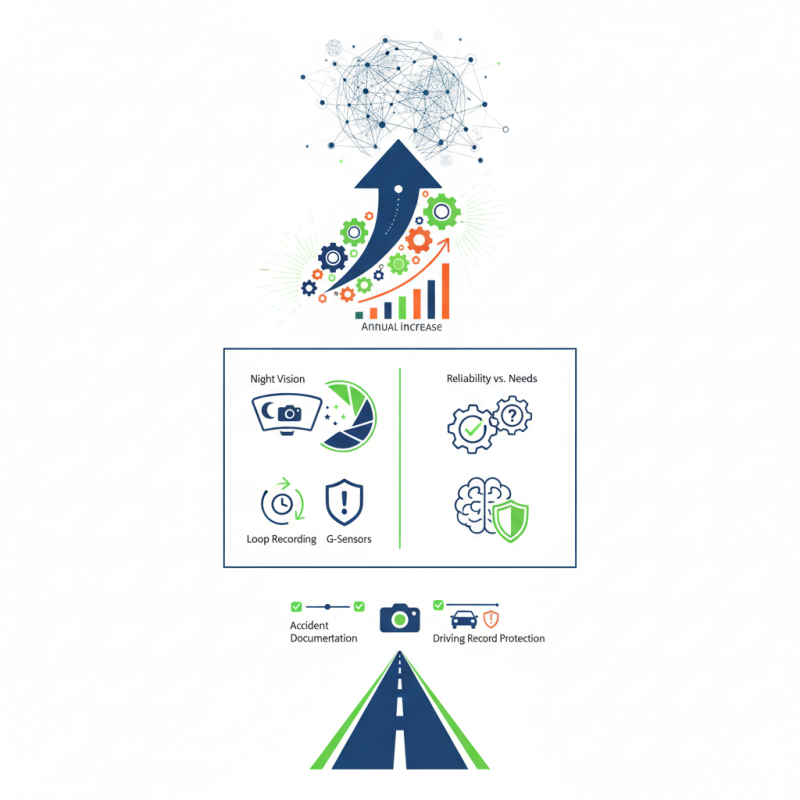
In the rapidly evolving world of automotive safety, the demand for Dashboard Cameras has surged. Recent reports indicate that the global dashcam market is expected to grow by 15% annually. This growth reflects increasing awareness of road safety and accident documentation. Dashboard cameras, or dashcams, have become crucial tools for drivers and fleet operators alike.
High-quality dashcams offer features that can significantly enhance the user experience. For instance, night vision capabilities and wide-angle lenses provide better visibility in various conditions. Additionally, features like loop recording and G-sensors help in capturing critical moments during incidents. However, not all dashboard cameras are created equal. Some cameras may compromise on image quality or rely solely on basic functions.
Considering the myriad of options, knowing which features are essential can be daunting. It's important to weigh reliability against your specific needs. The right dashboard camera should not only capture clear footage but also provide peace of mind while driving. Investing in a quality dashcam is a proactive step towards safer roads and can aid in protecting your driving record.
When choosing a dashboard camera, video quality is critical. High resolution, like 1080p or 4K, makes a huge difference. Clear footage captures details like license plates and street signs. It can be crucial for insurance claims or legal evidence. Many cameras come with wide-angle lenses. This feature ensures you capture more of the environment, enhancing your overall security.
Tips: Look for cameras that offer night vision technology. This feature helps you see clearly even in low light. High dynamic range (HDR) technology is also beneficial. It adjusts to bright and dark areas, maintaining clarity.
Adjustable frame rates are important too. They allow for smoother video playback. A camera that can record at various speeds can provide flexibility. However, too many features can be overwhelming. It's essential to focus on what truly matters based on your needs. Filters and other extras may not always deliver value. Assessing your priorities can help streamline your choices in dashboard cameras.
When looking for dashboard cameras, safety features are paramount. High-definition recording is essential. A camera with at least 1080p provides clear footage. This clarity helps in case of incidents. Night vision capability is another crucial feature. Poor visibility can occur during nighttime. A camera that performs well in low light can capture vital details.
GPS tracking is a valuable addition. It records your speed and location, providing context to footage. If an accident occurs, this information can clarify events. Be wary of cameras without this feature. They might neglect critical evidence.
Always check for loop recording. This feature ensures continuous recording. Older files are overwritten when memory fills up. It guarantees that you always have current footage. Consider the importance of a wide-angle lens. A broader view captures more of the surroundings. It can be the difference in assessing an accident.
Tips: Look for dashboards with user-friendly interfaces. Complicated settings may lead to errors during emergencies. Regularly check camera placement for optimal capture angles. A well-angled camera prevents blind spots.
When choosing a dashboard camera, a user-friendly interface is crucial. It helps drivers access features quickly while on the road. Intuitive controls minimize distractions, ensuring safety. Look for simple icons and clear menus. A well-designed screen can enhance your experience significantly. It should be easy to adjust settings during a drive.
Tips: Always test the interface before buying. A camera that feels complicated may be frustrating. Familiarize yourself with touch screen responsiveness. Voice commands can also save time.
Many dash cams come with adjustable settings for video quality and recording modes. A clear and straightforward guide is essential for new users. Pay attention to how settings are organized. If features feel scattered, it may lead to confusion. It’s okay to feel overwhelmed. Take your time to learn the system.
Tips: Keep notes of important settings. This can streamline your next trip. Regularly revisit the manual to discover overlooked features.
When choosing a dash camera, understanding storage options is crucial. The type of storage you select impacts footage quality and accessibility. Many cameras use microSD cards, which vary in capacity and speed. A higher capacity card allows for longer recording times. However, be cautious: not all cards are created equal.
Data management is equally important. Regularly check your footage to ensure it records correctly. Some cameras have automatic overwrite features that save space but could delete important videos. Always back up critical clips to a secondary device or cloud storage. This ensures you have access to vital evidence if needed.
Tips: Choose a reliable SD card with a high write speed. This ensures smooth video capture. Consider using a cloud backup for additional security. Regularly format your card to prevent data corruption. Remember, effective storage and management can make all the difference in a critical moment.
| Feature | Description | Storage Type | Data Management |
|---|---|---|---|
| Loop Recording | Automatically overwrites old footage when storage is full. | MicroSD Card | Easy to manage, simply replace or format card. |
| G-Sensor | Detects sudden movements and locks those files to prevent overwriting. | Internal Storage / Cloud | Requires manual retrieval or cloud management. |
| Wi-Fi Connectivity | Allows easy transfer of files to smartphones or PCs. | Internal Storage | Can sync videos directly to a mobile app. |
| Parking Mode | Continues to monitor if the vehicle is parked and detects motion. | MicroSD Card | Requires sufficient storage for extended recordings. |
| Video Resolution | Higher resolutions provide clarity but require more storage. | MicroSD Card | Manage storage based on video quality settings. |
When selecting a dashboard camera, additional functionalities can greatly enhance your experience. One key feature is GPS tracking. It adds a layer of safety by recording your vehicle's location and speed. This is valuable in case of accidents. It also helps you retrace your route if needed.
Another feature worth considering is parking mode. This allows the camera to monitor your vehicle even when parked. Motion detection can alert you to any potential threats. Even a minor bump can be recorded, giving you peace of mind.
Tips: Look for models with cloud storage options. This allows you to save significant footage without relying solely on the camera’s memory card. Furthermore, consider the ease of use. A complicated interface can detract from your overall experience. Opt for a model that has intuitive controls and a clear display.
© 2025 Grandmark International. All rights reserved.
© 2020 Grandmark. Grandmark International. All rights reserved. Proud shareholder of Temot International.