
grandmark logoGrandmark International
@alexaseleno
Skip to main content

10 Best Managed Network Switches for Global Buyers?

Choosing the right Managed Network Switch is not simply a matter of counting ports. Global buyers must balance performance, security, reliability, support, and total ownership costs. A switch that excels in a European office may disappoint in a warehouse, hotel, or branch network elsewhere. Regional power standards, warranty coverage, cloud management, and local technical assistance also deserve close attention.

This guide evaluates ten leading options through practical criteria. These include VLAN control, PoE capacity, Layer 3 features, redundancy, monitoring tools, noise levels, and configuration difficulty. Real-world details matter. A 48-port switch may fit a server room, yet its fan noise could frustrate a small office. A compact model may save space, but limited uplink speed can create congestion later.

Networking authority Andrew S. Tanenbaum once said, “The nice thing about standards is that you have so many to choose from.” That observation remains useful here. Standards improve compatibility, but they do not guarantee a perfect deployment. No ranking can serve every country or business equally. I may favor models with stronger documentation, even when cheaper alternatives appear attractive. That choice deserves scrutiny.

Readers will find comparisons based on technical capability, business practicality, and long-term manageability. The selection considers established vendors and promising alternatives, without treating brand reputation as proof of quality. Firmware support can change. Pricing can shift. Local availability can disappoint. Use this list as a careful starting point, then confirm specifications with the manufacturer before purchasing.
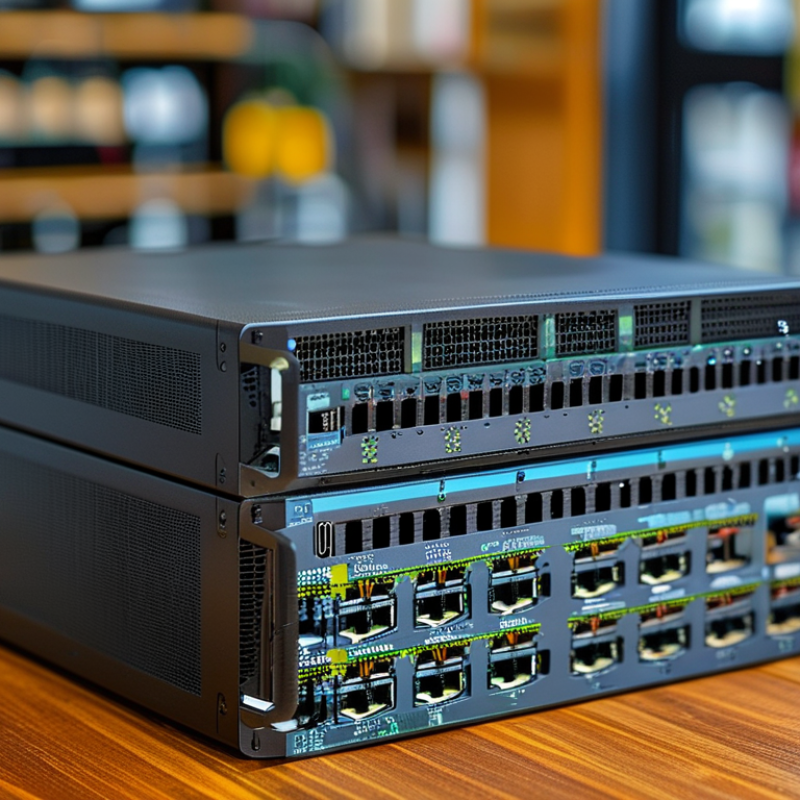
10 Best Managed Network Switches for Global Buyers?

What a Managed Network Switch Is and Why Global Buyers Need One

A managed network switch is more than a box that connects cables. It lets administrators control traffic, separate departments, and monitor network performance. Through a web interface or command line, teams can create VLANs, prioritize voice traffic, and detect unusual activity. In real deployments, these controls reduce troubleshooting time. A blinking port is no longer the only clue.

Global buyers need this control because networks rarely stay simple. Offices may span several countries, warehouses, and remote sites. A managed switch can support consistent configurations across different locations. It can also provide redundancy when one connection fails. However, features vary widely. A powerful switch may still disappoint if its software feels confusing or regional support is weak. I have seen installations delayed by small issues, such as unsuitable power standards or missing management documentation.

Tips: Check port speed, power requirements, operating temperature, and warranty coverage before purchase. Confirm support for VLANs, quality of service, link aggregation, and secure remote administration. Ask whether the device fits local electrical rules and data protection expectations. Test the management interface with a small deployment first. Do not assume every listed feature works equally well in daily operations. A short trial can expose weak alerts, limited logs, or awkward updates.

Core Features That Define a High-Quality Managed Switch

A high-quality managed network switch is more than a port count. It should support VLAN segmentation, link aggregation, IPv6, QoS, and secure administrative access. IEEE 802.1Q VLAN support separates cameras, voice devices, guests, and business systems without extra cabling. That matters in offices where one crowded rack serves several departments. Look for 802.1X authentication, role-based access, and detailed event logs. The 2024 Data Breach Investigations Report recorded a 180% rise in vulnerability exploitation, making basic access controls difficult to ignore.

Reliability also depends on visibility. A switch should provide SNMP, streaming telemetry, loop protection, and alerts for failed links or rising temperatures. Redundant power options and rapid spanning-tree recovery can limit disruption. The 2023 Global Data Center Survey found that 60% of respondents experienced an outage within three years. A five-minute failure still feels long when payment terminals stop responding. For international deployments, check voltage input ranges, regulatory documentation, language support, and warranty handling across regions.

PoE planning deserves careful attention. Confirm the total wattage budget, not only the maximum output per port. Newer access points may consume more during startup than their average rating suggests. I still distrust dashboards that show green icons while a cable quietly negotiates at 100 Mbps. Testing firmware updates, backup configuration, and recovery procedures before installation is less exciting, but more reliable. The best specification can still fail when monitoring, staff training, or spare hardware is overlooked.

How to Compare the 10 Best Managed Network Switches

How to Compare the 10 Best Managed Network Switches

Comparing ten managed network switches requires more than checking port counts. Begin with your actual layout, including desks, cameras, wireless access points, and uplink distances. A 24-port model may appear sufficient, but future expansion can quickly consume its spare capacity. Check switching capacity, forwarding rate, buffer memory, and uplink speed together. These figures reveal whether the switch can handle busy traffic without noticeable delay.

Management features often separate a dependable switch from an attractive specification sheet. Look for VLAN support, access control lists, quality-of-service settings, link aggregation, and loop prevention. IPv6 readiness and clear monitoring tools also matter for global deployments. Review the interface before buying. A powerful feature is less useful when configuration screens are confusing. Confirm regional power requirements, safety documentation, firmware support, and warranty terms. These details affect long-term reliability more than a small discount.

Tips: Compare each switch using the same checklist. Record port type, PoE budget, uplink capacity, noise level, power use, and management method. Test a sample under realistic traffic if possible. Manufacturer claims can be accurate but incomplete. A higher capacity rating does not guarantee better performance in every network. I would also leave room for mistakes, such as unexpected devices or poorly planned cable runs. Independent test data, detailed manuals, and responsive technical support provide stronger evidence than marketing language alone.

Key Buying Factors for Different Countries and Network Sizes

Choosing among the 10 best managed network switches depends on location and network scale. A switch that performs well in a London office may not suit a warehouse in Nairobi or a hotel in Tokyo. Country-specific power standards, plug types, operating temperatures, and certification requirements deserve careful checking. Local warranty support also matters. A low purchase price can become expensive when replacement parts cross borders.

For small offices, eight or sixteen ports may be enough, especially with a few wireless access points and cameras. Growing businesses may need twenty-four or forty-eight ports, plus faster uplinks for servers and storage. Check the real PoE budget, not only the number of PoE ports. Some devices use more power during startup. VLAN support, access control, traffic monitoring, and firmware updates improve reliability. Local management is often simpler, while cloud management can help teams oversee distant sites. Neither option is perfect.

Tips: Match the switch to two-year growth, not today’s device count. Leave spare ports and uplink capacity. Confirm voltage compatibility before ordering. Ask whether the warranty applies in your country. For dusty or hot locations, review cooling design and installation limits. Fan noise can matter in classrooms and small offices. I have seen buyers overlook this detail. It later became the main complaint. Also, test the management interface before full deployment. A powerful feature is less useful when staff cannot operate it confidently.

10 Best Managed Network Switches for Global Buyers? – Key Buying Factors for Different Countries and Network Sizes
Profile Recommended Network Size Typical Deployment Access Ports Port Speed PoE Capability Uplink Configuration Switching Capacity Management Features Layer 3 Features Power Input Best-Fit Country or Region Factors Key Buying Consideration
Profile 1
Compact Smart Switch
Small offices and home offices
Up to 15 endpoints
Workstations, printers, wireless access points and IP phones 8 × RJ45 10/100/1000 Mbps Optional PoE+
Up to 120 W
2 × 1 GbE SFP 20 Gbps Web interface, VLAN, QoS, link aggregation, loop prevention and port mirroring Static routing only or none 100–240 V AC external adapter Suitable for countries with limited rack space, small offices and low-density cabling Fanless operation, compact dimensions and low energy consumption
Profile 2
Entry-Level PoE Switch
Small businesses
Up to 25 endpoints
IP phones, cameras, access points and desktop computers 16 × RJ45 10/100/1000 Mbps PoE+
Up to 180 W
2 × 1 GbE SFP 36 Gbps 802.1Q VLAN, QoS, STP/RSTP, LACP, DHCP snooping and IGMP snooping IPv4 static routing on selected configurations 100–240 V AC, internal power supply Practical for mixed office and surveillance deployments in Europe, Asia-Pacific and Latin America Confirm the total PoE budget rather than counting only the number of PoE ports
Profile 3
24-Port Office Switch
Small and medium-sized businesses
Up to 45 endpoints
Departmental networks, VoIP and standard Wi-Fi infrastructure 24 × RJ45 10/100/1000 Mbps PoE+
Up to 370 W
4 × 1 GbE SFP 56 Gbps 802.1X, VLAN, QoS, RSTP/MSTP, LACP, ACL, SNMP and traffic monitoring Static IPv4 routing; limited inter-VLAN routing 100–240 V AC Good general-purpose choice where copper cabling is dominant and fiber uplinks are required Choose 370 W PoE when cameras, phones and wireless access points operate simultaneously
Profile 4
24-Port Multi-Gigabit Switch
Growing offices and high-speed workgroups
Up to 50 endpoints
Wi-Fi 6/6E access points, video production and high-throughput storage 24 × RJ45 1/2.5/5/10 GbE depending on port type PoE++ available
Up to 720 W
4 × 10 GbE SFP+ 128 Gbps or higher Centralized management, VLAN, QoS, 802.1X, ACL, multicast control and network diagnostics Static routing; selected models support basic dynamic routing 100–240 V AC Useful in markets where Wi-Fi 6/6E adoption and multi-gigabit broadband are increasing Verify cable compatibility: Cat 5e may support some multi-gigabit rates, while 10 GbE commonly requires Cat 6A
Profile 5
48-Port Enterprise Access Switch
Medium-sized businesses
50–150 endpoints
Office floors, schools, hotels and branch aggregation 48 × RJ45 10/100/1000 Mbps PoE+
Up to 740 W
4 × 10 GbE SFP+ 176 Gbps 802.1X, role-based access, ACL, QoS, STP, LACP, SNMPv3 and redundant configuration options Inter-VLAN routing and static routing 100–240 V AC; optional redundant power on selected designs Well suited to larger offices and education or hospitality sites with many powered endpoints Check rack depth, airflow direction and local electrical standards before ordering
Profile 6
10 GbE Aggregation Switch
Medium and large networks
150–300 endpoints
Server rooms, campus aggregation and high-speed backbone links 8 × 10 GbE SFP+ 10 GbE fiber or direct-attach copper No PoE Additional 10 GbE or 25 GbE uplinks 160 Gbps or higher VLAN, MLAG or stacking on selected designs, QoS, ACL, telemetry and SNMP IPv4/IPv6 static routing; dynamic routing on advanced configurations 100–240 V AC; redundant power often available Appropriate for regions with fiber-rich campuses, data rooms and long-distance building links Compare transceiver compatibility, fiber type, connector type and maximum link distance
Profile 7
Layer 3 Campus Switch
Large offices, campuses and multi-floor buildings
300–600 endpoints
Core or distribution layer with multiple access switches 24 or 48 × 1 GbE RJ45 1 GbE access ports PoE+ optional
Up to 740 W
4–8 × 10 GbE SFP+ 176–216 Gbps Stacking, 802.1X, ACL, QoS, DHCP protection, multicast and centralized monitoring OSPF, IPv4/IPv6 routing, VRRP or equivalent gateway redundancy 100–240 V AC; redundant power recommended Strong fit for campuses where resilient inter-VLAN routing and high availability are required Prioritize stacking bandwidth, gateway failover and software licensing terms
Profile 8
Industrial Managed Switch
Industrial sites and remote facilities
Up to 100 endpoints
Manufacturing lines, transport systems, utilities and outdoor cabinets 8–16 × RJ45 10/100/1000 Mbps PoE+ optional
Up to 240 W
2–4 × 1/10 GbE fiber uplinks 20–76 Gbps VLAN, QoS, ring redundancy, SNMP, event alerts and industrial protocol support on selected models Static routing; basic Layer 3 support on advanced units 12/24/48 V DC; dual-input options common Designed for temperature variation, vibration, dust and unstable power conditions Check operating temperature, enclosure rating, DIN-rail mounting and surge protection
Profile 9
Cloud-Managed Branch Switch
Distributed businesses
5–50 sites
Retail branches, clinics, franchise locations and remote offices 24 × RJ45 10/100/1000 Mbps PoE+
Up to 370 W
2–4 × 1/10 GbE fiber or copper uplinks 56–128 Gbps Cloud provisioning, remote monitoring, templates, VLAN, QoS, alerts and firmware scheduling Static routing; advanced routing may require a higher subscription tier 100–240 V AC Useful where local IT staff are limited and sites are geographically dispersed Evaluate subscription costs, data residency, offline behavior and cloud service availability by country
Profile 10
High-Density Data Center Switch
Large enterprises and data centers
600+ endpoints
Server racks, virtualization clusters and spine-leaf networks 48 × 10/25 GbE SFP28 10/25 GbE No PoE 6–8 × 40/100 GbE QSFP+/QSFP28 1.2 Tbps or higher Automation APIs, telemetry, VXLAN/EVPN on selected designs, ACL, QoS and zero-touch provisioning OSPF, BGP, ECMP, IPv4/IPv6 and data-center gateway functions 100–240 V AC; hot-swappable redundant power and fans Best for regions with high-density compute, cloud workloads and strict uptime requirements Assess latency, buffer size, airflow direction, optics availability and automation compatibility
Specifications shown are representative, standards-based configurations for comparing managed-switch categories. Actual port combinations, PoE budgets, software features, power options and environmental ratings vary by product configuration and market.

Installation, Security, Management, and Long-Term Maintenance

Choosing among the 10 best managed network switches for global buyers requires more than port counts. Installation quality often decides future reliability. Before mounting, confirm power budgets, rack depth, airflow, and regional electrical requirements. Label every cable at both ends. Test copper and fiber links, then record results. A missed uplink setting can create an expensive, silent failure.

Security must be designed during installation, not added later. Use separate VLANs for staff, guests, cameras, and management traffic. Disable unused ports and require multi-factor authentication for administrator access. NIST guidance supports secure configuration, least privilege, logging, and timely patching. The Verizon 2024 Data Breach Investigations Report found vulnerability exploitation involved 14% of breaches, while the human element appeared in 68%. Strong controls still need trained operators. Technology alone is insufficient.

Management should include centralized monitoring, configuration backups, syslog collection, and alerts for unusual traffic or failing power supplies. Keep firmware records and test recovery files, not just create them. A practical maintenance schedule includes monthly reviews, quarterly access audits, and documented replacement planning. Spare units should match installed features and power requirements. I have seen teams overlook license dependencies and cable labeling. That mistake is avoidable. The Uptime Institute’s outage research repeatedly links operational failures with major business costs, so maintenance deserves budget protection. Perfection is unrealistic, but unmeasured maintenance is worse.