What Are CFRP Roughing Cutters Used For?
Cfrp Roughing Cutters are designed for the demanding first stage of carbon-fiber-reinforced polymer machining. They remove excess material quickly before finishing operations begin. This work may involve trimming thick panels, opening pockets, reducing oversized blanks, or preparing contoured aerospace components. The cutter must manage abrasive carbon fibers without causing severe delamination, fiber pull-out, or heat damage.
Professor J. Paulo Davim, a recognized authority in composite machining, has described the challenge clearly: “The machining of composite materials is complex because of their anisotropic and heterogeneous nature.” That observation explains why ordinary milling tools often perform poorly. A suitable roughing cutter uses a strong carbide body, optimized flute geometry, and effective chip evacuation. Its cutting edges must remain stable while striking alternating fiber and resin regions. In a workshop, this difference can appear as cleaner pocket walls, fewer lifted fibers, and more predictable tool life.
Still, CFRP Roughing Cutters are not a universal solution. Cutting speed, feed rate, tool coating, clamping pressure, and dust extraction all affect results. Even an advanced cutter may fail under poor fixturing. The operator must watch for vibration, rising spindle load, and a dusty, overheated cutting zone. Small defects can become expensive during finishing. The process is efficient, but not effortless. Its best performance comes from matching cutter design with laminate structure, machine rigidity, and the required surface allowance. That practical judgment remains essential, and it is where many machining plans need further reflection.
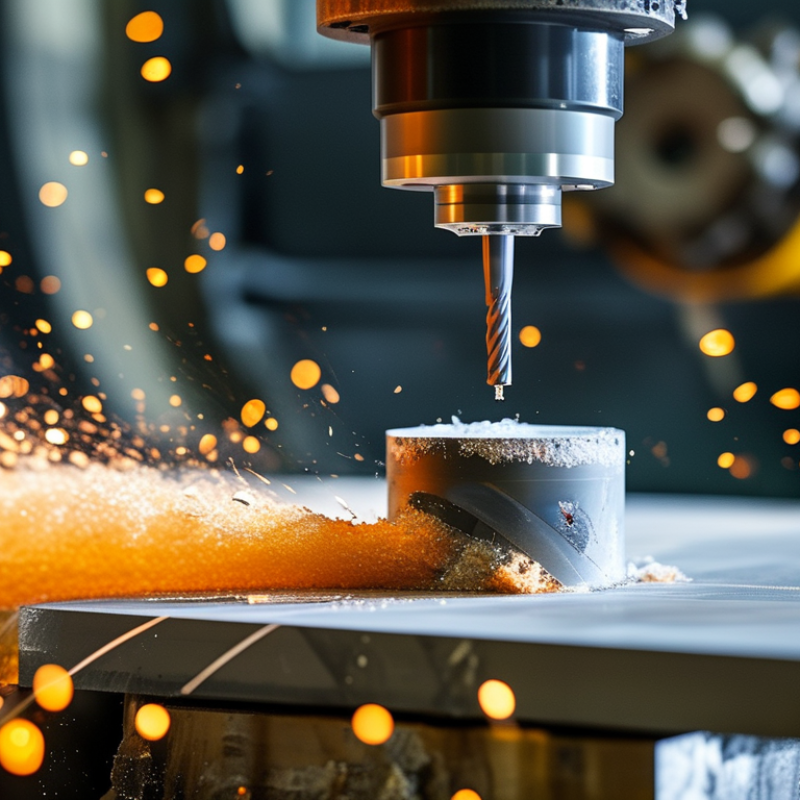
What Are CFRP Roughing Cutters?
CFRP roughing cutters are specialized tools for removing large amounts of carbon fiber reinforced polymer quickly. CFRP combines strong carbon fibers with a resin matrix. This structure makes it lightweight, but difficult to machine with ordinary cutting tools. The fibers can pull from the surface, while heat may soften the resin. Roughing cutters use reinforced cutting edges and carefully shaped flutes to control these problems during heavy material removal.
In practical work, technicians use these cutters to open pockets, reduce thick panels, and prepare parts for finishing operations. A suitable cutter can produce short chips and limit fiber breakout around the cutting path. Dust extraction is essential, because CFRP dust is fine, abrasive, and unsafe to leave around machinery. Cutting speed, feed rate, tool diameter, and clamping pressure must match the laminate thickness. Small changes matter.
They are not magic.
Even a high-quality roughing cutter can damage a part when the setup is unstable. I have seen clean edges become rough after excessive feed pressure or a worn cutting edge. Regular inspection helps reveal dullness, resin buildup, and uneven wear. Operators should also check the finished surface under good lighting, rather than trusting sound alone. The tool removes material efficiently, but careful judgment still controls the result.
Key Applications of CFRP Roughing Cutters
CFRP roughing cutters are built for fast, controlled material removal before finishing operations. Their key applications include trimming aircraft panels, opening pockets, and shaping complex composite structures. According to Airbus’ Global Market Forecast 2023–2042, airlines may require more than 40,000 new commercial aircraft over the next two decades. That forecast indicates continued demand for efficient composite machining.
In aerospace production, cutters remove excess CFRP from wing skins, fuselage sections, and interior frames. A roughing pass may reduce a thick laminate to a near-net shape, leaving a small allowance for finishing. Cutting tools must manage abrasive carbon fibers without causing delamination or fiber pull-out. Dust extraction is essential. The chips are sharp and difficult to control.
Automotive manufacturers also use CFRP roughing cutters for monocoque parts, suspension components, and crash structures. The International Energy Agency reported that global electric car sales exceeded 17 million units in 2024. Lightweight composite parts can support vehicle efficiency, although production cost remains a serious limitation. MarketsandMarkets projects the carbon fiber market will grow from about 4.7 billion dollars in 2023 to 7.3 billion dollars by 2028. That growth may expand machining demand, but the assumption needs scrutiny. Faster cutting is not always better. Heat, vibration, and poor chip evacuation can quietly damage a part before inspection. Experienced machinists therefore balance feed rate, tool geometry, clamping, and inspection data for every laminate design.
Benefits and Limitations in CFRP Machining
CFRP roughing cutters remove excess carbon-fiber reinforced polymer before finishing operations. They create the basic shape quickly.
In a production workshop, a roughing cutter may clear a thick panel edge, pocket, or structural rib. Its fluted geometry breaks material into manageable cuts, while controlled forces reduce sudden tool deflection. The benefit is practical: shorter cycle times, fewer finishing passes, and more predictable stock removal. A stable cutter can also limit vibration around delicate laminates. Clean edges matter.
Yet CFRP is highly abrasive. Carbon fibers wear cutting edges quickly, even when the polymer matrix feels relatively soft. Heat can soften the resin, smear dust across the surface, or damage nearby layers. Fine carbon particles may irritate workers and contaminate machine components. Effective extraction and enclosure design require disciplined attention.
Roughing is not automatically safer. Aggressive feeds may cause delamination, fiber pullout, or boundary damage that finishing cannot fully repair. Tool life varies with fiber direction, laminate thickness, and cutting parameters. Operators should inspect each trial edge instead of trusting a catalog value. In my experience, conservative engagement often improves the final result, although productivity may fall. That trade-off needs measurement. Dry cutting can suit some setups, but cooling, chip evacuation, and electrical safety must be evaluated together.
What Are CFRP Roughing Cutters Used For? Benefits and Limitations in CFRP Machining
CFRP roughing cutters are used for high material removal during pocketing, trimming, contouring, and component pre-machining. Their geometry supports efficient chip evacuation and helps reduce cutting time, while abrasive carbon fibers can still cause rapid tool wear. The chart uses a qualitative engineering priority scale from 1 to 5, where 5 indicates a higher machining requirement or risk.
Choosing the Right CFRP Roughing Cutter for the Job
Choosing the Right CFRP Roughing Cutter for the Job
CFRP roughing cutters remove large amounts of carbon-fiber-reinforced polymer before finishing. They are used for trimming panels, pockets, edges, and structural components. The correct cutter depends on laminate thickness, fiber direction, resin content, and machine rigidity. A tool that performs well on a thin panel may struggle with a thick, cured section.
Look for a geometry designed to control fiber pull-out and reduce delamination. Compression-style cutting action can help protect the upper and lower laminate surfaces. Diamond-coated edges often provide longer wear resistance, especially when abrasive fibers quickly dull conventional tools. Match the cutter diameter to the pocket corners and available spindle power. Keep tool overhang short. Watch the dust.
Tips: Use conservative cutting data at the start, then adjust feed and speed after checking the edge. Inspect the workpiece under strong light. White fuzz, chipped fibers, or a raised edge usually indicate unsuitable parameters or tool wear. Good dust extraction and appropriate protective equipment are also essential during CFRP machining.
In practice, coolant is not always the best choice because it can complicate dust control and cleanup. Dry machining may work better with stable extraction, but every laminate behaves differently. That is where experience matters. Record spindle load, edge quality, and tool life after each trial. A small test cut can prevent an expensive panel from becoming scrap.
Even careful selections can miss the mark. Recheck the cutter after several passes.