China Top 10 Diesel Self Priming Sewage Pump Suppliers?
China has become a major manufacturing base for industrial drainage and wastewater equipment. This guide examines China’s top 10 Diesel Self Priming Sewage Pump suppliers through practical purchasing criteria. The focus is not popularity alone. It considers pump performance, factory experience, product quality, customization, and after-sales support.
A reliable supplier should provide clear flow and head data. Buyers should also check solids-handling capacity, fuel consumption, priming time, and continuous-duty performance. Product testing matters. Look for pressure tests, vibration checks, engine inspection records, and traceable component information. A well-designed pump should start smoothly beside a muddy construction trench or a flooded municipal chamber. Details like suction hose quality and float-switch protection can affect real results.
This ranking should support careful comparison, not replace technical verification. Supplier positions may change as factories improve, merge, or lose service capacity. Public information is sometimes incomplete. That is worth admitting. Buyers should request current datasheets, factory videos, reference projects, and warranty terms before ordering. Import requirements, spare-parts availability, and local technician support also deserve attention. The strongest suppliers usually explain limitations instead of promising everything. They can recommend engine power, impeller design, and pump materials for specific wastewater conditions. Some companies may appear impressive online but provide weak documentation. Others may have modest websites and excellent manufacturing discipline. This guide aims to identify credible options while encouraging practical questions, independent checks, and decisions based on measurable value.
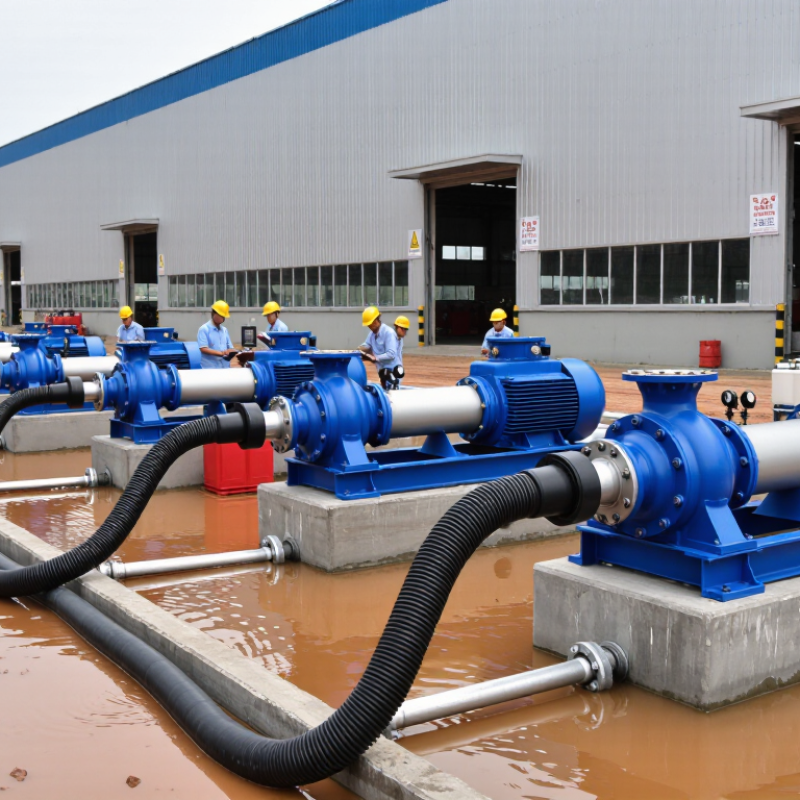
What Are Diesel Self-Priming Sewage Pumps and How Do They Work?
Diesel self-priming sewage pumps remove wastewater when grid power is unavailable or unreliable. A diesel engine turns a centrifugal impeller through a shaft. The impeller creates suction, while an air-separation chamber removes trapped air from the intake line. Once primed, the pump moves sewage through the discharge pipe.
The process is practical, but not effortless. A foot valve or check valve helps retain water after shutdown. The pump casing must hold enough liquid for the next start. Large solids require a wide passage and suitable impeller clearance. A blocked suction hose can stop the system quickly. Self-priming does not mean unlimited dry running.
The UN-Water SDG 6 Synthesis Report 2023 reported that 42% of household wastewater was not safely treated in 2022. That figure shows why dependable emergency pumping remains important. The U.S. Environmental Protection Agency’s 2022 Clean Watersheds Needs Survey estimated $630.1 billion in wastewater infrastructure needs over twenty years. Diesel units can support bypass pumping, flood response, and remote treatment sites.
Operators should check fuel quality, oil level, exhaust ventilation, vibration, and seal leakage before every deployment. Noise and emissions also need controlled placement. In practice, capacity charts can look convincing, yet real performance falls with long hoses, high lift, and rag buildup. That is an easy detail to underestimate. Suppliers should provide verified flow curves, solids-passage dimensions, priming limits, and maintenance records. Reliability is demonstrated in the wet well, not merely printed in a catalog.
How to Evaluate China’s Diesel Self-Priming Sewage Pump Suppliers
Choosing among China’s diesel self-priming sewage pump suppliers requires more than comparing prices. Start with the duty data: flow rate, total head, suction lift, solids diameter, sewage temperature, and daily operating hours. A supplier that asks these questions understands application risk. One that sends a generic quotation may be guessing. Request pump curves, engine fuel consumption, priming time, materials, and seal details. Check whether performance data comes from witnessed testing or calculation alone.
Visit the factory, physically or through a live video inspection. Look at machining, welding, assembly cleanliness, test benches, and spare-parts storage. Ask to see a pump running with dirty water, not only clear water. Listen for unstable engine speed and inspect leakage around the mechanical seal. Confirm serial-number traceability, inspection records, and pressure-test reports. Documentation matters. However, it is not proof by itself. I have seen attractive reports fail to match the delivered configuration.
Evaluate the supplier after the sale. Clarify commissioning support, warranty boundaries, response times, training, and parts availability. Ask for two recent customer references with similar lift and solids conditions. Check whether the supplier can safely adapt the skid, fuel tank, control panel, and trailer. Require written confirmation of relevant local safety and emissions requirements. A small field trial is wise. It may reveal priming delays, excessive fuel use, or poor access to service points before a larger order is placed. Price still matters, but downtime costs more.
This chart presents a practical procurement weighting model for evaluating China-based diesel self-priming sewage pump suppliers. Pump performance, diesel engine reliability, material quality, and factory testing receive the highest weights because they directly affect operating reliability, service life, and wastewater-handling performance. Buyers should verify each criterion through technical documents, test records, samples, certifications, and after-sales references.
Top 10 China-Based Diesel Self-Priming Sewage Pump Suppliers
China-based diesel self-priming sewage pump suppliers serve construction, municipal drainage, agriculture, and emergency dewatering projects. A practical top-ten review should examine more than production scale. It should check pump performance, engine reliability, material quality, and after-sales support.
Several suppliers focus on compact pumps with 3-inch or 4-inch discharge outlets. Others build larger units for flood control and industrial wastewater. Cast iron bodies are common, while stainless steel options suit more corrosive environments. Buyers should compare maximum head, flow rate, solids passage, fuel use, and priming time. Real test data matters.
Field experience reveals small details. A pump may start easily in a workshop but struggle beside a muddy excavation. Mechanical seal quality, suction hose strength, and access to spare parts can change operating results. Ask for factory test records, load-testing videos, warranty terms, and service response times. Check whether the diesel engine meets the destination market’s emissions and safety requirements.
Brochures are not field proof. Some specifications may need closer review. Suppliers should explain performance under actual suction lift, dirty water, and continuous operation. I would also inspect packaging, vibration control, noise levels, and operator access before placing an order. A reliable supplier communicates limitations clearly, even when the answer is less attractive.
What to Consider Before Choosing a Chinese Pump Supplier
When comparing China’s top 10 diesel self-priming sewage pump suppliers, begin with evidence, not catalog photos. The WHO and UNICEF Joint Monitoring Programme reported in 2024 that 3.5 billion people lacked safely managed sanitation in 2022. That pressure makes dependable pumping equipment more important, especially on construction sites and emergency drainage projects. Ask each supplier for verified flow, head, priming time, fuel consumption, solids-passage diameter, and continuous operating limits. Request test records based on ISO 9906 principles, not only laboratory claims.
Factory experience matters. Inspect machining areas, impeller balancing, welding quality, seal assembly, and final testing procedures through a live video audit or independent inspection. A reliable supplier should provide serial-number traceability, spare-parts drawings, maintenance intervals, and clear warranty exclusions. The World Bank’s report Wastewater: From Waste to Resource highlights wastewater as a valuable resource, but recovery systems fail when basic pumping reliability is ignored. That lesson applies here.
Look closely at the diesel engine, controller, fuel tank, battery system, and cold-start performance. Ask for noise, exhaust, and fuel data under realistic loads. Paperwork can still mislead. I would also test one sample unit before placing a large order, even when references look convincing. Compare total ownership cost, not the lowest quotation: downtime, seals, fuel, transport, and technician response can quickly erase the initial saving. A supplier may offer impressive capacity, yet provide weak after-sales support. That gap deserves uncomfortable questions.
China Top 10 Diesel Self Priming Sewage Pump Suppliers? - What to Consider Before Choosing a Chinese Pump Supplier
The table below uses anonymous supplier slots because company names and brands are intentionally excluded. Technical figures are practical benchmark ranges for diesel-driven self-priming sewage pump configurations and should be verified against formal quotations, drawings, test reports, and certificates before purchase.
| Position | Anonymous Supplier Slot | Typical Pump Configuration to Verify | Nominal Flow Range | Head Range | Solids Passage | Practical Suction Lift | Indicative Engine Output | Primary Evaluation Criteria |
| 1 | Supplier Slot A | Large trailer-mounted self-priming sewage pump | 300–1,200 m³/h | 20–45 m | 75–100 mm | Up to 8 m | 90–250 kW | Verify hydraulic test curves, trailer loading, fuel autonomy, and emergency-response support. |
| 2 | Supplier Slot B | Municipal bypass and flood-control package | 200–900 m³/h | 15–40 m | 65–100 mm | 6–8 m | 75–200 kW | Check continuous-duty rating, automatic priming performance, noise level, and control-panel protection. |
| 3 | Supplier Slot C | Medium-capacity construction dewatering unit | 100–500 m³/h | 15–35 m | 50–80 mm | 6–8 m | 30–110 kW | Confirm wear-plate adjustment, abrasion-resistant materials, quick-access service covers, and spare-part availability. |
| 4 | Supplier Slot D | Compact sewage transfer package for industrial sites | 60–300 m³/h | 12–30 m | 40–75 mm | 5–7 m | 20–75 kW | Review seal selection, chemical compatibility, discharge connection standards, and operating-cost data. |
| 5 | Supplier Slot E | Municipal wastewater emergency backup system | 80–400 m³/h | 18–40 m | 50–100 mm | 6–8 m | 30–110 kW | Require documented cold-start testing, automatic shutdown protection, battery specifications, and maintenance intervals. |
| 6 | Supplier Slot F | High-head sewage pumping configuration | 40–250 m³/h | 30–60 m | 40–75 mm | 5–7 m | 45–150 kW | Check actual duty-point efficiency, pressure rating, vibration limits, and protection against dry running. |
| 7 | Supplier Slot G | Portable 4-inch sewage and drainage pump | 50–180 m³/h | 12–32 m | 50–75 mm | 5–7 m | 15–55 kW | Evaluate lifting points, frame strength, transport dimensions, fuel consumption, and hose compatibility. |
| 8 | Supplier Slot H | Diesel-driven pump for rental and short-term projects | 40–220 m³/h | 15–35 m | 40–80 mm | 5–7 m | 15–75 kW | Prioritize fast delivery, interchangeable wear parts, simple controls, and clear warranty terms. |
| 9 | Supplier Slot I | Corrosion-conscious industrial wastewater package | 30–180 m³/h | 15–40 m | 40–75 mm | 5–7 m | 20–90 kW | Verify wetted-material grades, elastomer compatibility, coating system, and chemical-resistance test evidence. |
| 10 | Supplier Slot J | Small municipal and agricultural sewage-transfer unit | 20–120 m³/h | 10–30 m | 30–65 mm | 4–6 m | 8–45 kW | Compare total cost of ownership, local service capability, fuel efficiency, and availability of operating manuals. |
Important supplier-verification checklist: Request a certified performance curve, duty-point test record, material specification, engine emissions information, factory inspection evidence, warranty conditions, spare-parts list, packing details, and references for comparable sewage applications. Confirm that flow, head, suction lift, solids passage, and fuel-consumption figures are measured under clearly stated test conditions.