
grandmark logoGrandmark International
@alexaseleno
Skip to main content

China Top 10 Pyrimidine and Purine Building Block Suppliers

Pyrimidines and purines are small molecules with a large role in research and development. Their identity, purity, and consistency can shape the quality of downstream work. For buyers, a supplier list is only a starting point. A clear certificate of analysis, batch traceability, and realistic lead times matter just as much as a broad catalog.

Chemist Steven A. Benner’s research in synthetic biology offers useful context for thinking about nucleic-acid chemistry. The following line is an editorial summary, not a verbatim quotation from him: “A reliable building block begins with verified chemistry and ends with dependable delivery.” That distinction matters. Product descriptions may look similar, while specifications, analytical methods, packaging, and support can differ. Check them.

This guide to China Top 10 Pyrimidine and Purine Building Block Suppliers is intended to help readers compare vendors with care. It focuses on practical questions: Can the supplier provide relevant analytical data? Are purity claims supported by stated methods? Is technical support available when a specification needs clarification? Even a polished catalog cannot answer everything. Some details require direct confirmation, and supplier information can change. Treat this overview as a screening aid, not a substitute for independent qualification. The best choice is the one whose documentation, communication, and product fit stand up to close review.
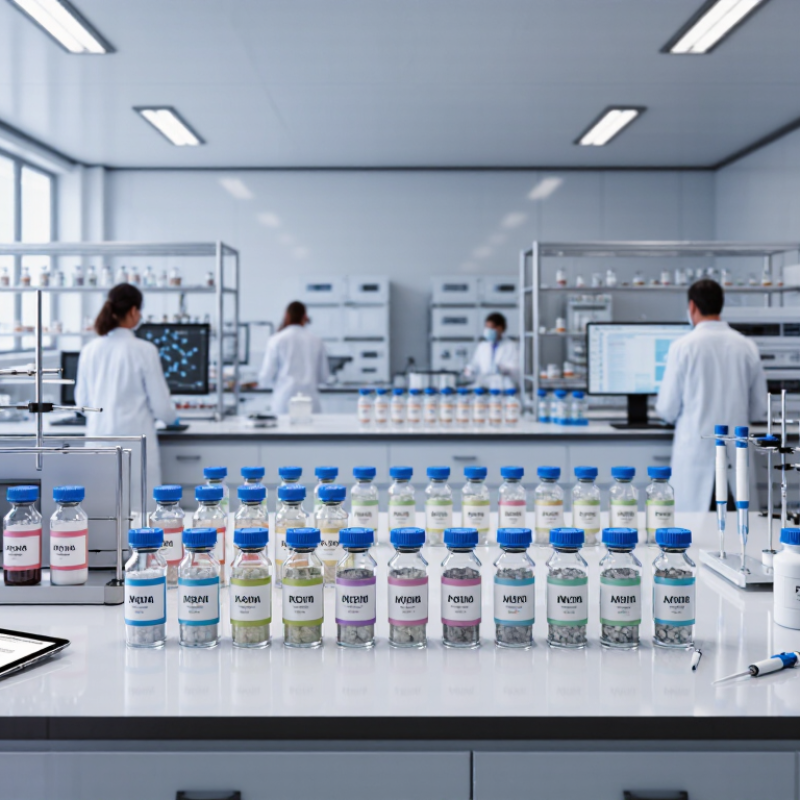
China Top 10 Pyrimidine and Purine Building Block Suppliers

Pyrimidine and Purine Building Blocks: Core Concepts and Uses

Pyrimidine and purine building blocks are small chemical units with outsized biological roles. Adenine and guanine are purines; cytosine, thymine, and uracil are pyrimidines. Their ring structures help shape DNA and RNA, while nucleotide forms also support energy transfer and cell signaling. In a lab, researchers use these compounds to study genetic processes, develop analytical standards, and explore medicinal chemistry. Small structures. Important details.

Building-block selection depends on purity, water content, and trace-metal limits. A minor impurity can distort a reaction or weaken assay results, so certificates of analysis and fit-for-purpose testing matter. FDA CDER’s 2023 Novel Drug Approvals report recorded 55 novel drug approvals. That number reflects a busy discovery environment, not proof that every medicine uses these intermediates. The distinction matters. Buyers should check specifications against the intended synthesis and application, rather than rely on a broad product label.

Tips: Confirm identity with suitable analytical data, review batch-specific purity, and store materials as directed. Keep lot records. One practical gap remains: published specifications may not describe performance in your exact reaction, so small-scale validation is still prudent.

China Top 10 Pyrimidine and Purine Building Block Suppliers - Pyrimidine and Purine Building Blocks: Core Concepts and Uses

Product-focused reference to ten commonly used pyrimidine and purine building blocks. This table does not rank or identify suppliers; product availability, grades, and specifications vary by supplier.

No. Building Block Chemical Family Molecular Formula CAS Registry Number Typical Role and Uses Useful Sourcing Checks
1 Uracil Pyrimidine nucleobase C4H4N2O2 66-22-8 Starting material for uridine-related compounds and a heterocyclic intermediate in pharmaceutical and biochemical synthesis. Confirm assay, water content, impurity profile, and whether the offered grade suits synthesis or analytical use.
2 Thymine Pyrimidine nucleobase C5H6N2O2 65-71-4 DNA nucleobase used in nucleoside chemistry and as a reference or research material in biochemical work. Check identity, assay, residual moisture, particle characteristics, and batch-specific analytical documentation.
3 Cytosine Pyrimidine nucleobase C4H5N3O 71-30-7 Precursor for cytidine-related compounds and a starting material for nucleoside and heterocycle synthesis. Review assay, related substances, water content, and packaging conditions for the intended application.
4 Adenine Purine nucleobase C5H5N5 73-24-5 Starting material for adenosine-related compounds and a building block in nucleotide and pharmaceutical research. Verify assay, identity test, impurity limits, and grade-specific documentation.
5 Guanine Purine nucleobase C5H5N5O 73-40-5 Precursor for guanosine-related compounds and a purine building block used in nucleoside chemistry. Check assay, insoluble matter, water content, and the analytical method used for release testing.
6 2,6-Diaminopurine Substituted purine C5H6N6 1904-98-9 Purine scaffold used in nucleoside analogue research and as an intermediate for substituted purine compounds. Confirm identity, assay, related purine impurities, and suitability for the intended synthetic route.
7 5-Methylcytosine Modified pyrimidine nucleobase C5H7N3O 554-01-8 Used in modified nucleoside synthesis and biochemical research involving DNA methylation. Check assay, trace nucleobase impurities, storage recommendations, and any reference-standard documentation required.
8 5-Fluorouracil Fluorinated pyrimidine C4H3FN2O2 51-21-8 Fluorinated pyrimidine used as an antimetabolite pharmaceutical ingredient and in research or synthesis involving fluorinated nucleosides. Distinguish research or intermediate material from regulated pharmaceutical-grade material; confirm applicable quality and documentation requirements.
9 6-Chloropurine Halogenated purine C5H3ClN4 87-42-3 Reactive purine intermediate used to prepare substituted purines and purine nucleoside derivatives. Review assay, residual starting materials, moisture sensitivity, and packaging or handling information.
10 2,4-Dichloropyrimidine Halogenated pyrimidine C4H2Cl2N2 3934-20-1 Electrophilic pyrimidine intermediate used to introduce substituents when preparing functionalized pyrimidines. Check assay, isomer or related-substance profile, storage conditions, and suitability for the planned reaction.

Main Product Types and Their Applications

Pyrimidine and purine building blocks are sold as nucleobases, nucleosides, nucleotides, and chemically protected intermediates. These forms serve different synthesis steps. Nucleosides support pharmaceutical research and active-ingredient development, while phosphoramidite building blocks are used to assemble short DNA and RNA strands. Unmodified bases and nucleotides also appear in assay development, reference materials, and laboratory research.

The IQVIA Institute’s Global Use of Medicines 2024 report projects worldwide medicine spending will approach US$2.3 trillion by 2028, at invoice prices. That broader growth supports demand for reliable chemical inputs, but it does not measure building-block sales directly.

Applications determine what specifications matter. A research lab may prioritize small pack sizes and clear analytical data. A manufacturing team may need consistent purity, controlled water content, and documented batch-to-batch performance.

For oligonucleotide work, protecting groups and coupling compatibility can affect yield and cleanup. For nucleoside intermediates, stereochemistry and impurity profiles deserve close review.

A polished catalog is not proof of process fit. I would compare certificates of analysis, test methods, and sample performance before qualifying a material.

Tips: Match the building block to the intended synthesis route, then check identity, purity, storage conditions, and available batch documentation. Ask whether the reported purity method suits your application; this detail is easy to overlook.

China’s Top 10 Pyrimidine and Purine Building Block Suppliers

China’s Top 10 Pyrimidine and Purine Building Block Suppliers should be compared by product fit, documentation, and batch consistency—not catalog size alone. Grand View Research’s Nucleotide Market Size, Share & Trends Analysis Report estimated the global nucleotide market at about US$584 million in 2023 and projected a 9.4% compound annual growth rate through 2030. This broad market figure signals ongoing demand, but it does not measure the specialist building-block segment or validate any individual supplier. Not proof. Buyers should check whether a supplier can provide the required molecular structure, purity, and scale, with clear lead times for both samples and repeat orders.

For China-based suppliers, useful evidence includes recent certificates of analysis, validated HPLC results, and supporting NMR data where appropriate. Ask how impurities are monitored and how production changes are communicated between batches. Details matter. A technically polished datasheet is helpful, but it cannot replace consistent lot records or responsive technical support. Compare quoted specifications with the actual documents supplied, and confirm packaging protects material during storage and transit. Public supplier rankings can be incomplete or outdated; that is an inconvenient limitation. A practical shortlist therefore relies on current documentation, sample evaluation, and a direct review of quality systems, rather than marketing claims alone.

Supplier Capabilities, Quality Standards, and Market Reach

China’s leading pyrimidine and purine building block suppliers differ in more than catalog size. Buyers should compare synthesis expertise, batch consistency, and the ability to support custom specifications. Ask whether a supplier can provide recent chromatograms, NMR data, and a clear certificate of analysis for the exact lot offered. Good records matter.

Quality expectations depend on intended use. A capable supplier should explain its testing methods, impurity limits, storage conditions, and batch traceability. Its quality system should match the product’s application, rather than relying on a broad certification claim alone. For pharmaceutical development, buyers may also need documented controls for residual solvents and change management. Not always. Some catalog chemicals receive less testing than custom batches, so confirm the scope before ordering.

Market reach involves more than export destinations. Check production capacity, routine lead times, packaging options, and experience shipping temperature-sensitive or moisture-sensitive materials. A supplier with broad reach may still rely on external logistics partners, which can affect delivery estimates. Request realistic timelines and ask how delays or out-of-specification results are handled. One weakness in supplier comparisons is that public information can look polished while leaving technical details unclear. Verify claims with product-specific documents and a small qualification order.

Representative Pyrimidine and Purine Building Blocks

Molecular weights of four commonly used nucleobases, shown as reference data for comparing building-block specifications. These values describe molecules, not supplier rankings or quality ratings.

Molecular weight (g/mol). Pyrimidines shown in blue; purines shown in green.

How to Evaluate and Select a Chinese Supplier

Choosing among China’s top pyrimidine and purine building block suppliers requires more than comparing quoted prices. Start with the exact chemical identity, specification, assay method, and impurity limits. Ask for a recent, batch-specific certificate of analysis and confirm that its methods suit your intended use. Details matter. Check whether the supplier can explain unusual results clearly, rather than simply repeating a specification.

Review the quality system and traceability records. Ask how raw materials, production changes, retained samples, and complaints are documented. Where appropriate, request an audit or a small evaluation sample, then compare its test results with the supplier’s data. A polished document is not proof of consistent batches. Small differences in moisture, particle form, or packaging can affect handling and downstream performance.

Assess practical reliability, too. Confirm production capacity, typical lead times, storage conditions, packaging options, and export documentation before placing a larger order. Ask how delays or out-of-specification results are communicated. Clear answers are useful; vague assurances are not. A supplier may score well on price yet provide little flexibility when specifications change. No checklist catches everything, so record unresolved questions and test a representative batch before committing to routine supply.