How to Choose a Carbon Fiber Production Line Supplier?
Choosing a Carbon fiber production line supplier is a technical decision, not a simple price comparison. The wrong equipment can create uneven tow tension, unstable furnace temperatures, and costly scrap. A reliable supplier should explain each production stage clearly, from precursor preparation to oxidation, carbonization, surface treatment, sizing, and winding.
Professor Suresh G. Advani, a recognized composites manufacturing researcher, has emphasized, “Manufacturing is the key to making composites cost-effective.” His point remains practical. A production line must deliver repeatable quality, not only impressive specifications. Ask how the supplier controls furnace temperature across each zone. Request evidence of tension stability, energy consumption, line speed, and fiber-property consistency. Also inspect the proposed gas-handling and safety systems. Small details matter. Very much.
Experience deserves close attention. Visit an operating plant, if possible, and examine fiber rolls, control panels, maintenance areas, and laboratory records. Speak with existing customers about commissioning delays and technical support. A supplier may promise high output, yet provide weak after-sales service. That gap can become expensive.
The evaluation should also consider future production. Can the line process different precursor types? Can it support wider tow sizes or later automation? These questions are easy to overlook. I have found that buyers sometimes focus too heavily on furnace capacity. That is understandable, but incomplete. A better Carbon fiber production line supplier combines engineering depth, transparent documentation, operator training, spare-parts planning, and measurable quality control. No supplier is perfect. Careful verification still reduces avoidable risk.
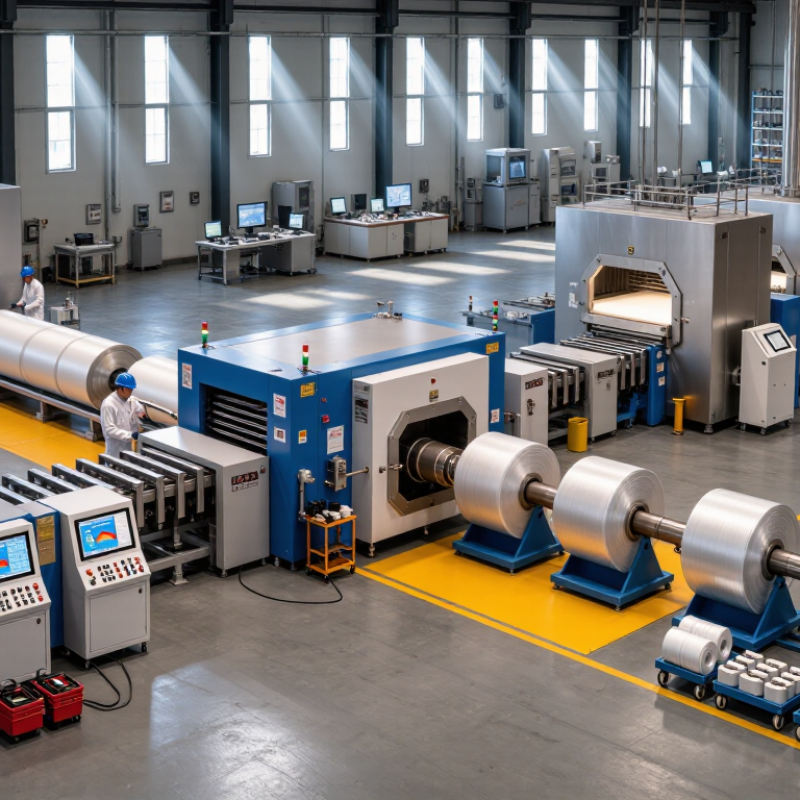
Define Required Output: Tow Size, Capacity, and 3.5–7 GPa Strength Targets
Choosing a carbon fiber production line supplier begins with a precise output definition. State the required tow size, such as 3K, 12K, 24K, or larger formats. Each size changes precursor handling, tension control, furnace loading, and winding stability. Do not accept a capacity figure without production conditions. Ask whether the quoted output refers to kilograms per hour, tonnes per year, or theoretical uptime.
Capacity should match your actual ramp-up plan. A line rated for 2,000 tonnes annually may produce less during maintenance, grade changes, and quality checks. Request trial data using a comparable precursor and target tow size. Observe filament spreading, broken filaments, surface fuzz, and spool consistency. Small defects can become expensive downstream. Measure tensile strength across several batches, not one impressive sample.
A 3.5–7 GPa strength target also requires careful process alignment. Higher strength may demand tighter temperature control, longer residence time, and stricter oxidation management. Ask the supplier for test methods, gauge lengths, batch variation, and failure statistics. Confirm whether the result is average strength or a minimum specification. A spreadsheet can lie. I have seen attractive capacity claims weaken after real production trials. Leave room for learning, because your first process window may be wrong. Select a supplier willing to adjust furnace zones, tension settings, and sizing chemistry with documented evidence.
Evaluate Stabilization at 200–300°C and Carbonization at 1,000–1,600°C
Choosing a carbon fiber production line supplier requires more than checking throughput. Thermal control deserves close attention. The U.S. Department of Energy’s carbon fiber process assessments identify stabilization near 200–300°C and carbonization around 1,000–1,600°C. These ranges strongly affect fiber strength, shrinkage, and electrical conductivity.
Ask suppliers for measured furnace profiles, not brochure promises. Stabilization should control temperature gradually while maintaining stable tension and airflow. Uneven heating can leave pale, under-stabilized sections beside brittle, over-oxidized areas. Small differences become visible as broken filaments near the winding unit. Look for multi-zone control, oxygen monitoring, calibrated sensors, and recorded residence time. The U.S. DOE Carbon Fiber Technology Facility technical data also emphasizes process consistency as a key cost and quality factor.
Carbonization needs deeper evidence. Request pilot-line results at several temperatures, such as 1,100°C, 1,400°C, and 1,600°C. Compare tensile strength, modulus, mass loss, and surface appearance. A supplier should explain furnace atmosphere, gas flow, temperature uniformity, and line speed. It should also provide test methods and raw data. Some proposals look precise but omit sampling details. That is a warning. I would also inspect maintenance records and energy measurements, because hot zones consume heavily and downtime can quietly erase expected savings. The best choice may not be the fastest line. Reliability matters more.
Compare Graphitization Options Reaching 2,500–3,000°C and 230–600 GPa Modulus
When choosing a carbon fiber production line supplier, compare graphitization performance beyond the advertised peak temperature. Some furnaces reach 2,500–3,000°C, but maximum heat alone does not ensure consistent fiber quality. Temperature uniformity, inert-gas control, residence time, and tension stability strongly affect molecular alignment. These factors influence whether the finished fiber approaches a 230–600 GPa tensile modulus range.
Continuous furnaces usually support higher throughput, while batch systems may offer flexible trials and easier process adjustments. Ask for production records, temperature mapping, energy consumption, and test results from comparable precursor materials.
Request modulus data from an independent laboratory, not only internal reports. A polished brochure can still hide uneven heating or unstable tension. I have seen specifications look impressive until pilot testing exposed weaker sections.
Tips: Examine the furnace profile at several points, especially near the hottest zone. Confirm how the supplier controls fiber speed, line tension, atmosphere purity, and emergency cooling. Ask whether the system can maintain performance during long runs, not just short demonstrations. Leave room for doubt; 600 GPa should be treated as a process result, not a guaranteed default. A practical pilot line may reveal more than a perfect presentation.
Audit Supplier Quality Systems, Fiber Uniformity, and ±2% Tension Control
How to Choose a Carbon Fiber Production Line Supplier?
Audit Supplier Quality Systems, Fiber Uniformity, and ±2% Tension Control
A reliable supplier should show more than polished equipment photographs. Ask for quality manuals, inspection plans, calibration records, and recent corrective-action reports. These documents reveal how the supplier handles variation, not just how it presents success. During an audit, review incoming precursor checks, furnace temperature mapping, surface treatment control, and packaging procedures. Clear ownership matters.
Fiber uniformity deserves direct evidence. Request test data for tensile strength, modulus, sizing content, filament count, and linear density. Compare results from different positions across a tow and from separate production lots. A practical trial should include spool samples, microscopy, and tension readings at several line speeds. Small differences can become serious problems during composite lay-up.
Tension control needs measurable proof. Ask the supplier to demonstrate ±2% control against the specified setpoint throughout a continuous run. Check the sensor type, calibration interval, alarm response, and data-recording system. Watch for tension spikes during start-up, splicing, winding, and speed changes. Those moments often expose weaknesses.
No audit is perfect. Factory conditions can differ during a scheduled demonstration. An independent verification run may cost more, but it reduces uncertainty. I would also request operator training records and service response times. Good machinery cannot compensate for poor process discipline. Good data is the real evidence.
Calculate Energy Use, Yield, Maintenance, and Lifetime Cost per Kilogram
How to Choose a Carbon Fiber Production Line Supplier?
Energy use should be measured per saleable kilogram, not per furnace hour. The U.S. Department of Energy’s 2015 bandwidth study estimated carbon fiber production energy near 286 MJ per kilogram. Ask suppliers to separate electricity, natural gas, cooling, and compressed-air demand. Request test data from stabilization through carbonization. A 10% yield loss can erase an impressive energy-efficiency claim.
Yield needs a physical definition. Is it based on precursor input, finished tow, or accepted product? Require batch records showing tow breakage, rejected lots, and start-up waste. Calculate saleable yield as accepted kilograms divided by precursor kilograms. Keep the numbers visible. Then test the line with your own precursor. Laboratory results can be optimistic; factory conditions are less polite.
Maintenance often decides lifetime cost. Use this formula: lifetime cost per kilogram equals annualized capital, energy, labor, consumables, maintenance, and downtime costs, divided by saleable output. Include spare heaters, seals, filters, sensors, and planned shutdowns. The International Energy Agency’s industrial energy-efficiency reports repeatedly stress the value of monitoring, heat recovery, and reduced idle operation. However, efficiency depends on utilization. A line running at 40% capacity may cost more per kilogram than a less efficient line running steadily. Ask for guaranteed availability, maintenance intervals, calibration records, and references from comparable production environments. A spreadsheet can look precise and still be wrong. Use measured trials, not promises.
How to Choose a Carbon Fiber Production Line Supplier? — Energy Use, Yield, Maintenance, and Lifetime Cost per Kilogram
Supplier-neutral comparison using realistic planning benchmarks for a PAN-based carbon fiber production line
Evaluation priority: The lowest purchase price does not necessarily provide the lowest cost per kilogram. Compare guaranteed energy consumption, demonstrated yield, planned downtime, spare-parts availability, maintenance intervals, and expected lifetime output before selecting a production line supplier.