Choosing Bosch filters for global sourcing requires more than comparing prices on a spreadsheet. Buyers must match each filter to the correct vehicle, engine, machine, or operating environment. A cabin filter used in a dusty mining region faces different demands from one used in a city passenger car. Check the exact part number, dimensions, filtration category, sealing surface, and service interval. Small differences can create installation problems.
Robert Bosch, the company’s engineering founder, said, “I would rather lose money than lose trust.” That principle remains useful when evaluating Bosch filters across international supply chains. Experienced buyers should request authorized distribution evidence, batch information, product certificates, and clear packaging photographs. They should also compare labeling, barcode details, and country-specific documentation. Genuine products normally show consistent printing, precise molding, and clean pleat construction. Poor finishing deserves attention.
Supply planning matters too. Confirm minimum order quantities, lead times, storage conditions, and replacement availability before signing a purchasing agreement. Filters stored in damp warehouses may suffer damaged media or weakened packaging. This detail is easy to overlook. It should not be.
Global sourcing is rarely perfect. A supplier may offer an attractive price but provide incomplete technical data. Another may have strong documentation but unreliable delivery. Careful verification reduces these risks. Still, buyers should review their assumptions after every shipment. Bosch filters are selected best through evidence, application knowledge, and long-term supplier reliability—not through price alone.
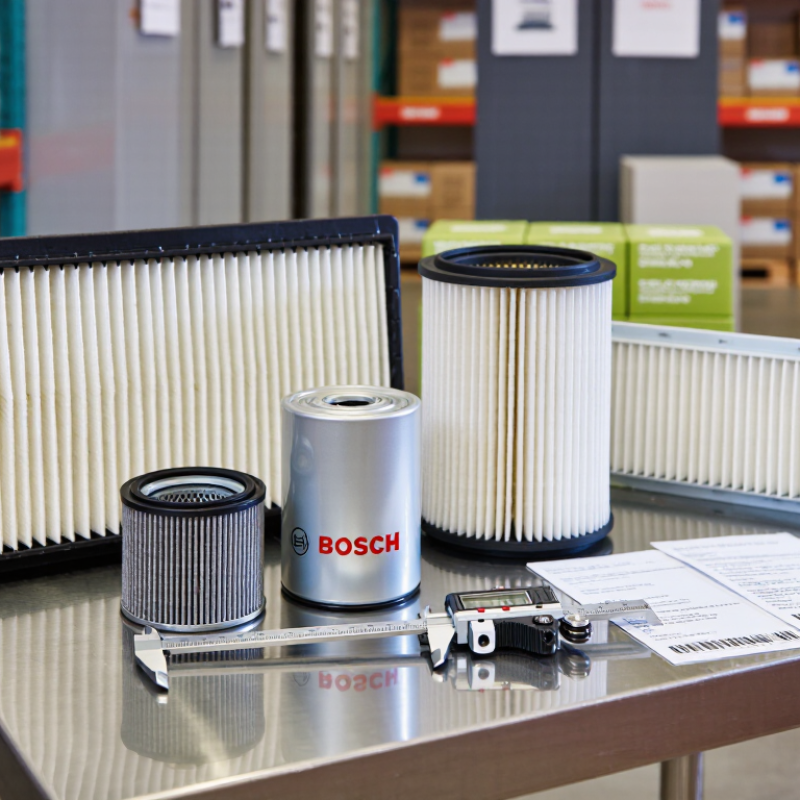
Global sourcing begins with matching the filter type to its working environment. Air filters protect engines and industrial equipment from dust, pollen, and fine particles. Oil filters remove metal debris and carbon from lubricating systems. Fuel filters help control water and sediment before they reach sensitive injection components. Hydraulic filters require precise particle ratings because small contaminants can damage valves and pumps.
Applications vary by region and operating conditions. A construction fleet in a dry area may need high-capacity air filters with strong dust-holding performance. Marine equipment often requires corrosion-resistant housings and reliable water separation. In cold climates, fuel filters must maintain flow during low temperatures. Cabin filters serve buses, trucks, and passenger vehicles, where airflow, odor control, and occupant comfort matter.
From practical sourcing work, I have found that a familiar part number is not enough. Confirm dimensions, media material, sealing quality, pressure limits, and service intervals with technical drawings. Ask suppliers for inspection records and batch traceability. Third-party testing can reveal differences hidden by identical packaging. It is easy to overvalue a low unit price. That choice may increase replacement labor, freight costs, and downtime. Specifications can also be interpreted differently across markets. Recheck them. A small mismatch in thread size or gasket shape can stop installation completely.
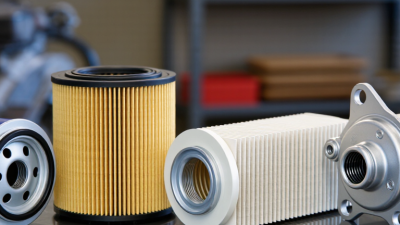
Bosch Filter Types and Their Global Sourcing Applications
The chart shows typical automotive replacement-planning intervals by filter type. Actual intervals vary according to vehicle design, operating environment, fuel quality, traffic conditions, and local maintenance practices. Shorter intervals are generally more relevant for dusty, congested, or severe-duty markets.
Choosing the right filter for global sourcing requires more than matching a part number. Key specifications must fit the equipment, operating conditions, and local supply chain.
Measure the filter’s length, diameter, thread, sealing surface, and installation clearance. A small dimensional error can cause leakage or difficult maintenance. Check the filtration rating, media type, flow rate, and pressure-drop data. Micron ratings alone can mislead because testing methods vary. Request test conditions and performance curves from the supplier. Also confirm the maximum operating pressure, temperature range, bypass-valve setting, and seal material. These details often determine whether the filter performs reliably in dusty factories, cold warehouses, or high-temperature machinery.
Tips: Compare samples against approved drawings before ordering. Ask for batch traceability, inspection records, and material declarations. Verify that packaging protects the sealing edge during long-distance transport. Do not guess.
I once accepted a visually identical filter without checking its bypass setting. It fitted perfectly, but the machine responded differently under cold-start conditions. That mistake reinforced a practical lesson: appearance is weak evidence. Use controlled sampling, documented measurements, and repeat testing with the actual fluid when possible. Supplier capability also matters. Review production consistency, quality controls, response time, and replacement support. A low unit price may become expensive when tolerances drift or specifications remain unclear. Some sourcing decisions still involve uncertainty, so record open questions before approval rather than hiding them.
| Selection Dimension | Recommended Specification or Range | Why It Matters | Sourcing Verification Point |
|---|---|---|---|
| Filter Application | Engine oil, fuel, air, hydraulic, transmission, or cabin air filtration | Each application requires different media, sealing, pressure resistance, and contamination-control performance. | Match the filter to the equipment system and confirm the application with the equipment service documentation. |
| Part and Cross-Reference Number | Exact part number, approved replacement number, and application cross-reference | A visually similar filter may have different internal construction or bypass characteristics. | Verify the full reference number, revision level, and interchangeability before placing a bulk order. |
| Overall Dimensions | Diameter, length or height, thread size, port size, and mounting interface measured in millimetres | Dimensional accuracy is essential for installation, clearance, and leak prevention. | Request a dimensional drawing and allow for gasket compression, access space, and housing tolerances. |
| Filter Media | Cellulose, synthetic fibre, glass fibre, melt-blown polymer, or combined multilayer media | Media type affects particle capture, dirt-holding capacity, pressure drop, and chemical compatibility. | Obtain the media construction, treatment, and compatibility data for the intended fluid and temperature. |
| Filtration Rating | Use the specified nominal or absolute rating; hydraulic applications commonly use approximately 3–25 μm depending on system requirements | A lower micron value does not automatically mean better performance if flow restriction becomes excessive. | Confirm whether the rating is nominal or absolute and request the test method used to establish it. |
| Beta Ratio or Efficiency | Prefer a documented beta ratio or efficiency value at the stated particle size and test conditions | Beta ratio provides a more meaningful comparison than an unsupported micron claim. | Check the particle size, contaminant type, flow rate, and applicable test standard on the report. |
| Flow Rate | Specify the required flow in L/min, L/h, m³/h, or CFM according to the application | The filter must support the operating flow without unacceptable pressure loss or media damage. | Compare rated flow at the actual fluid viscosity, temperature, and pressure—not only at water-like test conditions. |
| Initial Pressure Drop | Select the lowest practical clean-filter pressure drop at the required flow | Lower pressure drop can improve energy efficiency and maintain system performance. | Request a pressure-drop curve showing clean and loaded conditions. |
| Maximum Operating Pressure | Choose a rated pressure above the system’s continuous pressure, pulsation, and transient peaks | Insufficient pressure capability can cause housing deformation, seal failure, or media collapse. | Check working pressure, burst pressure, fatigue testing, and any pressure-pulsation limits. |
| Operating Temperature | Specify the minimum and maximum continuous temperature and any short-term peak temperature | Temperature influences media strength, adhesive performance, seal elasticity, and fluid viscosity. | Verify the temperature range for the complete filter assembly, not only the filter media. |
| Seal and Gasket Material | Common options include NBR, FKM, EPDM, silicone, and polyurethane, selected for fluid compatibility | The wrong elastomer may swell, harden, crack, or lose sealing force. | Confirm compatibility with oil, fuel, water-glycol, hydraulic fluid, additives, and temperature exposure. |
| Housing and End-Cap Materials | Steel, aluminium, stainless steel, reinforced polymer, or other application-approved materials | Material selection affects corrosion resistance, strength, weight, and recyclability. | Check coating, salt-spray performance, weld quality, and compatibility with the installation environment. |
| Bypass or Relief Valve | Use only when required by the system design; verify the opening pressure specified for the application | An incorrect bypass setting can allow unfiltered flow or restrict lubrication and cooling. | Confirm valve presence, opening pressure, direction of flow, and functional test records. |
| Water Separation or Drain Feature | Include water-separating media, drain valve, or water sensor only where the fuel system requires it | Water control helps protect pumps, injectors, bearings, and other sensitive components. | Verify separation efficiency, drain compatibility, sensor connection, and service accessibility. |
| Dirt-Holding Capacity | Select the highest documented capacity that fits the available installation space and pressure-drop limit | Higher capacity can extend service intervals and reduce maintenance frequency. | Compare capacity using the same test contaminant, terminal pressure drop, and test procedure. |
| Service Interval | Follow the equipment manufacturer’s maintenance schedule and adjust using condition monitoring where available | Operating environment, contamination level, duty cycle, and fluid condition strongly affect filter life. | Do not rely on a universal mileage or hour figure; verify the correct replacement interval for the equipment. |
| Quality and Compliance Documentation | Certificate of conformity, material declaration, inspection records, batch traceability, and applicable test reports | Documentation supports quality control, regulatory review, and consistent global sourcing. | Request controlled specifications, inspection criteria, packaging requirements, and retention periods for records. |
| Packaging and Identification | Moisture-resistant packaging, readable part identification, production batch code, and installation instructions | Proper packaging prevents contamination and damage during long-distance transport and storage. | Define carton strength, palletization, labelling language, barcode format, and storage-life requirements. |
Note: Final selection should be based on the equipment manufacturer’s approved application data, the complete filter assembly specification, and verified operating conditions.
How to Verify Filter Quality and Compatibility
A filter can look correct and still fail. During a sourcing inspection, I once focused too heavily on appearance. The housing was clean, but the sealing ring felt unusually hard. That small detail could cause leakage after temperature changes. Check the exact part number, dimensions, inlet shape, outlet position, and installation direction. Compare them with the equipment service manual, not only a supplier’s product sheet.
Ask for measurable evidence. Request filtration efficiency, pressure-drop data, flow capacity, operating temperature, and material specifications. Confirm whether tests followed recognized industry methods. Inspect the pleat spacing, adhesive coverage, media edges, and gasket surface under good lighting. A reliable supplier should provide batch records, inspection reports, and traceable production dates. Certificates are useful, but they need verification. Paper alone proves little.
Compatibility also includes the working environment. A filter for dusty construction equipment may not suit a clean hydraulic system. Check oil type, fuel composition, moisture exposure, vibration, and replacement intervals. Fit a sample before placing a large order. Measure installation force and inspect the seal after operation. My earlier process missed this practical trial, and that was a weakness. Leave room for review. Confirm packaging protects the filter from crushing, humidity, and contamination during international transport.
How to Choose Filters for Global Sourcing?
Evaluating Filter Suppliers and Certification Standards
Choosing a filter supplier requires more than comparing unit prices. Evaluate production experience, testing capacity, and traceability before approving samples. Ask for inspection records showing filtration efficiency, pressure drop, material compatibility, and dimensional tolerance. These details reveal whether a supplier understands real operating conditions.
Certification documents deserve careful review. ISO 9001 can indicate a structured quality system, while IATF 16949 may suit suppliers serving automotive applications. Environmental controls may be supported by ISO 14001. Check the certificate number, issuing body, covered factory, and expiration date. The certificate must match the actual production site.
Visit the facility when possible. Observe incoming material checks, clean assembly areas, sealing tests, and batch labeling. Request samples from different production lots, not only hand-selected units. Independent laboratory testing can verify performance claims. A supplier should also explain complaint handling and replacement procedures clearly.
Do not trust paperwork alone.
A polished certificate cannot correct weak process control. A low-cost sample may pass while later batches vary. This is where sourcing decisions become difficult. Use a written supplier scorecard, but leave room for judgment. No checklist is perfect. Reassess suppliers after design changes, equipment upgrades, or repeated delivery issues. Reliable partnerships grow from evidence, direct communication, and honest records.
Choosing filters for global sourcing requires more than comparing unit prices. A low quotation can become expensive after freight, duties, inspection, and warehouse handling. Ask suppliers for a detailed landed-cost sheet. It should show filter specifications, minimum order quantities, packaging fees, and payment terms. In my sourcing experience, consistent filtration performance matters more than a small discount. Request sample units from different production batches. One sample can hide production variation.
Logistics needs practical planning. Confirm carton dimensions, pallet strength, moisture protection, and labeling before placing an order. A damaged filter is still a business loss. Use clear delivery terms and confirm who manages export documents, freight booking, and customs information. Check the correct product classification with a qualified customs adviser. Build a reasonable time buffer for port delays and inspections. Tight schedules often fail here.
After-sales support should be measurable, not promotional language. Require written warranty periods, batch traceability, technical documents, and a defined response time for claims. Ask whether replacement units are available near your main market. Keep inspection photos, purchase records, and installation details for every shipment. This evidence speeds up problem resolution. Some suppliers promise fast support but lack local capacity. That risk deserves honest discussion. A trial order, followed by a performance review, can reveal weaknesses before larger commitments. No sourcing plan is perfect. Review it after every shipment.
© 2025 Grandmark International. All rights reserved.
© 2020 Grandmark. Grandmark International. All rights reserved. Proud shareholder of Temot International.