
Choosing an Anchor Chain in 2026 is not simply a matter of buying the heaviest chain available. Your boat’s displacement, windage, anchoring habits, and cruising grounds all affect the right match. A chain that looks substantial on a store rack may still be poorly suited to your windlass or bow roller. Details matter. Diameter, grade, length, and corrosion protection each influence strength, handling, and service life.
This guide explains how to compare those details without treating one specification as right for every boat. Check your windlass manual and boatbuilder’s guidance before settling on a chain size or grade. Compatibility is practical, not theoretical: mismatched links may jam, while extra weight can affect bow trim and handling. Consider how often you anchor, the seabed conditions you commonly encounter, and how you will inspect and store the chain. Look for clear product specifications, traceable quality information, and suitable markings. Ask a qualified marine professional when your setup is unusual.
There is no perfect setup. A well-matched chain can still be awkward to handle, and a durable finish will not prevent every sign of wear. That is worth remembering. The aim is a dependable system, not a label that sounds reassuring. The sections ahead cover chain materials, sizing, windlass fit, maintenance, and buying checks, so you can make a choice grounded in your boat’s actual needs.
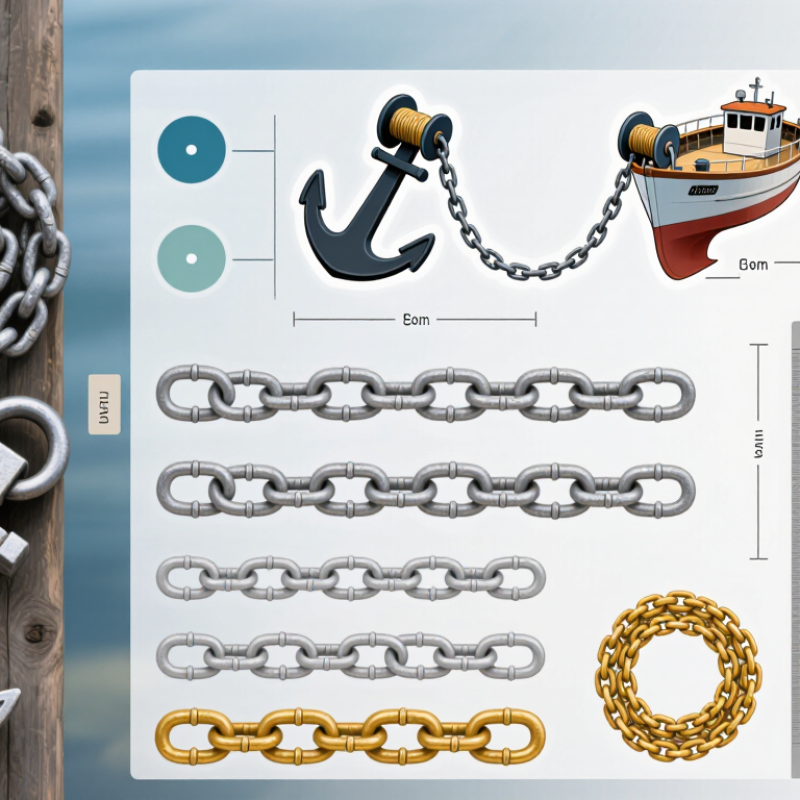
Anchor chain connects the anchor to the boat, but it does more than keep them together. Its weight helps the anchor settle and can soften sudden pulls as the boat moves. On a breezy afternoon, you may see the chain form a gentle curve between the bow and seabed. That curve can reduce snatch loads, though it becomes less pronounced in deep water or strong wind. Chain alone cannot guarantee a secure hold; anchor design, seabed, and scope matter too. Easy to overlook.
Chain choices differ by link size, strength, material, and windlass compatibility. Calibrated chain has consistent link dimensions for a windlass gypsy; uncalibrated chain may not feed reliably through it. Strength grades vary, so compare documented working-load ratings rather than judging by thickness alone. Galvanized steel is a common practical option, while stainless steel offers corrosion resistance but needs careful inspection, especially around links and fittings. Match the chain diameter and grade to the boat, anchor, and equipment. The heaviest option is not automatically the safest or easiest to handle. I would check the windlass manual and inspect sample links before ordering; specifications can look clear on paper, yet small fit differences matter.
Choosing an anchor chain starts with the vessel, not a catalogue. Note the boat’s loaded displacement, length, bow-roller limits, and windlass specifications. A heavy cruising vessel with a high cabin catches more wind than its waterline alone suggests. Check the equipment maker’s working-load guidance, and make sure the chain fits the windlass gypsy. A mismatch can jam under load. It is an easy detail to overlook.
Then consider where you actually anchor. Sheltered mud in a shallow bay places different demands on gear than exposed rock or a steep, tidal inlet. Record typical water depth, expected wind, current, and how much room you have to swing. More chain can improve catenary in some conditions, but it also adds weight at the bow. That can affect trim and handling. There is no single ideal length for every boat.
Use the vessel’s documentation and a qualified marine supplier to verify chain grade, diameter, and compatible working loads. Inspect the whole rode, including shackles and connections; the strongest chain cannot compensate for a weak link. I would also compare the chosen setup with real anchoring routines, not just occasional calm-weather use. Conditions change quickly. Your notes may be imperfect, especially if you anchor in several regions, but they are better than guessing from boat length alone.
For most cruising boats, galvanized carbon-steel chain offers a practical balance of strength, availability, and corrosion protection. Stainless steel can look tidy, but it is not automatically stronger, and salt trapped in tight link gaps can still cause corrosion. Choose a grade using the windlass maker’s specifications and the vessel’s anchor-load requirements; higher strength does not help if the chain will not run through the gypsy. Fit matters.
Compare published test data, not grade labels alone. ISO 1704:2020 specifies dimensions and mechanical requirements for stud-link anchor chain, while IACS Unified Requirement W18 sets proof and breaking-force values by grade and diameter for offshore mooring chain. Those figures serve different applications, so do not treat them as interchangeable. Ask for the chain’s material certificate and rated proof and breaking loads.
Measure nominal link diameter and check link pitch and width against the windlass manual. A chain that looks close may jam under load. Also inspect the galvanizing, welds, and stamped markings; rough welds or flaking coating deserve questions. One detail is easy to overlook: diameter alone does not confirm compatibility. I would verify the actual chain sample in the gypsy before buying a full length, because specifications and real-world fit can differ.
| Selection Factor | Options or Dimensions | Practical Comparison | What to Check Before Buying |
|---|---|---|---|
| Materials and Corrosion Protection | |||
| Hot-dip galvanized carbon steel | Common choice for all-chain and mixed rope-and-chain anchor rodes. | Strong and widely available. The zinc coating helps protect the steel from corrosion; abrasion and time can wear the coating. | Look for marine-suitable chain, consistent galvanizing, traceable specifications, and a windlass-compatible link pattern. |
| Stainless steel, commonly 316 grade | Available in some anchor-chain sizes and link styles. | Offers good corrosion resistance in many marine environments, but strength depends on the specific chain specification. Crevices, deposits, and oxygen-poor conditions can still contribute to corrosion. | Confirm the chain’s certified strength and intended anchoring use. Do not assume stainless chain is stronger than galvanized chain of the same diameter. |
| Uncoated or inadequately protected steel | Not generally preferred for a marine anchor rode. | Exposed steel is susceptible to corrosion in seawater and may require additional protection and maintenance. | Use only when the product specification and corrosion-control plan suit the application. |
| Chain Grades and Intended Use | |||
| Grade 30 (G30) | General-purpose chain grade commonly offered for anchoring. | Typically a lower-strength option than higher-strength anchor-chain grades of comparable size. Exact properties depend on the governing standard and product. | Check the manufacturer’s standard, certified proof or breaking-load data, and whether the chain is explicitly intended for anchoring. |
| Grade 40 (G40) and Grade 43 (G43) | Higher-strength grades commonly found in anchor-chain ranges. | May provide greater rated strength than lower-grade chain at a comparable nominal diameter, but grade numbers and ratings must be interpreted using the applicable specification. | Compare certified values for the exact chain, not grade labels alone. Confirm compatibility with the windlass and connecting hardware. |
| Grade 70 (G70) transport chain | Often sold for cargo tie-down and transport applications. | A high-strength transport-chain designation does not, by itself, make a chain suitable for anchoring or continuous marine exposure. | Use for anchoring only if the chain is specifically certified and approved for that service by its manufacturer. |
| Grade 80 and other lifting-chain grades | Designed for specified lifting applications when supplied and used under the relevant rules. | A lifting rating is not an anchor-chain rating. Intended use, link design, corrosion protection, and inspection requirements differ. | Do not substitute lifting chain for anchor chain unless the product documentation explicitly approves that use. |
| Dimensions, Fit, and Sizing | |||
| Common metric nominal diameters | Examples include 6 mm, 8 mm, 10 mm, and 12 mm. | These are common size increments, not a universal recommendation for a particular vessel. Required size depends on the boat, anchoring conditions, chain grade, and system design. | Follow the vessel or windlass manufacturer’s sizing guidance and verify the chain’s certified ratings. |
| Common imperial nominal diameters | Examples include 1/4 in, 5/16 in, and 3/8 in. | Imperial and metric chains with similar nominal diameters may have different link dimensions and may not run correctly in the same windlass. | Match the chain standard and actual link geometry to the windlass gypsy; do not select by diameter alone. |
| Link dimensions | Check nominal diameter, inside length, and inside width; dimensions vary by chain standard and product. | The gypsy engages the chain links, so link pitch and width are critical to reliable hauling and lowering. | Use the windlass maker’s chain-calibration specification and the chain supplier’s dimensional data. Test fit before installation. |
| Chain length and rode configuration | All-chain rode or a combination of chain and anchor rope. | The appropriate length depends on water depth, expected scope, anchoring conditions, and vessel requirements. | Plan for the intended operating depths and keep a suitable reserve. Secure the bitter end to the vessel using an appropriate arrangement. |
| Connectors and end fittings | Shackles, swivels, and joining links must suit the chain and anchor system. | A mismatched or weak connector can limit the strength of the entire rode and may not pass through the windlass. | Check rated capacity, pin security, corrosion compatibility, physical clearance, and gypsy passage. |
Selection note: Chain grades, dimensions, and load ratings can vary by standard and manufacturer. Treat the nominal diameter and grade as starting points; confirm certified specifications, windlass compatibility, and vessel-specific guidance before purchase.
How to Choose the Right Anchor Chain in 2026
Check Compatibility with Your Anchor and Windlass
A chain must fit both the anchor and the windlass gypsy. Check its nominal diameter, link length, and link shape against the windlass manual. ISO 4565’s small-craft anchor-chain dimensional tables provide a useful technical reference for comparing chain sizes. Matching diameter alone is not enough; a different link profile may ride poorly or jam. Test a short length through the gypsy before buying a full run.
Also inspect the anchor’s shank opening and bow roller. Links should pass freely without catching on the shank, roller cheeks, or deck hardware. Check the chain locker, too: heavier chain takes up more space and adds bow weight. A mismatch may only show up under load, so a dry fit is helpful, but not a complete test. Even careful measurements can miss wear or manufacturing variation.
Tips: Measure twice. Try several links through the gypsy by hand, then confirm the chain feeds and retrieves smoothly. Use the windlass maker’s specified chain grade and size; do not assume two chains with the same diameter are interchangeable.
Before buying, verify that the chain’s grade, diameter, and working-load information match your vessel’s documentation. Ask for traceable certification or test records, rather than relying on a stamped size alone. Requirements can vary by vessel and region, so confirm the applicable standard with a qualified marine professional. Check fit, too. The chain must run smoothly through the windlass gypsy and bow roller; a mismatch can cause jams or uneven loading. Small details matter.
Inspect the chain regularly, especially after rough weather or extended saltwater use. Look for cracked welds, bent links, deep pitting, sharp burrs, or links that no longer move freely. Rinse with fresh water, then let the chain locker drain and dry. Trapped mud and standing water speed corrosion. Keep it simple. Record inspection dates and any measured wear, and follow the chain maker’s replacement limits. If a link looks questionable, do not assume the next one is sound. That is an easy mistake to make when time is short. A small inspection light helps reveal damage near the locker’s bottom, where rust can hide under sediment.
© 2025 Grandmark International. All rights reserved.
© 2020 Grandmark. Grandmark International. All rights reserved. Proud shareholder of Temot International.