
Global construction projects depend on reinforcement that arrives consistently, fits drawings, and performs inside concrete. Steel mesh can look simple on a pallet. Its reliability depends on wire grade, aperture accuracy, weld integrity, corrosion protection, and traceable production records. Small variations can complicate site placement or concrete cover.
The scale of steel supply matters. World Steel Association’s World Steel in Figures 2024 reports that global crude steel production reached 1,888.2 million tonnes in 2023. This figure covers steel overall, not welded mesh specifically, but it shows the breadth of the supply chain serving infrastructure. Worldsteel Director General Dr. Edwin Basson has emphasized steel’s role in durable infrastructure and its potential for recycling. That perspective supports a practical buyer’s question: can a supplier document both product performance and material origin?
Experienced Steel Mesh Manufacturers help answer it with mill certificates, welding and dimensional checks, consistent batch identification, and export-ready packaging. Buyers should verify the mesh specification against project drawings, including wire diameter, spacing, sheet size, and coating requirements. Confirm applicable standards with the project engineer; requirements vary by market and application. Ask about lead times and how damaged or nonconforming sheets are handled. Details matter.
A polished catalogue is not proof. Request sample inspection records and clarify tolerances before production begins. The less comfortable truth is that even a capable manufacturer cannot compensate for vague specifications or rushed approvals. Global projects benefit when supplier selection starts with evidence, not promises.
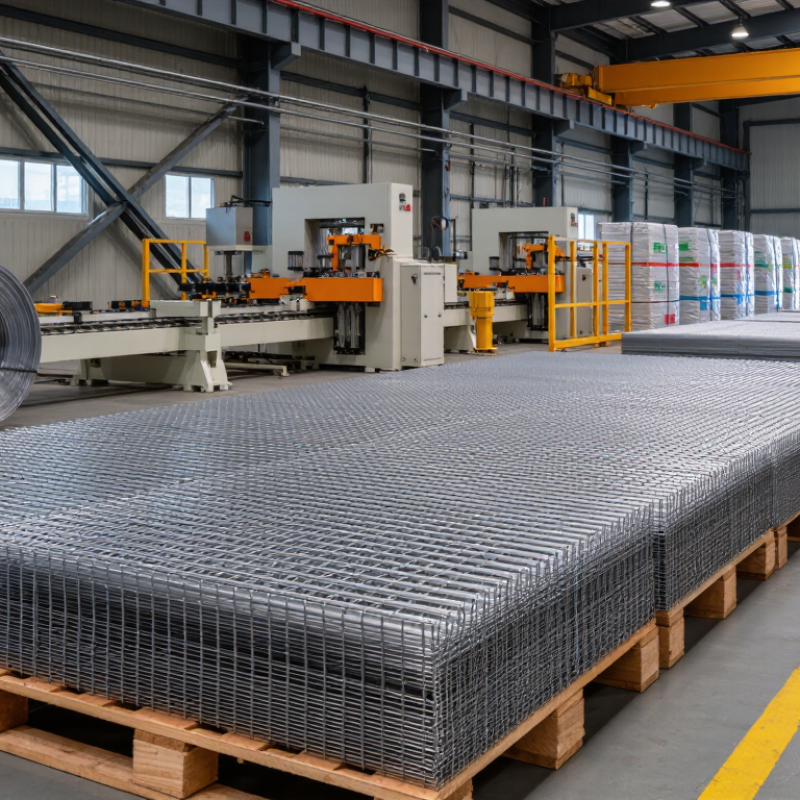
Why Choose Steel Mesh Manufacturers for Global Projects?
Steel mesh manufacturers convert wire rod or steel coil into products such as welded reinforcement mesh, woven screens, and bar grating. They draw wire to the required diameter, straighten and cut it, then weld or weave intersections into consistent openings. Some products receive a zinc coating for added corrosion resistance. The right mesh depends on load, opening size, exposure, and installation method—not appearance alone.
The scale of demand is substantial: the World Steel Association’s World Steel in Figures 2024 attributes about 52% of global steel use to building and infrastructure. Manufacturers support these projects by supplying mesh in specified sheet or roll sizes and checking dimensions, weld integrity, and coating thickness. Still, a clean-looking panel is not proof of consistent quality; buyers should review inspection records and confirm tolerances against project drawings.
Tips: Request a sample and a production inspection report before placing a large order. Check wire diameter, spacing, and coating requirements in writing. Small details matter. Even experienced teams can overlook packaging: bent edges or trapped moisture may cause problems during transport. Specify protective packing and clear bundle labels, then verify the first delivery before approving repeat shipments.
A typical look at what welded steel mesh manufacturers produce and how it is made.
Welded steel mesh is commonly made by drawing or preparing wire, cutting and positioning it, then resistance-welding intersections. Finishing, inspection, and packing follow as required. The sequence shown is typical; exact processes vary with mesh type, specifications, and coating requirements. The numbered bars show step order, not production time or volume.
Steel mesh for a global project must meet the design specification, not just look uniform on delivery. A panel’s wire diameter, spacing, weld integrity, and surface condition affect handling and performance. Details matter.
Requirements depend on the destination market and intended use. ASTM A1064/A1064M covers carbon-steel wire and welded wire reinforcement, while EN 10080 sets general requirements for weldable reinforcing steel. ISO 15630-2 describes test methods for welded fabric. These documents are not interchangeable; project engineers should confirm the governing standard and edition before production.
Quality checks should trace each batch to its wire certificates and production records. Inspectors can verify wire diameter and grid spacing, test tensile and bend properties, and assess weld shear strength using sampled panels. If a coating is specified, it needs its own acceptance checks.
World Steel Association’s World Steel in Figures 2024 reports 1,892.2 million tonnes of crude steel production in 2023, underscoring the scale of the supply chain. Scale is not proof of quality. A certificate helps, but it cannot replace calibrated equipment, documented sampling, and clear corrective-action records. In practice, inspection gaps still happen; they deserve scrutiny.
Global projects rarely use one mesh specification everywhere. Manufacturers adjust wire diameter, aperture size, sheet dimensions, and coating to match drawings, climate, handling, and local standards. A 6 mm wire with 150 mm openings may suit one structural schedule, while another market requires different reinforcement spacing or panel sizes. Small differences matter. A panel that fits the calculation but not the site’s lifting equipment can delay installation.
The World Steel Association’s World Steel in Figures 2024 reports global crude steel production of 1,892.2 million tonnes in 2023. That scale supports broad supply, but it does not guarantee identical grades or tolerances across mills. Experienced manufacturers check material certificates, weld consistency, dimensions, and coating requirements against the project specification. They can also align documentation with the relevant regional standard, such as ASTM A1064/A1064M for welded wire reinforcement in the United States. Still, specifications can leave gaps. Clarify test methods and acceptable tolerances before production.
Tips: Send a marked-up drawing, target standard, exposure conditions, and packing limits with the inquiry. Ask for a sample panel and inspection records. One lesson learned the hard way: confirm bundle weights early; site cranes may not forgive a neat-looking estimate.
Why Choose Steel Mesh Manufacturers for Global Projects?
How Production Capacity and Logistics Support International Delivery
For international projects, steel mesh availability depends on more than the size of a factory. Buyers need consistent wire diameter, aperture spacing, weld quality, and documented batch checks. Production capacity matters when a project needs repeated shipments, not just one large order. A dependable schedule can help contractors coordinate fabrication, port booking, and site installation. Small delays add up.
UNCTAD’s Review of Maritime Transport 2024 reports that more than 80% of global trade by volume moves by sea. That makes export packing and shipping coordination important: mesh panels must be bundled securely, protected from moisture, and loaded to limit shifting. The World Bank’s Logistics Performance Index 2023 assesses customs, infrastructure, shipment arrangements, tracking, and delivery timeliness. These factors offer a useful framework for evaluating a manufacturer’s logistics support. Ask for realistic lead times, packing details, shipment milestones, and a clear process for handling changes. Capacity alone is no guarantee. A large production line cannot fix a missed vessel or incomplete export documents. Even strong suppliers sometimes underestimate port congestion; checking contingency plans is sensible.
| Project Factor | Relevant Data and Considerations | How It Supports International Delivery |
|---|---|---|
| Production capacity | Compare confirmed output in tonnes per month with the project’s total quantity, required delivery dates, product mix, and available production shifts. Capacity figures should specify which mesh types and sizes they cover. | A product-specific production plan helps buyers assess whether an order can be manufactured in stages and coordinated with shipment bookings. |
| Product specifications | Mesh requirements can include wire diameter, spacing, sheet or roll dimensions, steel grade, coating, and applicable construction standard. These details should be confirmed on approved drawings or a purchase specification. | Clear specifications reduce the risk of producing mesh that does not meet the destination project’s design or acceptance requirements. |
| Container planning | A standard 20-foot freight container is about 6.06 m long externally; a standard 40-foot container is about 12.19 m long externally. Internal dimensions and permitted payload vary by container and carrier. | Bundling dimensions, shipment weight, container payload, and local road limits should be checked before loading plans and freight bookings are finalized. |
| Packaging and protection | Steel mesh is commonly bundled or stacked for handling. Packaging details should account for the product form, lifting method, transit duration, moisture exposure, and unloading equipment. | A documented packing plan helps protect the cargo during handling and sea transit and makes bundles easier to identify and unload at the receiving site. |
| Shipping schedule | Ocean freight schedules depend on the route, carrier, port availability, and transshipment arrangements. Production completion, export handling, sailing time, and destination clearance are separate stages. | Coordinating manufacturing milestones with a forwarder’s current sailing schedule helps project teams plan delivery windows without treating transit estimates as guarantees. |
| Export documentation | Common shipping documents include a commercial invoice, packing list, and bill of lading. Additional documents or certificates depend on the goods, destination-country rules, and contract terms. | Early document checks help reduce avoidable customs or port delays. Import requirements should be confirmed with the destination-country authorities or customs broker. |
| Delivery responsibilities | Incoterms® 2020 contains 11 trade terms that define specified responsibilities, costs, and risk-transfer points between sellers and buyers. | Agreeing the exact Incoterm and named place helps clarify who arranges transport, export or import formalities, and delivery at each stage. |
| Quality and traceability | A project may require inspection records, material certificates, batch identification, or test results. Required evidence should be agreed in the purchase documents before production. | Consistent batch and document identification helps buyers match delivered bundles with approved specifications and project records. |
Container dimensions are approximate external reference measurements; actual internal dimensions and payload depend on the specific container. Confirm current carrier, customs, and project requirements before shipment.
A steel mesh supplier can look suitable on paper and still struggle with a demanding project. Check how the manufacturer controls wire diameter, aperture size, weld consistency, and surface finish. Ask for material certificates and inspection records tied to the actual production batch. Documents matter. So does the ability to explain them clearly.
Production capacity should match your schedule, not just your estimated volume. Ask how orders are monitored, what happens when a production line changes, and whether sample panels can be checked before full production. Compare samples against drawings with a ruler or calliper. Small deviations can affect fit on site. A sample is useful, but it cannot guarantee every batch will be identical.
Also evaluate packaging, export handling, and response times. Mesh panels may arrive bent if bundles are poorly supported or loading is rushed. Request details on protective wrapping and how panels are separated during transport. For coated mesh, clarify the coating type and inspection method, then confirm these details in writing. No checklist catches everything; I would still keep a receiving inspection plan, because production and site conditions can vary. A manufacturer’s willingness to discuss limits and corrective steps can be more revealing than a polished brochure.
© 2025 Grandmark International. All rights reserved.
© 2020 Grandmark. Grandmark International. All rights reserved. Proud shareholder of Temot International.