China Top 10 Automotive Body Parts Manufacturers?
China’s automotive body parts industry has become a critical link in the global vehicle supply chain. China Association of Automobile Manufacturers (CAAM) reported more than 31 million vehicle sales in 2024. New-energy vehicle sales exceeded 12 million units. This scale creates strong demand for body panels, bumpers, doors, hoods, structural frames, and exterior trim.
The International Energy Agency’s Global EV Outlook 2025 also identifies China as the world’s largest electric vehicle manufacturing base. That shift is changing body-part requirements. Lightweight aluminum, high-strength steel, advanced plastics, and crash-resistant structures now matter more than simple production volume. Manufacturing precision matters too. A door gap of only a few millimeters can affect appearance, sealing, and customer confidence.
This guide examines ten leading Chinese automotive body parts manufacturers. It considers production capability, OEM partnerships, material expertise, quality systems, export reach, and innovation investment. Public company filings, CAAM statistics, supplier information, and industry research support the comparison. However, supplier rankings are not perfectly transparent. Some private manufacturers disclose limited financial and customer data. That limitation deserves attention.
The largest company is not always the best fit. A global automaker may need stable international logistics. A regional vehicle producer may value flexible tooling and faster engineering support. Certification claims also require careful checking. Readers should verify current factory capacity, product approvals, and customer references before making sourcing decisions. This overview offers a practical starting point, not a final purchasing judgment.
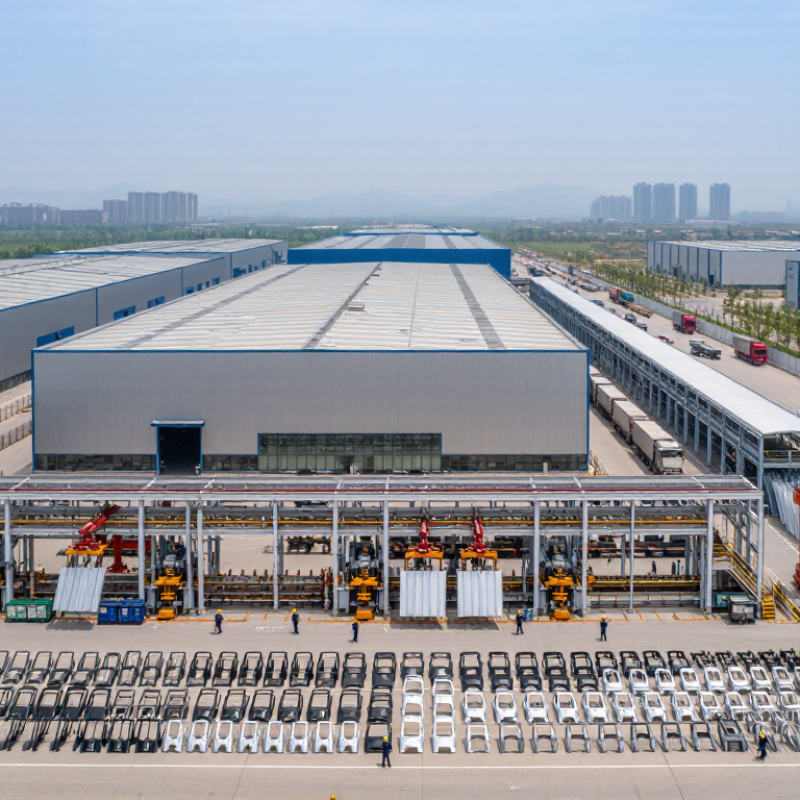
China’s Auto-Parts Industry: 31.28M Vehicles Produced in 2024
China Top 10 Automotive Body Parts Manufacturers?
China produced 31.28 million vehicles in 2024, creating strong demand for reliable body parts. This volume supports a deep supplier network for doors, hoods, bumpers, fenders, and structural panels. The leading ten manufacturers should be judged by more than factory size. Production consistency matters. So does tooling accuracy. Experienced buyers usually check stamping tolerances, surface quality, corrosion protection, and delivery records before signing contracts.
A dependable manufacturer should provide clear inspection reports and batch traceability. ISO-based quality systems can help, but certificates alone do not prove daily performance. Engineers should review material grades, welding points, paint adhesion, and crash-related requirements. Factory visits offer useful evidence, especially when checking press lines and finished-part storage. Still, evaluations can be imperfect. A polished showroom may hide weak process control. That risk deserves attention.
Tips: Request recent samples, not only catalog photos. Compare dimensional reports from several production batches. Ask how defects are recorded and corrected. Confirm packaging details, because scratched panels create avoidable costs. Check whether the supplier can support design changes without delaying production. Local manufacturing experience is valuable, but it should never replace independent verification. Clear communication, realistic lead times, and documented testing usually reveal more than impressive claims.
China Top 10 Automotive Body Parts Manufacturers? — China’s Auto-Parts Industry: 31.28M Vehicles Produced in 2024
China’s annual vehicle production increased from 25.72 million units in 2019 to 31.28 million units in 2024, highlighting the expanding scale of the domestic automotive supply chain and demand for automotive body parts.
Source: China Association of Automobile Manufacturers (CAAM). Figures represent total vehicle production in China and do not identify individual companies or brands.
Ranking the Top 10 Manufacturers by Revenue, Capacity, and OEM Reach
China’s top ten automotive body-parts manufacturers should be ranked by more than revenue. A stronger method combines audited sales, installed capacity, and OEM reach. The China Association of Automobile Manufacturers reported 31.28 million vehicles produced in 2024. This scale creates intense demand for stamped panels, closures, chassis structures, and welded assemblies.
Revenue shows financial strength, but capacity reveals delivery ability. A supplier with several stamping lines and automated welding cells can support larger vehicle programs. OEM reach measures approved production sites, active platforms, and export coverage.
S&P Global Mobility data highlights growing platform complexity, while IEA’s Global EV Outlook reports that China represented over 60% of global electric vehicle sales in 2023. Therefore, body-part suppliers serving electric platforms deserve careful attention. The ranking remains imperfect. Public capacity figures often differ from real utilization.
Tips: Compare revenue with usable capacity, not plant count alone. Check annual reports, certification records, and customer-program evidence. A factory may look impressive, yet produce only one shift daily. That detail changes the ranking.
Experience also matters. In supplier audits, consistent dimensional accuracy and on-time delivery often outweigh impressive machinery. Look for press tonnage, steel or aluminum capability, weld traceability, and tooling response time. Reports from industry associations are useful, but independent verification is still necessary. A balanced ranking should reward scale, technical reliability, and proven OEM access.
Leading Body-Part Categories: Closures, Interiors, Chassis, and Structures
China’s automotive body-parts sector includes many capable manufacturers across closures, interiors, chassis, and structural systems. These suppliers commonly serve passenger vehicles, commercial fleets, and new-energy platforms. Their strengths often include stamping, injection molding, welding, die casting, and precision assembly.
Closures include doors, hoods, tailgates, hinges, and locking structures. Consistent panel gaps matter here. Interior specialists produce instrument panels, consoles, door trims, seats, and acoustic components. Good suppliers control surface texture, odor, fit, and long-term durability.
Chassis manufacturers focus on subframes, suspension parts, crossmembers, and steering supports. Structural suppliers build floor assemblies, pillars, rails, and crash-management components.
Material choices may include high-strength steel, aluminum, and engineered plastics. However, lighter is not always better. Engineers must balance stiffness, repairability, cost, and manufacturing stability.
Tips: Request process audits, dimensional reports, material certificates, and sample inspections before approval. Visit the production line if possible. Check weld consistency, coating coverage, and fixture maintenance. Ask how the supplier handles design changes and field complaints. A polished sample can hide weak production control. This happens more often than buyers expect. Independent testing can expose noise, corrosion, or fatigue risks before they become expensive problems. Also review tooling ownership, delivery capacity, and quality traceability. A supplier may appear technically strong but struggle during rapid volume increases.
Quality Benchmarks: IATF 16949, ISO 9001, and Global OEM Programs
China’s top ten automotive body parts manufacturers should be judged beyond production volume. Their real strength appears in controlled welding, stamping, painting, and inspection processes. IATF 16949 shows whether quality risks are managed throughout the supply chain. ISO 9001 supports consistent procedures, document control, and corrective actions. However, certificates alone cannot prove daily performance. Auditors should examine traceability records, worker training, and recent defect reports.
Global OEM programs require more than competitive pricing. Suppliers must manage strict drawing revisions, material specifications, tooling changes, and delivery schedules. A reliable manufacturer can trace one body panel from steel coil to final inspection. Digital measurement systems and automated weld checks add useful evidence.
Still, some factories depend too heavily on final inspection. That approach can miss hidden process variation. Strong suppliers use preventive controls, layered audits, and measurable response times. Their quality teams also communicate clearly across languages and time zones.
Tips:
Request three months of anonymized quality data. Check the actual scope of each certificate. Visit the line during production, not only during a prepared tour. Ask how the factory handled its last serious deviation. Small details matter, such as labeled bins, calibrated gauges, and clean weld fixtures. A supplier may look impressive, yet weak revision control can create expensive rework. Leave room for improvement; even mature plants can have blind spots.
EV Transformation: 12.89M NEVs and New Body-Parts Demand in 2024
China Top 10 Automotive Body Parts Manufacturers: EV Transformation and New Demand
China recorded 12.89 million new energy vehicles in 2024, according to widely cited industry data. That volume is reshaping automotive body-part manufacturing. Electric vehicles need more than traditional doors, hoods, and fenders. They require battery enclosures, reinforced underbody structures, lightweight crash rails, and precise thermal protection.
A reliable top-ten assessment should examine engineering depth, production consistency, and verified delivery performance. Suppliers with advanced stamping lines can produce thinner steel panels with stable tolerances. Others focus on aluminum castings, composite covers, or integrated body structures.
Battery protection is especially important.
A poorly sealed enclosure can allow moisture, vibration, and road debris to create expensive safety risks.
Real factory experience matters. Auditors should inspect welding cells, coating processes, mold maintenance, and traceability records. Test data should cover corrosion resistance, fatigue, impact behavior, and dimensional accuracy. Public information is uneven, however. Some manufacturers disclose impressive capacity figures without showing enough long-term field evidence. Rankings can therefore change quickly.
The EV transition also exposes a practical weakness: lightweight parts may reduce mass but increase repair complexity. Service teams need clear replacement procedures, not only attractive design claims. Manufacturers that combine material expertise, quality control, and responsive technical support are better positioned for China’s fast-changing body-parts demand.