
Global demand for Metal Forging is rising, driven by transportation, aerospace, energy, and industrial machinery. The process creates dense, durable components that often survive severe heat, pressure, and repeated loading. A forged crankshaft, for example, must leave a plant with consistent grain flow, accurate dimensions, and traceable inspection records.
Market estimates vary. MarketsandMarkets valued the global forging market at approximately USD 46 billion in 2023 and projected continued growth through 2028. Grand View Research also reported steady expansion, supported by lightweight vehicle production and aerospace investment. These figures are useful, but they are not identical. Different research firms define forging categories differently. That limitation matters.
John A. Schey, a respected manufacturing engineer and author, described forging as “the shaping of metal by plastic deformation.” His statement remains practical for buyers comparing suppliers. The strongest manufacturer is not always the largest one. Tooling control, material certification, heat-treatment capability, dimensional accuracy, and delivery reliability can matter more than factory size.
This guide reviews ten Metal Forging manufacturers serving global buyers. It considers production scale, technical experience, major end markets, quality systems, export capability, and documented performance. Certifications alone do not guarantee excellence. A buyer should still examine sample reports, audit results, forging tolerances, and corrective-action records.
There is no perfect ranking. Supplier fit depends on part complexity, alloy, volume, budget, and destination requirements. Readers should verify current capabilities directly before signing contracts. That extra step may prevent expensive surprises.
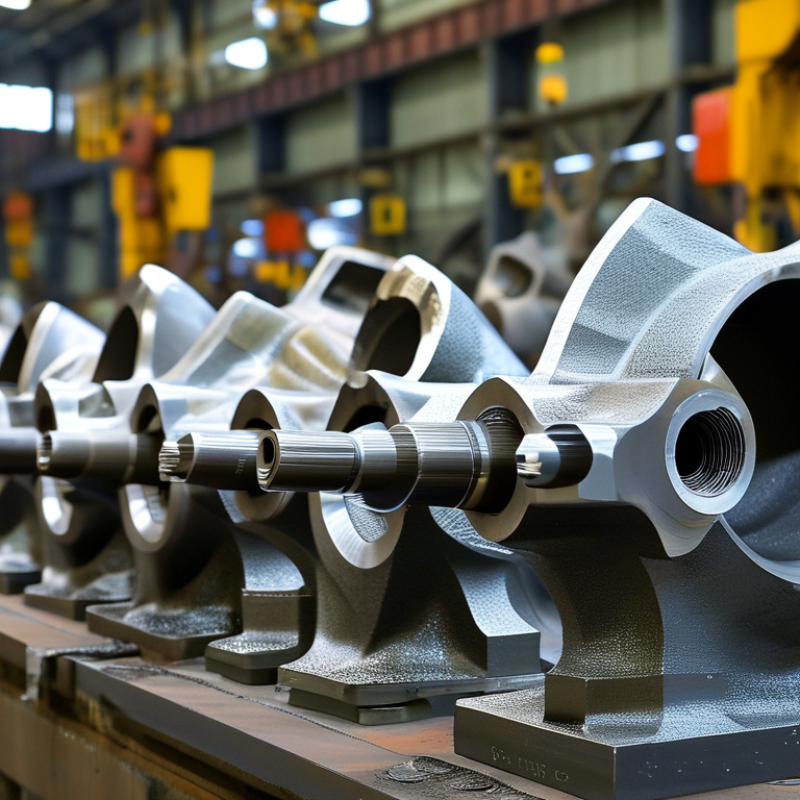
Metal forging is a manufacturing process that shapes heated or cold metal through controlled compressive force. Unlike casting, forging does not rely on liquid metal filling a mold. The process can improve grain flow, strength, and resistance to repeated loads. A forged component often begins as a billet, bar, or pre-cut slug. Its final performance depends on material selection, temperature control, tooling accuracy, and post-forging treatment.
Hot forging heats steel, aluminum, or other alloys above their forming temperature. Hydraulic presses and hammers then force the material into closed or open dies. The die closes. Heat matters. Warm and cold forging use lower temperatures, supporting tighter tolerances and cleaner surfaces. However, these methods require greater forming force.
Poor lubrication, uneven heating, or worn tooling can create laps, cracks, and dimensional problems. Experienced producers inspect grain structure, hardness, surface condition, and critical measurements rather than trusting appearance alone.
Forged parts serve demanding industries, including transportation, energy equipment, construction machinery, agriculture, and industrial automation.
Typical applications include shafts, connecting components, gears, hooks, flanges, and high-load fasteners. Global buyers should examine traceability records, process controls, testing methods, and realistic tolerance data. A supplier may present impressive samples, but production consistency matters more. Forging is powerful, not perfect. Design reviews sometimes reveal that a simpler geometry, different alloy, or extra machining allowance would reduce risk.cynnwys
Top 10 Metal Forging Manufacturers for Global Buyers
How to Evaluate Metal Forging Manufacturers for Global Purchasing
Global purchasing starts with evidence, not a polished website. The World Steel Association reports 1.88 billion tonnes of crude steel production in 2024. This scale makes material continuity a serious supplier-screening issue. Request heat numbers, mill certificates, and three-way traceability from billet to packed part. Verify chemistry independently. A missing record is not a minor gap.
Evaluate forging capability through real samples, not catalog photographs. Review press capacity, die design controls, heat-treatment curves, machining tolerances, and non-destructive testing methods. Ask for dimensional reports showing Cp and Cpk values where critical features matter. Factory audits should include furnace logs, calibration records, operator training, and corrective-action history. A perfect audit score is not proof. Production discipline can weaken after approval.
Environmental performance also deserves technical attention. The International Energy Agency estimates that steel production creates roughly 7–9% of global carbon dioxide emissions. Compare energy sources, scrap usage, emission records, and waste controls. Confirm whether the supplier can maintain quality during volume changes, raw-material shortages, or transport delays. Request a pilot order with defined acceptance criteria. Price matters, but an attractive quotation can conceal unstable tooling costs and unrealistic lead times. I would challenge my own assumptions here: one successful sample cannot represent a full production season.
Recommended evaluation weights for comparing metal forging suppliers in international purchasing.
Quality systems and process capability should receive the highest priority because forged components must consistently meet dimensional, mechanical, and traceability requirements. Buyers should also assess delivery capacity, export experience, tooling support, cost transparency, and communication before making a final decision.
The top ten metal forging manufacturers stand apart through measurable capabilities, not attractive catalogs. Their plants commonly handle carbon steel, stainless steel, aluminum, and nickel-based alloys. Some specialize in open-die work for shafts, rings, and pressure equipment. Others use closed-die presses for automotive, energy, and industrial components. Press capacities may range from several hundred tons to more than 10,000 tons. That difference matters.
A reliable manufacturer should show clear process control from billet heating to final inspection. Look for documented temperature records, die maintenance schedules, ultrasonic testing, and dimensional reports. Experienced engineering teams also review grain flow, machining allowance, fatigue demands, and material traceability. During supplier evaluations, I would request sample inspection reports and production photos. A polished website proves very little. Factory evidence matters more.
Market reach adds another layer. Strong exporters maintain regional logistics partners, multilingual technical support, and packaging suitable for long ocean shipments. They understand customs documents, agreed delivery terms, and destination standards without making careless promises. Some serve multiple continents, while others remain highly capable but regionally focused. Bigger is not always better. A smaller forge may offer faster engineering feedback and closer production attention. No ranking is perfect. Buyers should compare capacity, certifications, lead times, tooling ownership, and corrective-action records against the actual project risk.
Top 10 Metal Forging Manufacturers for Global Buyers
Quality Standards, Materials, and Production Technologies to Compare
A strong forging supplier should show more than a polished certificate. The ISO Survey 2023 recorded over 1.26 million ISO 9001 certificates worldwide. Yet certification alone cannot prove stable dies, accurate heat treatment, or reliable traceability. Buyers should request process maps, furnace calibration records, material certificates, and recent nonconformance data. Useful standards include ISO 9001, ISO 14001, and sector-specific specifications such as ASTM A182 for forged pressure components. Ask how each requirement is verified.
Material selection changes both performance and cost. Carbon steel suits many structural parts, while alloy steel supports higher loads and fatigue resistance. Stainless grades help resist corrosion, but they require tighter temperature control during forging. The World Steel Association reported global crude steel production of about 1.89 billion tonnes in 2023. That scale hides major differences in chemistry, cleanliness, and mill traceability. A supplier should identify the melt source and provide test results for tensile strength, hardness, impact energy, and grain flow.
Production technology deserves a physical review. Closed-die forging supports repeatable shapes; open-die forging fits large, simpler sections. Ring rolling can reduce material waste in circular components. Induction heating, automated press control, ultrasonic testing, and coordinate measuring machines improve consistency. Digital simulation may predict folding, underfill, and die wear before production begins. It is useful, but not infallible. A supplier may still discover defects during first-article inspection. That uncomfortable result can reveal whether its corrective-action system works.σ
| Benchmark Profile | Primary Forging Processes | Typical Part Weight | Common Materials | Applicable Material Standards | Typical Production Technology | Typical Dimensional Capability | Heat Treatment Capability | Quality and NDT Options | Best-Fit Applications |
|---|---|---|---|---|---|---|---|---|---|
| Profile 01 High-volume precision supplier | Closed-die forging; warm forging; precision coining | 0.05–25 kg | Carbon steel, alloy steel, stainless steel, aluminum alloys | ASTM, SAE, AISI, EN, ISO material specifications | Automated presses, robotic transfer, in-die process monitoring | Approximately ±0.10–0.50 mm after forging, depending on geometry | Annealing, normalizing, quenching and tempering, carburizing | Dimensional inspection, hardness testing, magnetic-particle testing, ultrasonic testing | Automotive, industrial equipment, power transmission |
| Profile 02 Heavy open-die supplier | Open-die forging; ring rolling; upset forging | 500 kg–120 tonnes | Carbon steel, low-alloy steel, stainless steel, nickel alloys, titanium | ASTM, ASME, EN, API, NORSOK specifications where applicable | Hydraulic presses, controlled reheating, computer-assisted forging reduction schedules | Approximately ±2–10 mm before machining, depending on size | Solution annealing, stress relieving, normalizing, quenching and tempering | 100% ultrasonic testing, magnetic-particle inspection, mechanical testing, macro-etch examination | Oil and gas, power generation, shipbuilding, large industrial machinery |
| Profile 03 Aerospace-grade specialist | Closed-die forging; isothermal forging; ring rolling | 0.5–1,000 kg | Titanium, nickel-based superalloys, aluminum alloys, high-strength steel | AMS, ASTM, EN, ISO and customer aerospace specifications | Controlled-atmosphere heating, digital die simulation, CNC finish machining | Approximately ±0.10–1.00 mm before final machining | Vacuum heat treatment, solution treatment, aging, quenching and stress relief | Ultrasonic, fluorescent penetrant, radiographic inspection, metallography, tensile and fatigue testing | Aerospace structures, aircraft engines, defense and high-performance systems |
| Profile 04 Stainless and corrosion-resistant specialist | Open-die forging; closed-die forging; ring rolling | 5–8,000 kg | Austenitic, martensitic and duplex stainless steels; nickel alloys | ASTM, ASME, EN, ISO and pressure-equipment material standards | Servo-hydraulic pressing, controlled forging temperatures, traceable heat lots | Approximately ±0.5–3.0 mm before machining | Solution annealing, water or polymer quenching, stabilization and stress relief | Positive material identification, ultrasonic testing, penetrant testing, corrosion and hardness testing | Chemical processing, valves, pumps, marine and food-processing equipment |
| Profile 05 Aluminum and light-alloy supplier | Closed-die forging; precision forging; ring rolling | 0.1–150 kg | Aluminum alloys, magnesium alloys, titanium alloys | ASTM, AMS, EN and aerospace or automotive alloy specifications | High-speed mechanical presses, automated trimming, 3D die development | Approximately ±0.10–0.75 mm before machining | Solution heat treatment, quenching, artificial aging and stress relieving | Dimensional scanning, conductivity testing, hardness testing, penetrant inspection | Automotive chassis, aerospace fittings, transportation and sporting equipment |
| Profile 06 Specialty nonferrous supplier | Hot forging; cold forging; warm forging | 0.01–20 kg | Copper alloys, brass, bronze, aluminum and nickel alloys | ASTM, EN, ISO and electrical or plumbing material specifications | Multi-station forging, induction heating, automated trimming and gauging | Approximately ±0.05–0.30 mm, depending on process and alloy | Stress relieving, annealing, solution treatment and aging where applicable | Electrical conductivity, hardness, dimensional inspection, surface and penetrant testing | Electrical hardware, connectors, plumbing, HVAC and consumer equipment |
| Profile 07 Automotive drivetrain supplier | Cold forging; warm forging; hot closed-die forging | 0.02–40 kg | Medium-carbon steel, microalloyed steel, alloy steel and stainless steel | SAE, ASTM, EN, ISO and automotive customer specifications | Transfer presses, controlled-atmosphere furnaces, automated shot blasting | Approximately ±0.05–0.40 mm before machining | Carburizing, carbonitriding, induction hardening, quenching and tempering | Statistical process control, hardness mapping, magnetic-particle testing, profile measurement | Gears, shafts, steering components, suspension and engine parts |
| Profile 08 Energy and pressure-equipment supplier | Open-die forging; ring rolling; closed-die forging | 10–60,000 kg | Low-alloy steel, stainless steel, creep-resistant steel, nickel alloys | ASTM, ASME, API, EN and pressure-equipment specifications | Large hydraulic presses, programmable furnaces, forging reduction tracking | Approximately ±1–6 mm before machining | Normalizing, tempering, quenching, post-weld heat treatment and solution annealing | Ultrasonic testing, radiography where specified, magnetic-particle testing, tensile and impact testing | Power plants, turbines, pressure vessels, valves and renewable-energy equipment |
| Profile 09 Rapid-development and low-volume supplier | Open-die forging; small-batch closed-die forging; upset forging | 0.5–2,500 kg | Carbon steel, alloy steel, stainless steel, aluminum and titanium | ASTM, SAE, EN, ISO and project-specific specifications | Flexible CNC tooling, simulation-supported die design, short-run production cells | Approximately ±0.5–4.0 mm before machining | Annealing, normalizing, quenching and tempering, solution treatment | Material certificates, dimensional reports, hardness testing, ultrasonic and magnetic-particle inspection | Prototypes, maintenance parts, industrial machinery and engineered-to-order components |
| Profile 10 Integrated forging and machining supplier | Hot forging; closed-die forging; ring rolling; finish machining | 0.1–10,000 kg | Carbon steel, alloy steel, stainless steel, aluminum, titanium and nickel alloys | ASTM, ASME, SAE, EN, ISO and customer-controlled specifications | CNC die manufacturing, robotic forging, 3D inspection, integrated machining cells | Approximately ±0.05–0.50 mm after machining; forging allowance varies by part | Normalizing, annealing, quenching and tempering, carburizing, solution treatment and aging | Coordinate measuring machines, ultrasonic testing, magnetic-particle testing, penetrant testing and metallography | Industrial automation, transportation, energy, construction and general engineering |
Global buyers should compare landed cost, not just the forging price. A quote may exclude tooling, heat treatment, inspection, packaging, freight, duties, and rework. Ask for a cost breakdown by operation. Small details matter. The World Bank’s 2023 Logistics Performance Index assessed 139 economies and showed major differences in shipment reliability. A lower unit price can lose its advantage after delays and emergency freight. I prefer suppliers that provide firm tooling ownership terms and realistic price-validity periods.
Delivery performance needs measurable evidence. Request monthly on-time delivery data, capacity plans, and a documented response process for late orders. A useful check is a pilot batch with agreed quantities, inspection points, and packaging photographs. The OECD’s 2023 supply-chain guidance supports risk-based supplier monitoring, not one-time qualification. A perfect spreadsheet can still hide weak shop-floor control. I have learned to verify production claims through sample records and video audits.
Compliance should include material heat numbers, test certificates, dimensional reports, and traceability from billet to shipment. More than 1.2 million ISO 9001 certificates were recorded globally in the ISO Survey 2022, but certification alone proves limited operational detail. Ask how nonconforming parts are isolated and corrected. Support also matters after delivery. Confirm response times, spare tooling access, engineering communication, and language coverage. These points feel routine, yet they often decide whether a small defect becomes a contained adjustment or a costly production stoppage.
© 2025 Grandmark International. All rights reserved.
© 2020 Grandmark. Grandmark International. All rights reserved. Proud shareholder of Temot International.