
grandmark logoGrandmark International
@alexaseleno
Skip to main content

Top 10 Bar Code Reader Suppliers for Global Buyers

Bar Code Reader technology remains a practical foundation for retail, logistics, manufacturing, and healthcare identification systems. Scanners capture product and shipment data within seconds. They also reduce manual entry errors at receiving docks, checkout counters, and production lines. Grand View Research estimated the global barcode scanner market at approximately USD 7.32 billion in 2023. Its report projects continued growth through 2030, supported by automation, traceability, and expanding warehouse operations. Market figures differ, however, because some studies include software, mobile computers, or RFID-related products.

Not every supplier serves the same operating environment. A supermarket may need compact omnidirectional scanning. A distribution center may require rugged devices, long-range reading, and dependable wireless integration. Manufacturing sites often prioritize resistance to dust, vibration, oil, and temperature changes. GS1 guidance also reinforces the importance of accurate barcode data for global supply-chain visibility. In practice, an impressive scan rate means little if the device fails beside a loading bay or cannot connect with existing systems.

This guide examines ten Bar Code Reader suppliers for global buyers. It considers product range, scanning performance, durability, connectivity, support, certifications, and regional availability. Public company information, technical documentation, and established industry research inform the comparison. No ranking is perfect. Supplier claims still require testing with real labels, lighting conditions, and workflows. Buyers should request samples and verify total ownership costs before committing. That step is often overlooked. It should not be.
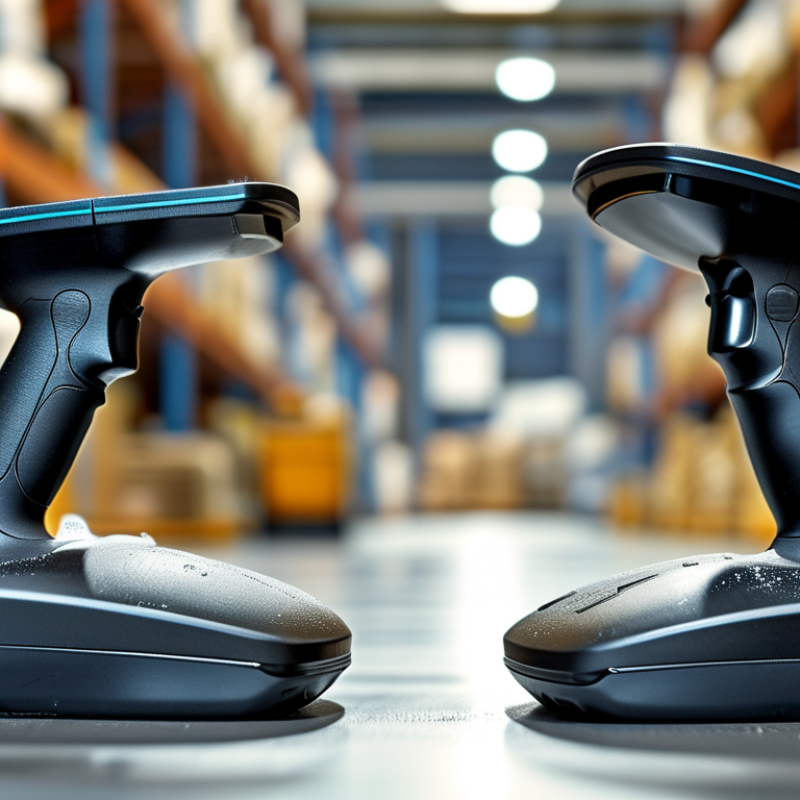
Top 10 Bar Code Reader Suppliers for Global Buyers

Barcode Reader Market Scope: 1D, 2D, and 2024 Global Adoption Trends

The barcode reader market now spans traditional 1D symbols and data-rich 2D codes. Global buyers should compare the top 10 suppliers by decoding accuracy, software support, durability, and regional service. GS1’s 2024 guidance supports the global transition toward 2D barcodes by 2027. These codes can store product identity, batch details, expiry dates, and traceability data in one symbol. Adoption is strongest in retail, logistics, healthcare, and manufacturing.

MarketsandMarkets’ 2024 barcode scanner analysis identifies rising demand for handheld, fixed-mount, and mobile scanning systems. The report links growth to automation, online fulfillment, and contactless workflows. VDC Research also highlights imaging technology as a key direction in automatic identification and data capture. Still, adoption is uneven. Some warehouses retain 1D systems because labels, software, and staff training remain costly to replace. A supplier’s published scan rate may also differ from real performance under glare, dust, motion, or damaged labels.

Tips: Test samples in the actual work area. Check 1D and 2D performance separately. Request evidence from low-light and high-speed trials. Confirm SDK compatibility before signing. GS1 compliance alone does not guarantee smooth integration. A useful evaluation should include total ownership cost, replacement cycles, warranty response, and cybersecurity controls. Rankings can guide research, but they cannot replace hands-on testing.

Top 10 Bar Code Reader Suppliers for Global Buyers - Barcode Reader Market Scope: 1D, 2D, and 2024 Global Adoption Trends

Market-scope comparison based on reader capability, barcode standards, application requirements, and documented global adoption signals. Company names and brand-level data are intentionally excluded.

No. Supplier Capability Segment Primary Barcode Scope Typical Reader Format Common Interfaces Typical Global Applications 2024 Market Signal Key Buying Criteria
1 Retail POS Scanning EAN-13, EAN-8, UPC-A, UPC-E, Code 128, emerging GS1 2D symbols Presentation and handheld imagers USB, RS-232, Ethernet, Bluetooth Supermarkets, convenience stores, pharmacies, specialty retail Retailers are evaluating 2D-capable scanners ahead of GS1 Sunrise 2027 objectives. High first-pass read rate, omnidirectional scanning, POS compatibility
2 Mobile Computer Scanning 1D and 2D symbols, including QR Code and Data Matrix Integrated handheld or wearable imager Wi-Fi, Bluetooth, USB-C, cellular networks Warehousing, delivery, field service, inventory counting Demand is linked to warehouse digitization and real-time inventory visibility. Battery life, ergonomics, ruggedness, operating-system support
3 Industrial Fixed-Mount Reading Code 128, Code 39, Data Matrix, QR Code, PDF417 Fixed industrial camera reader Ethernet/IP, PROFINET, TCP/IP, serial I/O Automotive, electronics, packaging, manufacturing lines Automation projects increasingly require traceability at line speed. Throughput, lighting control, motion tolerance, industrial protocols
4 Logistics and Parcel Identification ITF-14, GS1-128, Code 128, Data Matrix, QR Code Long-range handheld or tunnel scanner Ethernet, Wi-Fi, Bluetooth, industrial I/O Distribution centers, courier networks, freight handling, cross-docking E-commerce growth supports higher requirements for automated parcel sortation. Long reading distance, damaged-label performance, high scan volume
5 Healthcare Identification GS1 DataMatrix, Code 128, EAN/UPC, HIBC formats Disinfectant-ready handheld or corded imager USB, RS-232, Bluetooth, Wi-Fi Patient identification, medication administration, medical devices, specimens UDI requirements continue to support 2D barcode use in regulated healthcare workflows. Disinfectant resistance, data accuracy, privacy controls, UDI support
6 Food and Fresh-Product Traceability EAN-13, UPC, GS1-128, GS1 DataMatrix, QR Code Handheld and fixed-mount 2D imager USB, Ethernet, Wi-Fi, Bluetooth Food production, cold chain, grocery distribution, recall management More organizations are assessing 2D codes for batch, lot, expiry, and traceability data. Low-temperature operation, condensation tolerance, hygiene requirements
7 Manufacturing Work-in-Process Data Matrix, QR Code, Code 39, Code 128 Rugged handheld or fixed camera reader Ethernet/IP, PROFINET, USB, serial Component tracking, assembly verification, quality inspection Direct-part marking and serialized traceability remain important for complex production. DPM decoding, glare handling, vibration resistance, integration APIs
8 Government and Identity Documents PDF417, QR Code, Data Matrix, Code 128, machine-readable zones Document scanner or high-resolution imager USB, Ethernet, Bluetooth Border control, public administration, transport tickets, visitor management Digital tickets and mobile credentials continue to increase 2D scanning demand. OCR capability, security features, fast decoding, data protection
9 Digital Engagement and Payments QR Code, Micro QR Code, Aztec, Data Matrix Wide-angle 2D imager USB, Bluetooth, Wi-Fi, mobile application SDK Mobile ordering, ticketing, loyalty programs, payment acceptance QR-based mobile interactions remain widely used across retail, hospitality, and transport. Screen readability, anti-glare performance, privacy, software integration
10 Track-and-Trace and Circular Economy QR Code, Data Matrix, GS1 Digital Link-enabled 2D symbols Handheld, mobile, or fixed industrial imager Bluetooth, Wi-Fi, USB, cloud-connected APIs Product authentication, repair records, recycling, asset lifecycle management Product-level data requirements are encouraging pilots involving connected 2D identifiers. Data capacity, cloud connectivity, lifecycle software, standards compliance
Technical note: 1D symbols generally encode linear identification data, while 2D symbols can store substantially more data in a compact area and support applications such as batch, lot, expiry, serialisation, and web-linked product information. Market direction is summarized from publicly documented standards and industry initiatives rather than company market-share claims.
Reference framework: GS1 General Specifications; GS1 Sunrise 2027 initiative; ISO/IEC 15415 and ISO/IEC 15416 barcode quality standards; ISO/IEC 18004 QR Code standard; ISO/IEC 16022 Data Matrix standard; applicable UDI and product-traceability regulations.

Core Technologies: Laser, CCD, Imager, and DPM Scanning Standards

Top 10 Bar Code Reader Suppliers for Global Buyers

Core Technologies: Laser, CCD, Imager, and DPM Scanning Standards

Choosing a bar code reader supplier starts with the scanning task, not the catalog. Laser readers suit clear one-dimensional codes on stable surfaces. They are fast, simple, and often economical. However, they struggle with damaged bars, curved packages, and two-dimensional symbols. CCD readers capture reflected light across a line. They can read high-quality labels reliably, but they need suitable contrast and alignment.

Imagers use cameras and decoding software to read 1D and 2D symbols from different angles. They perform well in warehouses, production lines, and mobile inspection stations. Image quality depends on resolution, focus, exposure, and lighting. A glossy label may appear readable to the eye yet fail under harsh illumination. Small details matter.

Direct Part Marking requires more discipline. DPM symbols may be dot-peened, laser-etched, or molded into metal and plastic. Buyers should ask suppliers about ISO/IEC TR 29158 testing, lighting methods, grading evidence, and performance on low-contrast surfaces.

ISO/IEC 15415 generally supports two-dimensional symbol evaluation, while ISO/IEC 15416 applies to many linear symbols. Decoding is not the same as verification.

I have seen readers pass sample tests and fail after dust, vibration, or surface changes. That weakness deserves honest testing. Supplier support, replacement availability, software integration, and documented operating limits also influence global purchasing decisions. No reader wins every surface.

Supplier Evaluation: ISO/IEC 15415, GS1, IP Ratings, and Read-Rate Data

Choosing among the top ten barcode reader suppliers requires more than comparing scan speed. ISO/IEC 15415 grades 2D symbols from A to F, using measured parameters such as contrast, modulation, and decoding performance. A grade A symbol scores 3.5 or higher; grade F falls below 0.5. Suppliers should provide verification reports, not only laboratory photographs. Ask for results on your actual labels, including glossy film, curved cartons, and low-contrast printing.

GS1 General Specifications define data structures, quiet zones, and application rules for identifiers such as GTIN and GS1 DataMatrix. These details affect decoding reliability. A reader that handles one symbol perfectly may struggle with a smaller symbol beside a damaged seal. Read-rate evidence should show sample size, lighting, distance, angle, and failure count. For example, 9,950 successful scans from 10,000 attempts equals a 99.5% read rate. Without test conditions, that number says little. It sounds impressive, though.

Environmental claims need equal scrutiny. IEC 60529 defines IP ratings; IP65 indicates dust-tight protection and resistance to water jets. It does not guarantee chemical resistance, washdown durability, or performance under condensation. Ask suppliers for test reports, operating-temperature limits, and service records from comparable production lines. AIM Global quality guidance can support verification planning, while GS1 documentation confirms data compliance. My own evaluation mistake would be trusting a single peak read-rate figure. Real conveyors are messier. Suppliers should admit that.

Top 10 Bar Code Reader Suppliers for Global Buyers

Supplier Evaluation: ISO/IEC 15415, GS1, IP Ratings, and Read-Rate Data

This supplier-neutral checklist separates requirements defined by international standards from factors that must be validated in the buyer’s own application. ISO/IEC 15415 grades, GS1 data rules, and IP protection levels are standardized; read rate, decode time, motion tolerance, and wavelength compatibility require application-specific testing.

Top 10 Global Suppliers Compared by Product Range, Regions, and Industries

Top 10 Bar Code Reader Suppliers for Global Buyers

The ten leading suppliers differ sharply in product range, regional coverage, and industry focus. Most offer handheld, fixed-mount, presentation, and mobile readers. Stronger portfolios also include direct-part-marking models, image-based scanners, stands, cables, and integration software. Buyers should check scan speed, reading distance, lighting tolerance, and connection options before comparing prices.

Regional strength is not evenly distributed. Some suppliers support North American warehouses and retail chains, while others maintain deeper service networks across Europe or Asia-Pacific. A smaller group serves Latin America, the Middle East, and Africa through local distributors. This matters when installation support, replacement parts, or technical training are needed. Delivery may look simple, but regional stock can change the real purchasing cost.

Industry suitability also separates the ten suppliers. Retail operations often prefer presentation scanners with fast checkout performance. Logistics teams usually need rugged handheld units for damaged labels and long shifts. Manufacturing sites may require fixed readers for conveyor lines and marked components. Healthcare buyers often prioritize cleanable surfaces, accurate imaging, and dependable software integration. Food processing needs similar durability, but moisture and frequent cleaning can expose weak designs. I have found that product brochures rarely show these conditions clearly. A reader can perform well in a showroom and struggle under glare, dust, or poor label contrast. Testing sample units in the target environment remains the most reliable comparison.

Buyer Selection Guide: Speed, Interface, Durability, Compliance, and Total Cost

Top 10 Bar Code Reader Suppliers for Global Buyers

Selecting a bar code reader supplier requires more than comparing scanning speed. In warehouse trials, a fast reader can still fail when labels are scratched, curved, or poorly printed. Test the device with your actual labels, conveyor distance, lighting, and daily scan volume. A useful benchmark includes first-pass accuracy, recovery time, and operator comfort. Very fast is not always better.

Interface choice affects installation and future maintenance. USB suits simple workstations, while RS-232, Ethernet, and wireless connections support different production layouts. Confirm compatibility with your ERP, WMS, POS, or traceability software before purchasing. Ask for documented protocols, configuration tools, firmware policies, and technical support response times. Small details matter.

Durability should match the workplace, not the brochure. Check drop resistance, sealing ratings, temperature limits, cable strength, and trigger life. Compliance documents should be current and relevant to your destination markets. Request test reports, safety declarations, and material information from the supplier. Total cost includes scanners, cables, stands, batteries, training, repairs, integration, and downtime. I have seen buyers save on hardware, then lose money through frequent replacements. My own checklist is useful, but imperfect; field testing still exposes problems that specifications miss.