
China’s automotive glass industry has become a serious sourcing destination for global buyers. Large producers supply windshields, side windows, rear glass, sunroofs, and laminated products for passenger and commercial vehicles. However, choosing a manufacturer requires more than comparing prices or factory size.
Cao Dewang, founder of Fuyao Glass, has often described automotive glass as “the eye of the car.” The phrase is simple. Its meaning is not. Glass affects visibility, cabin safety, acoustic comfort, heat control, and advanced driver-assistance systems. A windshield with slight optical distortion can become a practical problem on a rainy highway. A replacement windshield may also require accurate camera calibration after installation.
This guide examines China’s top automotive glass manufacturers through a buyer-focused lens. It considers production capacity, product range, quality systems, export experience, research investment, and support for OEM and aftermarket customers. Important details include edge quality, glass thickness, interlayer performance, printing accuracy, packaging strength, and traceability. Certifications matter, but paperwork alone does not prove consistent production.
No ranking is perfect.
Factory visits, sample testing, and independent verification remain valuable. A polished showroom may not reveal packaging weaknesses or delayed technical support. Buyers should request inspection records, test reports, warranty terms, and clear communication procedures. They should also confirm whether products meet the destination market’s applicable safety requirements.
China offers strong manufacturing depth, yet supplier selection still demands careful judgment. The best partner is not always the largest producer. It is the company that combines dependable automotive glass, transparent evidence, responsive engineering, and realistic delivery performance.
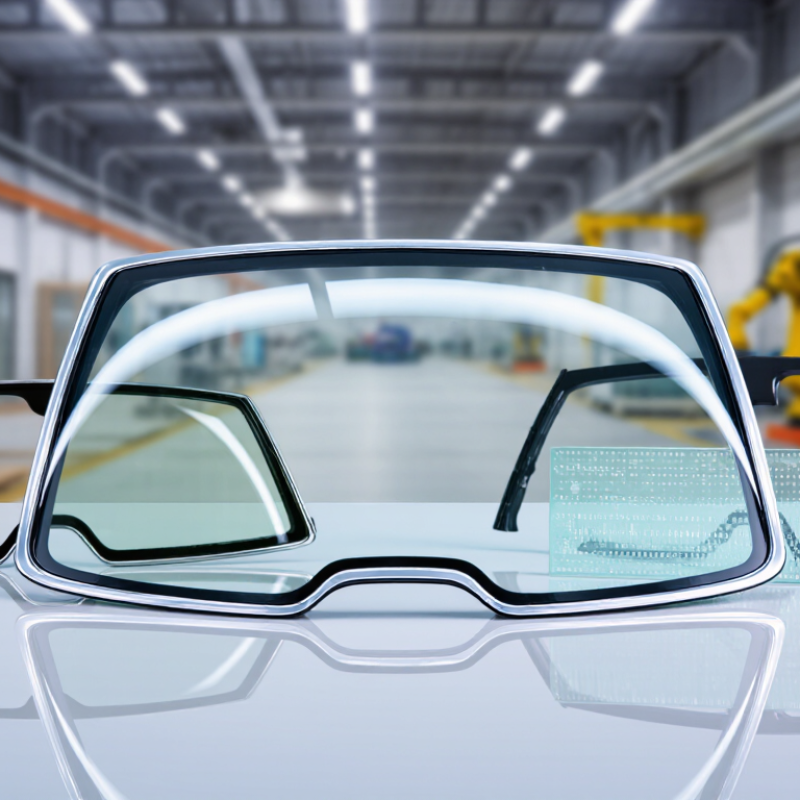
China’s automotive glass manufacturing landscape serves a wide range of global buyers, from vehicle producers to replacement-parts distributors. Manufacturers often operate large, specialized lines for windshields, side windows, and rear glass. Many facilities combine cutting, bending, lamination, coating, and inspection in one production flow. This integration can shorten lead times and reduce handling risks.
Quality control usually begins with flat glass inspection. Operators check bubbles, scratches, edge damage, and optical distortion before processing. Laminated windshields require accurate film placement, controlled heating, and clean-room discipline. Tempered glass needs careful heat treatment and fragmentation testing. Some suppliers also verify light transmission, moisture resistance, acoustic performance, and compatibility with vehicle sensors.
Global buyers should examine more than catalog prices. Ask for production records, test reports, traceability procedures, and sample approval controls. Confirm whether the factory can maintain thickness, curvature, tint, and mounting accuracy across repeated batches. Export packaging deserves attention too; a strong crate cannot fully protect poorly separated glass. No factory is flawless. Even a capable supplier may struggle during tooling changes, peak seasons, or material shortages. I would request a small pilot order and inspect it under real installation conditions. That step often reveals problems that certificates do not show. Clear communication about drawings, tolerances, labeling, and delivery schedules remains essential for dependable cooperation.

Chinese automotive glass manufacturers supply several product types for passenger cars, commercial vehicles, and specialty fleets. Laminated windshields use two glass layers with a polymer interlayer, helping retain fragments after impact and reducing road noise. Tempered side and rear windows are heat-treated for strength and controlled breakage. Some factories also produce panoramic roofs, quarter glass, and bonded backlights in customized shapes.
Technology choices now extend beyond basic safety glass. Solar-control coatings can reduce infrared heat entering the cabin, while acoustic interlayers target low-frequency traffic noise. Ceramic frit printing creates black borders for bonding and protects adhesive areas from ultraviolet exposure. For vehicles with head-up displays, manufacturers may control glass curvature and optical distortion more tightly. Some facilities also prepare glass for cameras and sensing systems used in driver-assistance functions.
Quality depends on more than equipment. Experienced suppliers inspect surface defects, optical distortion, dimensions, bending accuracy, and adhesive compatibility. They may use automated vision systems, heat-soak testing, impact testing, and traceable batch records. Certification practices vary by market, so buyers should verify testing against the destination country’s requirements.
A sample may pass visual inspection yet perform poorly after installation. This is an easy detail to overlook. Clear drawings, packaging trials, and installation feedback often prevent expensive revisions, especially for curved roofs and large windshields.
China has a broad automotive glass manufacturing base, but supplier selection requires more than comparing quotations. Experienced buyers inspect production lines, furnace records, and quality-control procedures before placing large orders. Ask for evidence of compliance with relevant automotive glass standards, including test reports from qualified laboratories. Check whether the reports match the exact glass type, thickness, coating, and curvature you plan to purchase.
A reliable supplier should provide clear drawings, tolerance data, packing specifications, and batch traceability. During evaluation, request samples made with the same process used for mass production. Examine edge finishing, optical distortion, heating elements, and connector placement under practical conditions. Video calls can help, but an independent factory audit gives stronger evidence. Communication also matters. Delayed answers about defects may reveal weak internal control. Still, no evaluation method is perfect. A polished showroom can hide inconsistent production, and a low price may reflect missing inspection steps.
Tips: Compare at least three suppliers using the same technical checklist. Ask how they handle cracked panels, incorrect dimensions, and transport damage. Review corrective-action records, not only product photos. Confirm lead times in writing, including tooling and sample approval. Keep one approved reference sample for future batch checks. If possible, test installation fit with your own vehicle components. Small gaps often appear there. Suppliers should explain changes in glass composition, equipment, or subcontracting before shipment. A practical scorecard covering quality, documentation, capacity, communication, and after-sales support makes decisions more consistent.
| Evaluation Dimension | Relevant Industry Reference | Typical Data or Benchmark | What Global Buyers Should Verify |
|---|---|---|---|
| Product Categories | Automotive safety glass | Laminated windshields; tempered side, quarter and rear windows; encapsulated or acoustic glass for selected vehicle applications. | Confirm whether the supplier produces the required glass type, vehicle position, curvature, tint, ceramic frit and integrated features. |
| Glass Thickness | Automotive design specification | Common finished thicknesses are approximately 3.0–6.0 mm, depending on vehicle location, construction and design requirements. | Request approved drawings and tolerance data rather than selecting solely by nominal thickness. |
| Safety Standards | Market-specific regulations | ECE R43 is widely used for many international markets; FMVSS 205 applies to glazing materials and related marking requirements in the United States; GB 9656 applies to automotive safety glass in China. | Check the exact certificate scope, product family, test reports, approval markings and validity for the destination market. |
| Windshield Construction | Laminated safety glass | Typically consists of two glass plies bonded with a polymer interlayer such as PVB; acoustic and solar-control interlayers may be available. | Verify interlayer type, optical quality, edge quality, delamination resistance and compatibility with cameras, sensors and heating elements. |
| Tempered Glass Performance | Heat-treated safety glazing | Tempered glass is designed to break into small, relatively blunt particles when fractured, subject to the applicable regulation and test method. | Review fragmentation test results, thermal-strengthening records, surface defects and compliance with the destination-market standard. |
| Optical Quality | Driver visibility and ADAS compatibility | Key checks include visual distortion, waviness, bubbles, inclusions, haze and light transmission; requirements vary by product and regulation. | Ask for inspection methods, acceptance limits, measurement equipment and samples from actual production rather than laboratory-only samples. |
| Vehicle Fit and Tolerance | Dimensional and assembly accuracy | Important parameters include outside dimensions, curvature, hole position, edge profile, frit location and mounting tolerances. | Require 2D drawings, 3D data where applicable, first-article inspection records and trial-installation results. |
| Functional Integration | Vehicle electronics and comfort features | Possible features include rain and light sensor brackets, camera windows, antenna, heating wires, solar-control coating and acoustic interlayers. | Confirm electrical resistance, heating uniformity, sensor alignment, coating durability and compatibility with the vehicle installation process. |
| Quality Management | Automotive manufacturing controls | An automotive-focused quality system commonly includes documented process control, traceability, corrective action and inspection records; IATF 16949 certification is a significant qualification for many OEM supply chains. | Validate certificate authenticity, certification scope, audit history, batch traceability and the supplier’s nonconformance response process. |
| Testing Capability | Laboratory and production testing | Useful capabilities include optical inspection, impact testing, fragmentation testing, climatic aging, adhesion evaluation and dimensional inspection. | Determine which tests are performed in-house, which are outsourced, how equipment is calibrated and whether reports are linked to the shipped batch. |
| Customization and Tooling | Low-volume and replacement-market flexibility | Custom work may involve molds, bending tools, silk-screen patterns, brackets, clips and vehicle-specific packaging. | Clarify tooling ownership, revision control, mold maintenance, minimum order quantity and sample approval procedure. |
| Packaging and Logistics | Export damage prevention | Automotive glass is commonly shipped in reinforced crates or returnable racks with separators, edge protection and moisture-control measures where needed. | Review packaging drawings, loading photos, drop or vibration test evidence, container utilization and damage-claim procedures. |
| Commercial Evaluation | Total landed cost | The total cost may include glass, tooling, packaging, inspection, freight, insurance, duties, taxes, replacement units and warranty handling. | Compare suppliers using the same Incoterm, specification, packing method, order quantity, payment terms and warranty conditions. |
Global buyers should assess automotive glass manufacturers through verified systems, not attractive catalog claims. OICA reported 93.5 million vehicles produced worldwide in 2023. This scale increases demand for stable glass quality and dependable export control. A capable factory should provide batch records, furnace parameters, inspection images, and traceable production codes. Small details matter.
Quality evaluation should include compliance with UNECE R43, FMVSS 205, or equivalent national requirements. Laminated and tempered glass need different impact and fragmentation tests. ISO 9001 certification supports process control, while IATF 16949 indicates stronger automotive quality management. The ISO Survey 2023 recorded 1,265,216 ISO 9001 certificates globally, so certification alone cannot prove manufacturing competence. Buyers should verify the certificate scope and issuing body. A copied PDF is not evidence.
Export readiness appears in practical work. Check whether the supplier can manage wooden crates, moisture protection, container loading, and replacement claims. Ask for recent test reports, third-party inspection results, and customs documentation samples. Product markings should remain readable after transport. I would also inspect a random shipment, not only polished samples. Mistakes happen. Even experienced factories may show uneven edge finishing or delayed corrective actions. That weakness deserves discussion before a long-term contract. Clear approval criteria, retained samples, and periodic audits make international sourcing more reliable.
China Top Automotive Glass Manufacturers for Global Buyers?
A Step-by-Step Process for Selecting the Right Manufacturer
Selecting an automotive glass manufacturer requires more than comparing price lists. Begin by defining your vehicle models, glass dimensions, thickness, tint, acoustic needs, and annual volume. Request technical drawings and production samples. Check whether the supplier can reproduce the same curvature, edge finish, and attachment points. Small differences can cause installation delays.
Ask for evidence of quality control, not attractive claims. Review material certificates, inspection records, impact-test procedures, and traceability systems. A reliable factory should explain how it controls heating, shaping, lamination, and final inspection. Inspect packaging details too. Corner protectors, separators, and moisture control matter during long-distance shipping. If possible, arrange a video audit or an independent factory inspection. Photos are useful, but they can hide weak processes.
Compare quotations line by line. Include tooling, sample costs, packaging, delivery terms, warranty conditions, and replacement procedures. Confirm production capacity during peak seasons. Ask how defects are recorded and resolved. In one practical sourcing review, the cheapest offer lacked clear tooling ownership, creating avoidable uncertainty. That was not a dramatic failure, but it changed the decision. I would also test communication speed. A technically capable supplier may still struggle with unclear drawings or delayed updates. Request a pilot order before signing a large contract. Measure fit, optical clarity, surface quality, labeling, and carton condition. Keep written records at every stage.
This buyer scorecard uses a 100-point evaluation framework rather than company or brand data. Prioritize verified automotive safety compliance, consistent quality systems, OEM or replacement-glass production capability, export logistics, and technical support before comparing quotations. Confirm applicable requirements such as UN/ECE R43, FMVSS 205, or China GB 9656 according to the destination market and vehicle application.
© 2025 Grandmark International. All rights reserved.
© 2020 Grandmark. Grandmark International. All rights reserved. Proud shareholder of Temot International.