7 Best Inverter Outlet Suppliers for Global Buyers
Choosing the right Inverter Outlet supplier requires more than comparing catalog prices. Global buyers need dependable electrical performance, transparent documentation, and consistent delivery across borders. A supplier may offer an attractive unit, yet weak testing records can create serious installation problems later.
Power-electronics consultant Dr. Samir Patel notes, “An inverter outlet is only as dependable as its weakest connection.” This practical view shapes our evaluation of the seven leading suppliers. We examine voltage compatibility, continuous load ratings, surge protection, socket standards, certifications, warranty coverage, and after-sales support. We also consider factory experience, sample quality, minimum order quantities, and the supplier’s ability to handle private-label or project-based requirements.
Small details matter. A clear wiring diagram saves time during installation. A firm terminal reduces heat at the connection point. Responsive technical support can prevent a costly shipment delay. Some suppliers appear strong online but provide limited evidence of testing or production capacity. That deserves careful attention.
This guide is not a perfect ranking. Buyer priorities differ, and regional standards can change the final choice. A residential installer may value compact design, while a commercial distributor may require stable monthly output. We therefore compare each Inverter Outlet supplier through a practical, evidence-based lens. The goal is simple: help global buyers identify reliable partners, reduce avoidable risk, and choose products suited to real operating conditions. Test reports, product samples, and direct communication should still influence the final decision.
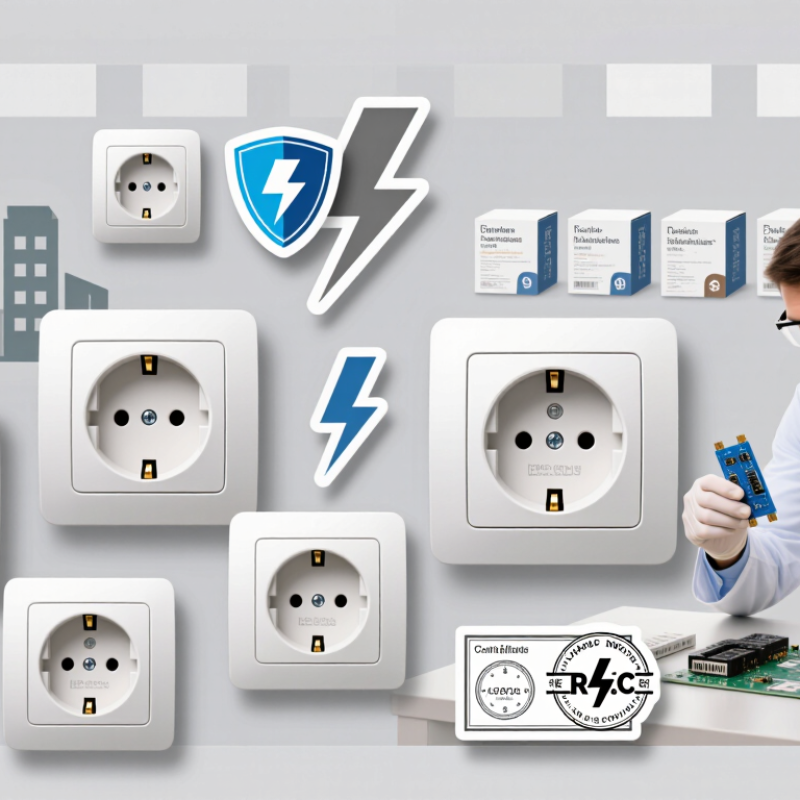
Understanding Inverter Outlets and Global Sourcing Requirements
7 Best Inverter Outlet Suppliers for Global Buyers
Understanding Inverter Outlets and Global Sourcing Requirements
An inverter outlet is an AC receptacle powered by a battery inverter or solar system. It must match the inverter’s voltage, frequency, waveform, and continuous output. A 1,500-watt inverter may run a lamp and laptop, but not a heating appliance safely. Small details matter.
Global demand is expanding. IRENA’s Renewable Capacity Statistics 2024 recorded 473 GW of renewable capacity added in 2023, representing 86% of total new power capacity. IEA PVPS also reported more than 400 GW of solar photovoltaic additions that year. These figures increase demand for dependable outlets, connectors, and compact power interfaces. Buyers should request electrical test reports, temperature-rise data, grounding details, and clear surge ratings. “Universal” is often too vague.
Regional sourcing requires careful verification. Check plug geometry, 100–240 V compatibility, 50 or 60 Hz operation, insulation ratings, and local conformity documentation. For humid sites, an appropriate ingress-protection rating is essential. Ask suppliers for batch traceability, factory audit records, packaging drop tests, and samples from current production. IEC-based testing can improve confidence, but it does not automatically satisfy every market’s rules. Some supplier claims still need independent confirmation. I would also compare minimum order quantities, replacement procedures, lead times, and port-ready packaging. A low unit price can become expensive after failures, returns, or redesigns.
Seven Leading Inverter Outlet Suppliers for Global Buyers
Seven Leading Inverter Outlet Suppliers for Global Buyers
Global inverter demand is rising with solar deployment, storage projects, and unstable grid conditions. IRENA’s Renewable Capacity Statistics 2024 reports 473 GW of renewable capacity added worldwide in 2023. Solar contributed about 346 GW. This expansion increases pressure on inverter outlet suppliers to provide verified equipment, clear specifications, and dependable support.
Experienced buyers should compare more than unit prices. Check conversion efficiency, MPPT voltage range, surge tolerance, IP protection, and operating temperature. Ask suppliers for IEC 62109 safety documentation and tested warranty procedures.
IEA PVPS Trends 2024 shows global photovoltaic capacity passed 1.6 TW by the end of 2023. That scale makes traceable quality control increasingly important. A supplier with regional inventory can reduce delays when a replacement inverter is needed.
Seven leading inverter outlet suppliers for global buyers should also explain compatibility clearly.
Product pages need wiring diagrams, grid requirements, communication protocols, and realistic delivery dates. Small details matter. A missing connector can stop installation.
Buyers should request sample units before larger orders, especially for unfamiliar markets. Low prices remain attractive, but they may hide weaker documentation or limited after-sales service.
No shortlist is perfect. Climate, installer skill, and local certification rules can change the best choice. Suppliers that share test records and respond with technical evidence deserve closer review.
Comparing Product Quality, Certifications, Pricing, and Delivery
7 Best Inverter Outlet Suppliers for Global Buyers
Global demand for inverter-linked electrical equipment is expanding rapidly. The IEA PVPS Trends 2024 report recorded about 456 GW of new solar capacity in 2023. This growth increases pressure on outlet suppliers to prove quality, safety, and delivery consistency. For a seven-supplier shortlist, buyers should request IEC 60884-1 test evidence for socket outlets and IEC 62109 compliance for inverter-related safety. Regional approvals may also include CE, UKCA, UL, or equivalent marks. Certification alone is not enough. Factory audit records, batch traceability, and independent laboratory reports provide stronger evidence.
Pricing requires more than comparing unit quotations. Copper content, surge protection, enclosure material, packaging, minimum order quantity, and warranty terms can change the landed cost considerably. A low offer may exclude testing or export packaging. The World Bank’s Logistics Performance Index shows that customs efficiency and shipment reliability vary widely between markets. Ask suppliers for production lead times, inspection points, shipping options, and recent on-time delivery data. A practical benchmark is to compare total cost across three order sizes, not one sample order. My own caution: sample performance can look excellent, while larger batches reveal uneven terminal tightening or molding defects.
Tips: Test at least three production samples before approval. Photograph labels and wiring points. Confirm whether certificates match the exact model. Use a pre-shipment inspection for large orders. Keep a small time buffer, because “ready to ship” can sometimes mean unfinished documentation.
How to Select the Right Supplier for Your Target Market
Choosing among inverter outlet suppliers requires more than comparing unit prices. Your target market determines the correct voltage, frequency, socket design, and safety requirements. A supplier experienced with your destination market should provide clear test reports, material specifications, and compliance documents. Ask whether these documents apply to the exact model, not a similar product.
Request samples before placing a large order. Check outlet alignment, switch movement, heat resistance, and connection stability. Test the inverter outlet under realistic loads, including repeated switching and longer operating periods. Review production capacity, minimum order quantities, lead times, packaging, and replacement policies. A reliable supplier communicates problems early. That matters when shipping schedules are tight.
Tips: Build a small comparison sheet. Record certification scope, sample results, response time, warranty terms, and landed cost. Ask for a factory video or arrange an independent inspection when possible. Do not trust polished photos alone. In practice, the cheapest offer may create higher costs through defects, customs delays, or unsuitable specifications. I have learned that supplier selection is rarely perfect on the first attempt. Leave room for testing, negotiation, and one uncomfortable question: what happens if the product fails in the field?