
Choosing a dependable Phase Lack Chrome Rectifier manufacturer requires more than comparing prices or advertised output ratings. These systems influence plating consistency, energy use, production speed, and equipment safety. A stable rectifier should deliver controlled current, accurate voltage adjustment, efficient cooling, and dependable protection against overloads. Small details matter. Clean cabinet wiring, accessible components, and clear digital readings can reduce downtime during demanding plating cycles.
This guide examines leading Phase Lack Chrome Rectifier manufacturers worldwide through practical and technical criteria. The comparison considers manufacturing experience, transformer quality, control-system design, service responsiveness, customization capability, and evidence from industrial applications. It also reviews documentation, testing procedures, warranty terms, and compliance with relevant safety and environmental requirements. Manufacturers with transparent specifications usually inspire greater confidence than companies relying on broad marketing claims.
Real operating conditions can reveal differences that brochures overlook. A unit running beside a hot plating tank may need stronger ventilation and better thermal protection. A factory with unstable power may require additional control safeguards. These factors deserve careful attention. No ranking is perfect, because application needs vary between workshops, automated lines, and large production plants. Some available information may also be incomplete or difficult to verify. Readers should confirm technical data directly with suppliers before purchasing.
The goal is practical guidance. By focusing on measurable performance, verified experience, and responsive support, buyers can narrow the field with greater confidence. A suitable manufacturer should not only sell equipment. It should understand the process behind every ampere, connection, and finished chrome surface.
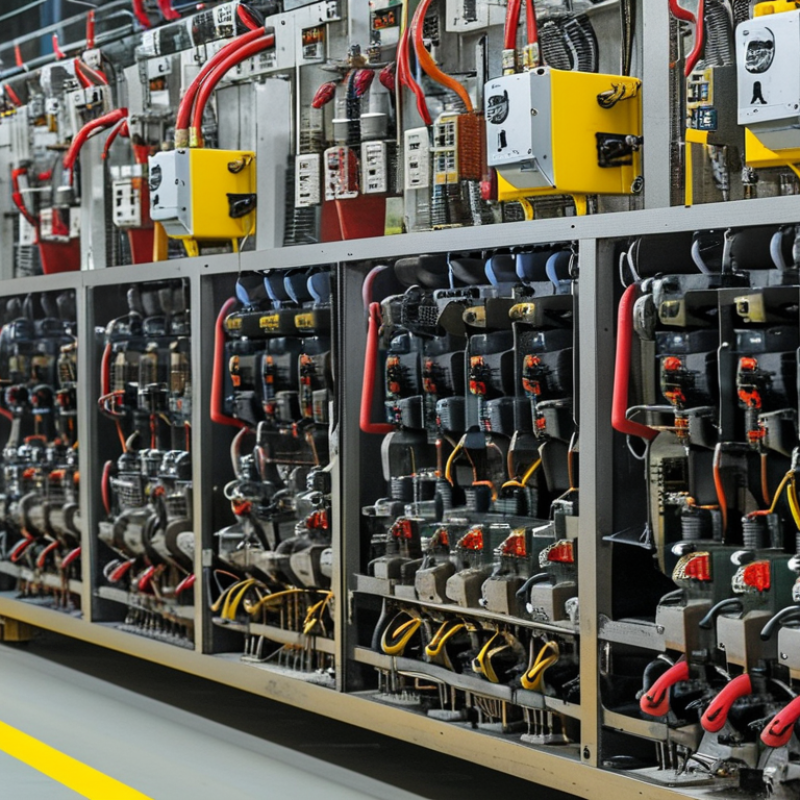
In industrial plating, a phase-lack chrome rectifier usually means a rectifier with phase-loss protection. It supplies controlled direct current for hard chrome or decorative chrome electroplating. The name can mislead. It does not mean the machine intentionally operates without a phase.
Most units receive three-phase alternating current. Diodes or thyristors convert it into direct current, while control circuits adjust voltage and amperage. The workpiece acts as the cathode, and the anode completes the electrical path through the chrome electrolyte. A stable current helps produce consistent coating thickness, color, and adhesion.
If one input phase disappears, the rectifier may continue operating unevenly. Output ripple can increase, and internal components may heat rapidly. The plating surface can show dull areas, burning, or uneven deposits. Good protection systems detect phase loss and reduce output or stop the unit. Technicians should still verify incoming voltage with a meter, inspect fuses, and check terminal temperature. Do not rely only on the alarm.
Real workshops reveal a small weakness in many specifications. “Phase-lack protection” does not guarantee perfect plating. Bath temperature, anode spacing, cable resistance, and poor electrical contacts also affect results. A rectifier may be correctly designed yet poorly maintained. Testing under the actual load matters more than reading an unloaded display.
In a six-pulse three-phase chrome-plating rectifier, losing one phase reduces the average DC output and changes the ripple from six pulses per cycle to two. The values below are calculated for a 400 V line-to-line, 50 Hz supply with a 1.1 V forward drop per diode.
A healthy six-pulse bridge produces approximately 537.8 V DC and 300 Hz ripple. With one phase unavailable, the bridge behaves as a single-phase full-wave rectifier, producing approximately 357.8 V DC and 100 Hz ripple. Actual values vary with transformer impedance, load current, and diode characteristics.
When evaluating chrome rectifier manufacturers, start with measurable output performance. Industrial plating lines commonly require stable DC power from 6 to 24 volts, with current capacity extending from hundreds to several thousand amperes. The selected unit should specify continuous, not only peak, current. Ripple below 5% is often preferred for uniform deposits, although the ideal value depends on bath chemistry and workpiece geometry. A low ripple number alone can mislead.
The Grand View Research Electroplating Market report valued the global market at approximately USD 19 billion in 2023 and forecast continued growth through 2030. This expansion increases demand for efficient, serviceable rectifiers. Compare conversion efficiency, cooling design, overload protection, and digital control accuracy. IEC 60146-1-1 provides a useful reference for power-converter performance and safety evaluation. Ask manufacturers for factory test records, calibration traceability, and thermal-rise data. Real evidence matters more than polished brochures.
Inspect enclosure ratings, cable terminals, ventilation paths, and maintenance access. In humid plating rooms, corrosion-resistant construction and suitable IP protection can prevent costly downtime. Field experience also shows that remote monitoring is valuable, but network features should never replace manual alarms and local controls. Warranty length matters less than response time and spare-part availability. Some specifications remain unclear. That uncertainty deserves a written answer before purchase.
Phase-lack usually means phase-loss protection in industrial rectifiers. For chrome plating, manufacturers must manage ripple, heat, and current stability. A practical unit should maintain steady direct current beside a hot plating tank. Grand View Research estimates the global electroplating market exceeded USD 17 billion in 2023, with Asia-Pacific holding the strongest production position. This supports its large base of rectifier manufacturers, integrators, and metal-finishing equipment suppliers.
In China, India, Japan, and South Korea, manufacturers often provide high-current systems for automotive parts, hydraulic rods, and decorative fittings. Their advantages include shorter delivery routes and customized cabinets. European manufacturers generally emphasize energy efficiency, digital monitoring, and compliance with IEC 60146 requirements. North American suppliers often focus on retrofit controls, remote diagnostics, and heavy-duty industrial service. The Middle East and Latin America show smaller supplier networks, but local integrators can reduce installation delays.
Regional selection still needs caution. A report by Mordor Intelligence identifies Asia-Pacific as the leading electroplating equipment market, yet market share does not guarantee better after-sales support. Ask for measured ripple data, cooling performance, phase-loss response, and service records. I would also inspect a working installation, not only a polished specification sheet. Some published efficiency figures use ideal loads. Real tanks are less cooperative. Data from the International Energy Agency also reinforces the importance of industrial energy management, although rectifier efficiency alone does not reveal total plant consumption.
Choosing top phase lack chrome rectifier manufacturers requires more than comparing output ratings. Serious producers follow documented manufacturing standards for design, assembly, testing, and traceability. ISO 9001 supports controlled processes, while ISO 14001 reflects environmental management. Depending on the destination market, IEC requirements, CE marking, RoHS compliance, or other regional approvals may also apply.
Quality begins with incoming inspection. Technicians verify transformers, semiconductors, cooling fans, cables, and protective components against approved specifications. During assembly, calibrated instruments check voltage stability, current accuracy, insulation resistance, and grounding. Each rectifier should receive a load test under realistic operating conditions. Heat matters. A unit that performs well for ten minutes may behave differently after several hours.
Look for measurable evidence. Certificates should show valid dates, issuing bodies, and matching factory information. Test reports should identify the model, serial number, test conditions, and operator. Factory audits can reveal details that brochures cannot, including wiring discipline, spare-part control, and storage practices. No factory is flawless. Even experienced manufacturers may document a corrective action after detecting unstable readings or inconsistent cooling. That transparency can be more reliable than perfect marketing language. Specifications may look impressive on paper, yet weak after-sales records or vague warranty terms deserve careful questioning. Process records, independent inspections, and repeat testing provide stronger confidence before large-volume purchasing.
| Manufacturer Capability Profile | Primary Manufacturing Region | Typical Rectifier Configuration | Common DC Output Range | Cooling and Enclosure Options | Applicable Manufacturing Standards | Key Quality-Control Activities | Common Product Certifications or Compliance Declarations |
|---|---|---|---|---|---|---|---|
| Profile A – High-Volume Industrial | East Asia | Three-phase, six-pulse controlled rectifier; silicon-controlled rectifier bridge; forced-air or natural-air design | 24–600 VDC; 10–3,000 A | IP20 to IP54 indoor cabinets; optional filtered fan cooling; copper or aluminum busbars | IEC 60146-1-1 IEC 60529 ISO 9001 | Incoming semiconductor inspection, automated solder-joint inspection, busbar torque verification, dielectric-strength testing, no-load and rated-load testing | CE marking where applicable; RoHS and REACH declarations for relevant markets; factory quality certification to ISO 9001 |
| Profile B – Heavy-Process Specialist | Central and Western Europe | Three-phase thyristor rectifier with high-current bridge modules, redundant control circuits, and harmonic-reduction options | 48–1,200 VDC; 100–10,000 A | IP31 to IP54 floor-standing enclosures; water-cooled options for high-current applications | IEC 60146-1-1 IEC 61378-1 IEC 61439-1 ISO 9001 | Thermal-rise testing, insulation-resistance measurement, power-factor and ripple verification, control-loop validation, vibration-resistant assembly checks | CE conformity assessment; EMC and low-voltage compliance documentation when applicable; ISO 14001 and ISO 45001 may be maintained at facility level |
| Profile C – Plating and Surface-Finishing | South Asia and Southeast Asia | Low-ripple three-phase rectifier with isolated control, current limiting, soft start, and programmable voltage/current regulation | 6–24 VDC; 500–20,000 A | IP21 to IP54 cabinets; air-cooled standard units; water-cooled busbars or transformer assemblies for high-current systems | IEC 60146-1-1 IEC 60529 ISO 9001 | Ripple measurement, output-current calibration, short-circuit protection testing, electrolyte-environment corrosion review, continuous-load burn-in testing | CE or market-specific conformity documentation; RoHS declarations; material traceability for copper, aluminum, insulation, and semiconductor assemblies |
| Profile D – Modular Power-Electronics | North America | Modular three-phase SCR or diode bridge, digital monitoring, selectable firing-angle control, and parallel power sections | 24–800 VDC; 25–5,000 A | NEMA or IEC-style enclosures; forced-air cooling; optional heat exchangers and remote monitoring interfaces | IEC 60146-1-1 IEC 60204-1 IEC 60529 ISO 9001 | Component derating review, firmware and alarm-function testing, protective-device coordination, hipot testing, load-bank performance testing | UL or CSA evaluation may be specified by project; FCC-related requirements may apply to digital electronics; RoHS compliance is commonly requested for exported products |
| Profile E – Mining and Metals Duty | Australia and Oceania | Ruggedized three-phase controlled rectifier with high-temperature components, redundant fans, and remote fault indication | 110–1,000 VDC; 100–6,000 A | IP42 to IP66 depending on installation; dust-filtered forced air; sealed or water-cooled options for harsh environments | IEC 60146-1-1 IEC 60529 IEC 60068-2-14 ISO 9001 | Temperature-cycle testing, fan-failure simulation, dust-ingress design review, thermal imaging, earth-continuity checks, and extended burn-in | Project-specific electrical approvals; ingress-protection test reports; environmental and occupational health management may be certified to ISO 14001 and ISO 45001 |
| Profile F – Energy and Infrastructure | Middle East and Africa | Three-phase diode or thyristor rectifier with battery-charging, DC distribution, or industrial process-control functions | 24–480 VDC; 10–2,000 A | IP31 to IP55 indoor or sheltered outdoor cabinets; high-ambient-temperature design; air-conditioning interface available | IEC 60146-1-1 IEC 61439-1 IEC 60529 ISO 9001 | High-ambient derating calculations, battery-interface testing, surge-protection verification, alarm and communication testing, insulation and earth-leakage checks | CE documentation for applicable projects; IEC test reports; RoHS and REACH declarations when products enter European supply chains |
| Profile G – Custom Engineering and OEM | Multi-region production network | Application-specific six-pulse, twelve-pulse, or phase-shifted rectifier with custom transformer, PLC interface, and communications package | 12–1,500 VDC; 20–15,000 A | Indoor, outdoor, containerized, or skid-mounted systems; air, water, or hybrid cooling | IEC 60146-1-1 IEC 61378-1 IEC 61439-1 ISO 9001 | Design-for-manufacture review, factory acceptance testing, control-panel point-to-point checks, harmonic analysis, protection coordination, and customer witness testing | Certification package is normally defined by destination country, end-use sector, enclosure type, and customer specification; compliance evidence should be verified for each project |
| Profile H – Laboratory and Precision Process | Japan, South Korea, and advanced electronics hubs | Low-ripple digitally controlled rectifier with closed-loop regulation, high-resolution measurement, and data logging | 6–600 VDC; 5–1,500 A | IP20 to IP42 cabinets; low-noise forced-air cooling; optional remote HMI and Ethernet communication | IEC 60146-1-1 IEC 61000 series IEC 60529 ISO 9001 | Ripple and regulation accuracy testing, electromagnetic-compatibility prechecks, calibration traceability, software-function verification, and accelerated life testing | CE or regional EMC conformity documentation; RoHS and REACH declarations; calibration certificates traceable to recognized national metrology systems where specified |
When comparing three-phase chrome rectifier manufacturers worldwide, evaluate technical evidence before catalog claims. The European Commission’s Surface Treatment BREF identifies current density, bath temperature, and process control as major quality variables. Ask for measured ripple, output stability, power factor, and efficiency at your actual load. A 12,000-ampere unit may perform poorly if tested only at light load.
Customization should match the plating line, not merely the cabinet size. Confirm input voltage, cooling method, pulse or reverse-pulse capability, remote monitoring, and communication protocols. The IEC 60146-1-1 standard provides a useful reference for converter performance and testing. The IEA’s Electricity 2024 report expects global electricity demand to grow by about 3.2% annually through 2026, making energy losses increasingly expensive. Small efficiency differences matter. Really matter.
After-sales support deserves a scored comparison. Request spare-parts lead times, wiring diagrams, commissioning procedures, and technician response targets. EPA guidance on metal-finishing operations highlights the importance of stable process control and emission management; rectifier faults can affect both. Check whether the supplier offers recorded training and fault-history analysis. Ask for two customer references using similar current ratings. I would not rely on a polished factory tour alone. No scorecard is perfect. A practical trial, witnessed at your bath temperature and load profile, can reveal voltage ripple, cooling weaknesses, and uncomfortable service gaps before purchase.
© 2025 Grandmark International. All rights reserved.
© 2020 Grandmark. Grandmark International. All rights reserved. Proud shareholder of Temot International.