
grandmark logoGrandmark International
@alexaseleno
Skip to main content

What Is a Sheet Extruder and How Does It Work?

A Sheet Extruder is an industrial machine that converts plastic resin into continuous, flat sheets. It combines heat, pressure, and controlled shaping in one production line. The process usually begins with dry pellets entering a heated barrel. A rotating screw then melts and mixes the material evenly. The molten plastic moves through a flat die, which forms a wide sheet. Cooling rolls quickly reduce its temperature and stabilize its thickness.

The result may look simple, but sheet extrusion requires careful control. Operators monitor melt temperature, screw speed, die pressure, and roll spacing. Even a small temperature change can create waves, bubbles, or uneven surfaces. Materials also behave differently. PET, ABS, PP, and polycarbonate each need suitable processing conditions. Practical experience matters here, especially during startup, material changes, and quality checks. It is not merely “melt and press.”

A reliable line may include dryers, filters, chill rolls, edge trimmers, and automatic thickness gauges. These components help maintain consistent dimensions and reduce material waste. However, no machine removes every production risk. Moisture, contamination, worn screws, or incorrect cooling can still affect performance. For that reason, manufacturers should follow equipment manuals, verify material data, and record process results. This guide explains how a Sheet Extruder works, what each stage contributes, and where common problems begin. Some settings require adjustment. That is part of the learning.
What Is a Sheet Extruder and How Does It Work?

What Is a Sheet Extruder?

A sheet extruder is a machine that converts plastic pellets into continuous, flat sheets. It combines melting, mixing, filtering, and shaping in one controlled process. Inside the heated barrel, a rotating screw moves the material forward. Heat and friction soften the pellets into a uniform melt. A screen pack can remove unwanted particles before forming begins.

The molten plastic passes through a wide, flat die. This die determines the sheet’s initial width and thickness. The hot sheet then enters polished cooling rolls. These rolls flatten the material, control its final gauge, and improve its surface finish. Roll temperature, pressure, and speed must remain balanced. Small changes can create ripples, cloudy areas, or uneven edges.

In practical production, operators watch temperature readings and the sheet surface continuously. They may adjust screw speed when the output becomes unstable. Moisture in the raw material can also cause bubbles. Drying matters more than many beginners expect. A clean die helps too.

The process is precise, but not perfectly forgiving. A neat machine setting can still produce inconsistent results. Material type, pigment, and ambient temperature all affect performance. The sheet may look acceptable while internal stress remains. Later cutting or bending can reveal that weakness. Regular thickness checks and careful recordkeeping help identify these hidden problems.

What Are the Main Parts of a Sheet Extrusion Line?

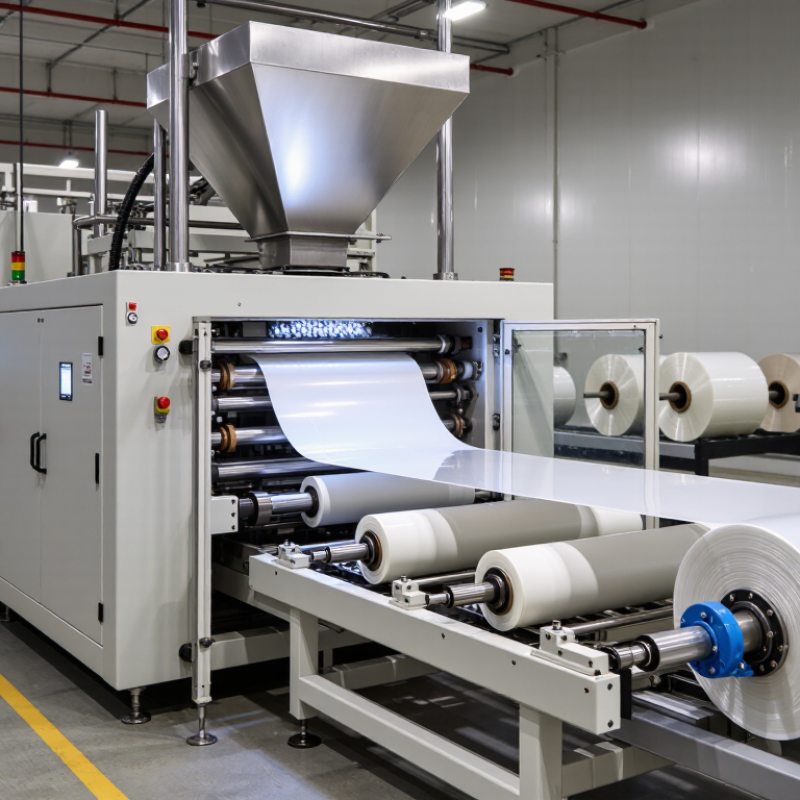
A sheet extruder converts plastic pellets into continuous, flat sheets. The line works through controlled heat, pressure, and cooling. Its performance depends on several connected parts, not only the extruder itself.

The process begins at the hopper, where clean, dry pellets enter the system. A dryer may remove moisture before feeding. Inside the heated barrel, a rotating screw conveys, melts, and mixes the material. The motor and gearbox control screw speed and torque. A screen changer filters contaminants from the melt. This small component matters more than many operators expect.

The die spreads the molten plastic into a wide, even curtain. Adjustable die lips help control sheet thickness. After leaving the die, the sheet passes through polished cooling rollers. These rollers set thickness, surface appearance, and temperature. A haul-off unit maintains steady tension, while an edge trimmer and cutter prepare the final sheet. Sensors and the control cabinet monitor pressure, temperature, speed, and thickness. In practice, alignment errors or unstable cooling can still create waviness. Machines are precise, but not perfect.

Tips: Check moisture, melt pressure, and roller temperature before changing screw speed. Small adjustments are safer. Keep a production record with thickness readings and visible defects. It helps identify problems that memory often misses.

How Does the Sheet Extrusion Process Work Step by Step?

A sheet extruder converts plastic pellets into a continuous, flat sheet. According to PlasticsEurope’s Plastics – the Fast Facts 2024, global plastic production reached 413.8 million tonnes in 2023. That scale makes process control essential.

The process begins when dried pellets enter the hopper. A heated barrel and rotating screw then melt and mix the material. Temperature zones usually rise gradually, preventing sudden degradation. The screw pushes the melt through a flat die, which spreads it into a wide curtain. Die lips control the initial thickness.

The hot sheet immediately meets a three-roll calender. The rolls cool, compress, and polish its surfaces. A small thickness variation can appear here. Operators adjust roll gaps, speed, and melt pressure while checking samples with gauges. Edge trimmers remove uneven borders. Pull rolls then stabilize the sheet before cutting or winding it. The final width, thickness, gloss, and strength depend on every stage, not only the die.

Tips: Dry moisture-sensitive pellets carefully. Wet material may create bubbles or silver streaks. Keep melt pressure steady, but do not chase every minor fluctuation. Industry testing reports should guide settings, while real production data confirms them. The Plastics Industry Association also emphasizes consistent quality monitoring across processing operations. Perfect uniformity is an aim, not an automatic result.

What Is a Sheet Extruder and How Does It Work? — Sheet Extrusion Process Step by Step
Step Process Stage Main Equipment Typical Conditions and Controls What Happens to the Plastic Sheet
1 Material Preparation Material hopper, blender, dryer Pellets are blended with approved additives or color concentrates. Hygroscopic polymers may require drying before processing to reduce moisture-related defects. A consistent feedstock is prepared for continuous extrusion. Proper drying helps limit bubbles, splay, hydrolysis, and loss of mechanical properties.
2 Feeding and Conveying Feed throat and rotating screw Pellets enter the barrel at a controlled rate while the screw conveys them forward. Feed rate and screw speed are adjusted to match the required sheet output. Solid polymer pellets move steadily through the extruder without excessive surging or feed interruption.
3 Melting and Plasticizing Heated barrel, screw, temperature controllers Barrel zones are heated according to the polymer’s processing window; shear from the screw supplies additional heat. Typical melt temperatures vary by resin and grade, commonly about 180–300 °C for many thermoplastics. The pellets become a homogeneous molten polymer with controlled viscosity and sufficient mixing.
4 Melt Filtration and Pressure Stabilization Screen pack, breaker plate, melt pump Contaminants and unmelted particles are filtered from the melt. Melt pressure is monitored to detect screen blockage, contamination, or unstable output. A cleaner and more uniform melt reaches the die, improving surface quality and thickness consistency.
5 Flat-Die Distribution T-slot or coat-hanger flat die The die spreads the melt across the required sheet width. Die-lip adjustment and uniform internal flow are used to control cross-web thickness. The polymer exits as a continuous, wide molten curtain or sheet. Die width is selected according to the target product width and trim allowance.
6 Primary Cooling and Sizing Three-roll polishing stack or chill-roll unit The molten sheet passes between temperature-controlled rolls. Roll temperature, nip pressure, line speed, and roll gap affect thickness, gloss, flatness, and surface texture. The sheet cools and solidifies while being sized. Typical sheet thickness may range from approximately 0.5 to 12 mm, depending on the product and line design.
7 Edge Trimming Rotary knives or edge-trim cutters Irregular edges and excess material are removed while the sheet remains under controlled tension. Trim width is set to achieve the specified finished width and edge quality. The sheet obtains clean, parallel edges. Trim may be collected for recycling when material specifications permit.
8 Surface Treatment or Finishing Embossing roll, corona treater, coating or laminating unit Optional finishing is applied according to the end use. Embossing changes surface texture; corona treatment can improve the adhesion of inks, coatings, or adhesives. The sheet receives a defined texture, improved printability, added layers, or other functional surface properties.
9 Pulling and Tension Control Take-off rolls, haul-off unit, tension controls Line speed is synchronized with extrusion output and cooling conditions. Stable tension helps prevent wrinkles, stretching, waviness, and dimensional variation. The solidified sheet travels through the line at a controlled speed and maintains its intended dimensions.
10 Inspection and Measurement Thickness gauge, width sensors, visual inspection system Thickness, width, appearance, and surface defects are checked continuously or at defined intervals. Common defects include gels, streaks, bubbles, die lines, wrinkles, and thickness variation. Process adjustments can be made before nonconforming material accumulates, supporting consistent product quality.
11 Cutting or Winding Sheet cutter, stacker, or winding unit The finished material is either cut into fixed-length sheets or wound into rolls. Cut length, stack height, roll tension, and core dimensions are selected for downstream handling. The extruded sheet is converted into a transportable format suitable for fabrication, thermoforming, printing, or further processing.
12 Quality Release Laboratory and dimensional testing equipment Samples may be tested for thickness, width, appearance, tensile behavior, impact performance, and other customer or product specifications. Conforming sheets are packaged and released; process data and inspection results are recorded for traceability and continuous improvement.

Which Materials and Products Are Made by Sheet Extrusion?

A sheet extruder turns plastic pellets into continuous, flat sheets. The material is heated, mixed, and pushed through a wide die. Rollers then control thickness, surface finish, and cooling speed. In practical production, small temperature changes can affect clarity, stiffness, and sheet flatness.

Many thermoplastics work well in sheet extrusion. Polypropylene is light and resists moisture, so it suits storage bins, laboratory trays, and reusable containers. Polyethylene offers flexibility and impact resistance for protective panels and industrial liners. ABS provides a firm, attractive surface for equipment housings and interior components. PETG is often selected for clear packaging and display guards. Polystyrene can produce rigid sheets for signs, food-service packaging, and appliance liners. PVC is also used for construction sheets, though processing requires careful temperature control.

The finished sheet may become packaging trays, refrigerator liners, wall panels, machine guards, or vehicle interior parts. Some sheets are thermoformed later, while others are cut, drilled, or laminated.

I have found that material selection is rarely based on strength alone. Moisture, cleaning chemicals, forming temperature, and expected sunlight exposure matter too. A clear sheet may look perfect at first, then haze during forming. That is an easy detail to miss. Thickness checks, surface inspections, and trial forming help confirm whether the selected material truly fits the product. Technicians should still review each application, because a convenient material is not always the most reliable one.

What Factors Affect Sheet Extruder Performance?

What Is a Sheet Extruder and How Does It Work?

A sheet extruder melts plastic pellets and pushes the material through a flat die. The die forms a continuous, wide sheet. Cooling rolls then reduce its temperature and control its thickness. In daily production, operators inspect the sheet surface, edge shape, and roll pressure. Small changes can create visible waves, lines, or uneven gloss.

What Factors Affect Sheet Extruder Performance?

Material moisture strongly affects sheet quality. Wet resin may cause bubbles, silver streaks, or unstable output. Drying conditions must match the material, not just a standard timer. Melt temperature also matters. Excessive heat can cause discoloration or material breakdown. Low heat may produce poor mixing and higher motor load.

Screw speed controls output and residence time. Faster rotation can raise production, but it may increase shear and melt temperature. Die temperature should remain even across the full width. A small temperature difference can create thick and thin areas. Cooling roll temperature, pressure, and speed influence flatness and shrinkage. Line tension matters too.

Clean filtration protects the die from contamination. Yet, an overly fine filter can increase pressure and reduce output. This is where practical judgment matters. Technicians should record pressure, temperature, speed, and sheet thickness during each run. One setting rarely works forever. Room temperature, resin batches, and tool wear can quietly change performance. A clean theory can still fail on the factory floor.