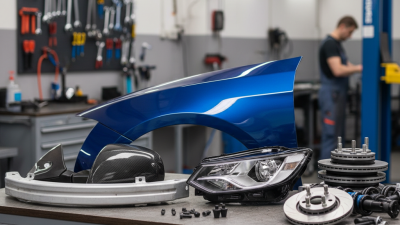
Global vehicle owners and repair networks increasingly rely on aftermarket auto parts for broader choice, competitive pricing, and practical availability. These components can support older models when original equipment becomes expensive or difficult to obtain. They also give distributors access to specialized suppliers across Asia, Europe, and the Americas. Yet global sourcing is not simply a price comparison exercise.
Experienced buyers examine more than a supplier’s catalog. They review fitment data, material specifications, production capacity, and quality-control records. A brake component, for example, must match the vehicle application precisely. Packaging should also protect parts from moisture during long sea transport. Reliable suppliers can provide batch numbers, inspection reports, warranty terms, and clear traceability. Independent testing may be appropriate for safety-critical products.
Cost still matters. However, the lowest quotation may hide inconsistent tolerances, weak packaging, or expensive returns. Landed cost tells a more realistic story. It includes tooling, freight, duties, inspection, storage, and warranty support. Supplier audits and sample orders can reveal problems before a large commitment. Small details matter.
No sourcing model is flawless. Product data may be incomplete, and market demand can change unexpectedly. A careful buyer should question assumptions, compare multiple sources, and document every decision. Compliance requirements also differ by market, so professional advice may be necessary. When selection combines technical evidence, transparent communication, and practical testing, aftermarket auto parts become a more dependable option for global distribution. Reliability is built gradually.
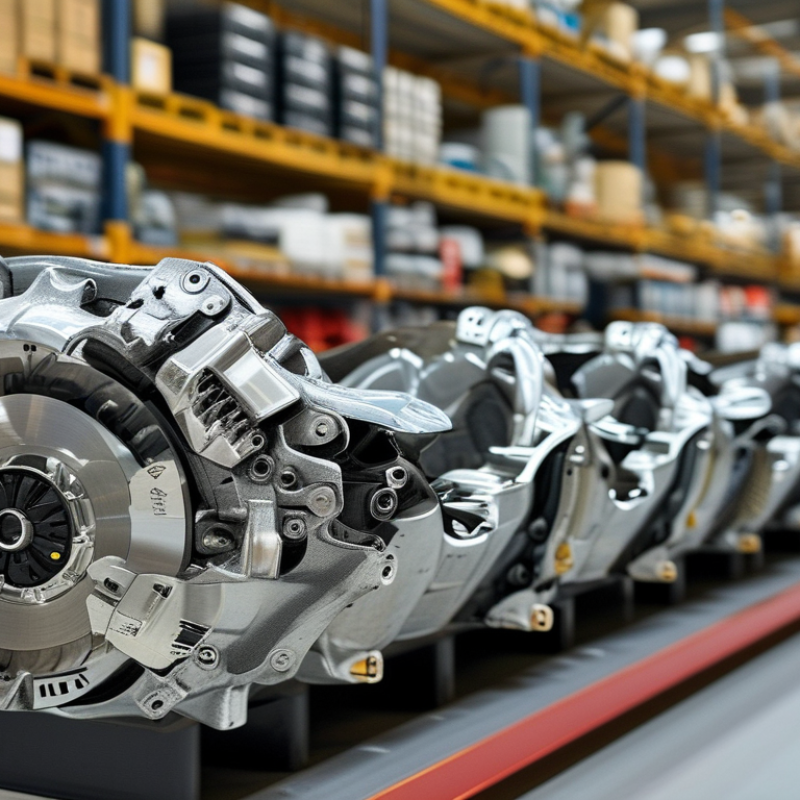
The average U.S. vehicle reached 12.6 years in 2024, according to S&P Global Mobility. That number changes procurement decisions. Older vehicles need more filters, sensors, suspension parts, and cooling components. A repair shop may see this demand every morning: cracked bushings, weak batteries, and leaking hoses. These are ordinary failures, but they create recurring international opportunities.
The 2024 U.S. Auto Care Industry Factbook valued the automotive aftermarket at more than 400 billion dollars. Its data also shows that vehicle owners increasingly maintain older cars instead of replacing them quickly. For global buyers, aftermarket parts can offer broader application coverage and flexible production volumes. Quality documentation remains essential. Traceable materials, dimensional inspection, and consistent testing reduce costly returns.
The 12.6-year average is useful, but it is not a complete forecast. Regional driving habits, climate, road quality, and repair income can change failure rates. A part that sells quickly in a cold northern market may move slowly in a tropical one. That assumption deserves testing. Buyers should compare fleet age, failure history, certification needs, and landed costs before placing large orders. Supplier audits and sample fitting still matter, even when the catalog looks convincing.

A 93.5-million-unit global vehicle production base creates a broad aftermarket opportunity. Every vehicle needs filters, brake components, suspension parts, lighting, and replacement electronics throughout its service life. This volume supports larger production runs and gives buyers more options across different vehicle applications.
Global sourcing works best when production data guides purchasing decisions. Suppliers can compare vehicle populations, replacement cycles, regional climates, and repair habits before selecting components. In practical audits, buyers should review material certificates, dimensional reports, batch records, and quality-control procedures. A brake pad may look correct in a catalog, yet its friction performance and noise level still require verification.
Details matter.
Packaging should protect parts during long ocean routes and repeated warehouse handling. Clear labels can reduce picking errors, especially when similar components serve different models. Reliable suppliers also provide fitment data, inspection samples, and traceability from raw material to shipment. These steps support compliance with local safety requirements and reduce costly returns.
The 93.5-million-unit base does not guarantee easy sourcing. Regional specifications can differ, and demand forecasts can be wrong. I have seen purchasing plans fail when teams trusted vehicle numbers without checking replacement timing. A smaller trial order, field feedback, and independent testing may reveal weaknesses early. Sometimes the cheapest quotation needs the most questions.
Why Choose Aftermarket Auto Parts for Global Sourcing?
Aftermarket sourcing can reduce replacement costs by 20%–50%, depending on the component and market. The savings usually come from broader supplier competition, efficient production, and flexible order quantities. In practical sourcing work, buyers should compare landed costs, not unit prices alone. Freight, packaging, inspection, duties, and warranty handling can change the final figure. A brake component may look 35% cheaper, yet poor packaging can create costly returns. Fitment matters. Material quality matters more.
Tips: Request technical drawings, test reports, and sample parts before placing large orders. Check dimensions, surface finish, heat resistance, and installation points. Ask suppliers to explain their quality-control process. Keep approval records for every part number. Small details protect large budgets.
The 20%–50% estimate is useful, but it is not guaranteed. A careful buyer should compare at least three qualified suppliers and review performance data. Independent inspections can confirm consistency between samples and production batches. Still, aftermarket parts may require extra validation for older or uncommon vehicles. That step takes time. It can also reveal hidden costs. A cheaper part is not always a cheaper solution, and initial sourcing assumptions sometimes need revision.
| Sourcing Dimension | Traditional OEM Replacement Benchmark | Aftermarket Global-Sourcing Benchmark | Potential Commercial Impact | Key Consideration |
|---|---|---|---|---|
| Replacement unit cost | 100 cost-index points | 50–80 cost-index points | 20%–50% lower purchase cost | Actual savings depend on part complexity, certification, order volume, and country of origin. |
| Supplier quotation coverage | Usually based on a narrower approved supply channel | Broader access to qualified manufacturers, distributors, and regional suppliers | Improves price comparison and negotiation leverage | Supplier qualification should include technical drawings, material specifications, testing records, and production audits. |
| Minimum order quantity | Often determined by an established replacement program | May range from sample quantities to several hundred units, depending on the supplier | Supports phased purchasing and inventory planning | Confirm tooling, packaging, labeling, and sample-order policies before contracting. |
| Lead-time flexibility | Typically follows a fixed distribution and replenishment schedule | Can be negotiated around production slots, consolidation, and shipment frequency | Reduces the risk of urgent spot purchases | Production time, export documentation, customs clearance, and transit time must be calculated separately. |
| Product customization | Generally limited to predefined specifications | Common options include packaging, labeling, materials, finishes, and selected dimensions | Better alignment with local regulations and vehicle applications | Any design change should be validated through fitment, durability, and performance testing. |
| Quality-control cost | Usually embedded in the existing supply structure | Requires planned incoming inspection, pre-shipment inspection, or third-party testing | May add 1%–5% to procurement cost, depending on inspection scope | Quality-control costs should be included in the total landed-cost calculation. |
| Warranty and returns exposure | Managed under established contractual and distribution procedures | Depends on supplier warranty terms, traceability, and after-sales responsiveness | A lower unit price does not automatically mean a lower total cost | Define warranty duration, claim evidence, replacement responsibility, and return freight in writing. |
| Total landed-cost visibility | Often easier to estimate but may include higher part pricing | Requires adding product cost, freight, insurance, duties, inspection, and local handling | Enables a more accurate 20%–50% replacement-cost comparison | Compare suppliers using the same Incoterm, order quantity, currency, and delivery destination. |
| Planning note: The percentages and cost indexes above are non-brand planning benchmarks intended for procurement comparison. Actual results vary by part category, technical requirements, order volume, shipping route, import duties, compliance obligations, and supplier performance. | ||||
Aftermarket parts can widen sourcing options, especially when vehicle platforms remain active. In my supplier audits, consistent documentation often mattered more than attractive pricing. IATF 16949 supports process control, defect prevention, traceability, and corrective action across automotive production. ISO 9001 strengthens the quality management system behind those activities. The 2022 ISO Survey recorded 1,265,216 ISO 9001 certificates worldwide, showing the standard’s broad industrial acceptance. Certification is useful evidence, but it is not a quality guarantee.
A reliable supplier should connect certification with measurable records. Ask for process capability data, inspection plans, calibration logs, and lot-level traceability. IATF 16949 also encourages risk-based thinking throughout the supply chain. This helps control details such as connector fit, surface finish, torque, and packaging damage. Industry 4.0 research from Deloitte reports that manufacturers continue investing in digital quality tools to reduce variation and improve visibility. Still, not every dashboard reflects reality. Physical audits remain necessary. Sometimes, the paperwork looks better than the production floor.
Tips: Verify certificate scope and validity. Review recent nonconformities. Request sample parts from different lots. Compare dimensional reports with your own measurements. Check how suppliers handle returns and corrective actions. Small checks prevent expensive surprises. Keep requirements written. Avoid assumptions.
Aftermarket parts can widen sourcing options, but cross-border compliance needs evidence. UNECE’s 1958 Agreement included 64 Contracting Parties in 2024, supporting mutual recognition of approved vehicle components. This framework can reduce repeated testing between participating markets. It does not remove every national requirement. That distinction matters.
UNECE Regulation No. 90 covers replacement brake linings, drums, and discs. A valid type-approval mark connects the part to tested performance, production controls, and traceable documentation. In a warehouse, this means checking the approval number against packaging, certificates, and product specifications. One missing character can create a costly hold.
The European Commission reported approximately 20,400 road deaths across the European Union in 2023. Safety-critical parts deserve more than a low-price comparison. In practical sourcing work, buyers should verify approval scope, vehicle compatibility, revision dates, and supplier consistency. Certificates alone are not magic shields. Production batches can still vary. The uncomfortable point is simple: a compliant sample does not guarantee every later shipment remains identical. Independent inspections and retained samples provide useful protection. UNECE WP.29 guidance and national market-surveillance reports should remain part of the purchasing file. That extra work feels slow, yet it can prevent rejected cargo, unsafe installation, and expensive requalification.
© 2025 Grandmark International. All rights reserved.
© 2020 Grandmark. Grandmark International. All rights reserved. Proud shareholder of Temot International.