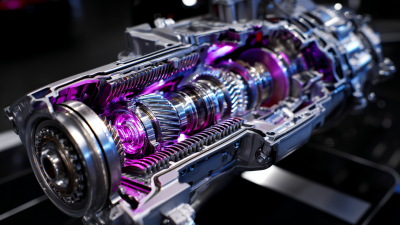
An automatic transmission changes gears without requiring the driver to operate a clutch pedal. It helps a vehicle move smoothly from a complete stop to highway speed. Inside the transmission, a torque converter transfers engine power through fluid instead of a manual clutch. Planetary gear sets then provide different gear ratios for acceleration, cruising, and reversing.
The process depends on several parts working together. Sensors monitor vehicle speed, engine load, throttle position, and transmission temperature. A control module interprets those signals and directs hydraulic fluid through small passages and valves. This pressure engages selected clutches and bands, changing the gear ratio almost unnoticed. When you press the accelerator, the system may downshift for stronger response. When the road levels out, it can upshift to reduce engine speed and fuel use.
It feels simple from the driver’s seat.
However, automatic transmission designs vary widely. Traditional hydraulic units, continuously variable transmissions, and dual-clutch systems do not shift in exactly the same way. This overview simplifies some engineering details, so it should not replace the vehicle owner’s manual or professional inspection. A delayed engagement, burning smell, harsh shift, or fluid leak deserves attention, even if the vehicle still moves. Real-world driving also exposes limits that diagrams cannot show, such as hesitation during cold starts or different behavior on steep roads. Understanding these systems makes maintenance decisions clearer and helps drivers notice changes before a small fault becomes an expensive repair.
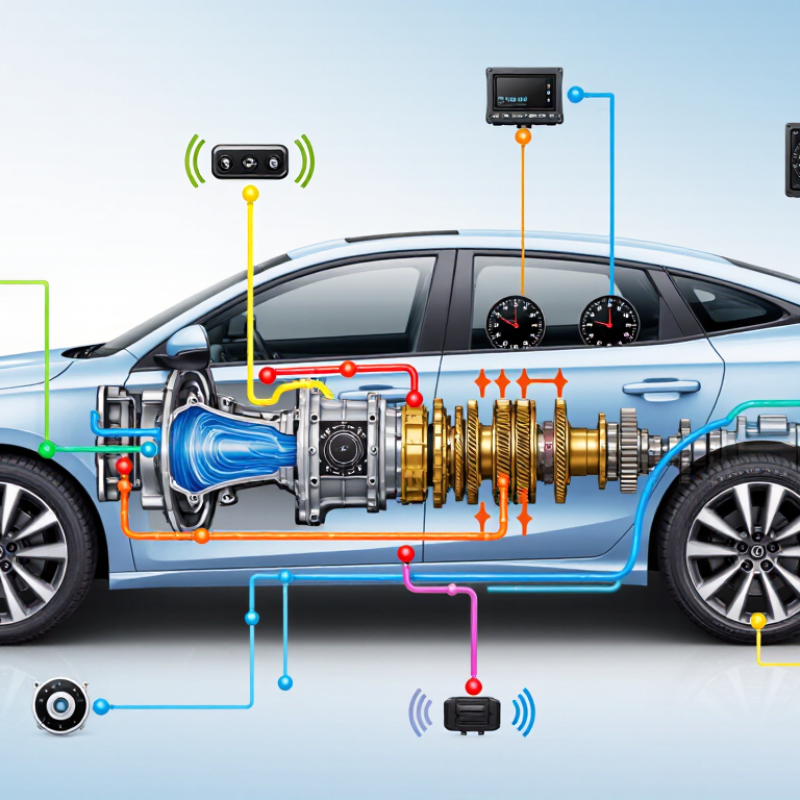
An automatic transmission selects gears without requiring a clutch pedal. It responds to vehicle speed, engine load, throttle position, and road conditions. The transmission control unit interprets these signals within milliseconds. It then directs hydraulic pressure toward specific clutch packs and gearsets.
The torque converter transfers engine power through fluid. It also allows the engine to keep running when the vehicle stops. Inside, planetary gearsets create different ratios for starting, climbing, cruising, and reversing. Lower gears provide stronger wheel torque. Higher gears reduce engine speed and improve efficiency. The U.S. Environmental Protection Agency’s Automotive Trends Report shows that automatic systems now represent more than 99% of new light-duty vehicle sales in the United States. That figure reflects convenience, but it also shows how much control software now influences driving.
Tips: Check the transmission fluid level only when the service procedure allows it. Watch for delayed engagement, harsh shifting, or unusual vibration. These symptoms can develop quietly. A diagnostic scan can reveal control-system faults before mechanical damage becomes expensive.
Automatic transmissions do not make every shift perfectly. Cold fluid, steep grades, and heavy loads can change their behavior. I have found that drivers often blame the transmission too quickly. Sometimes worn engine mounts or incorrect tire sizes create similar sensations. Proper diagnosis matters. Industry guidance from the Society of Automotive Engineers also emphasizes matching transmission ratios with engine output, vehicle mass, and efficiency targets.
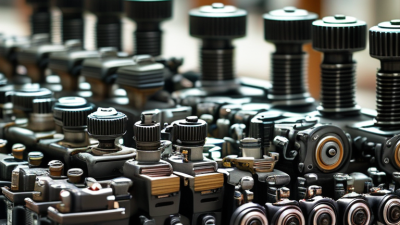
An automatic transmission changes gears without requiring the driver to operate a clutch pedal. Its main components work together inside a sealed metal housing. During a fluid inspection, technicians often notice how much the transmission depends on clean, correctly filled fluid. It looks simple from outside. Inside, it is highly coordinated.
The torque converter transfers engine power through fluid and allows the vehicle to stop without stalling. Planetary gearsets create different gear ratios using sun gears, planet gears, and ring gears.
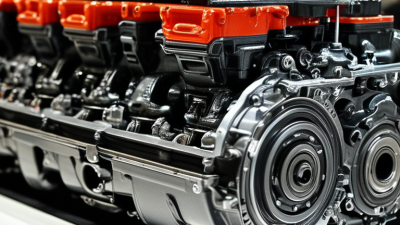
A hydraulic pump moves transmission fluid through narrow passages. The valve body directs that pressure to specific clutches and bands. These parts lock selected gears together. The result is a controlled change in speed and torque.
Electronic sensors monitor vehicle speed, throttle position, and fluid temperature. A control module uses this information to adjust solenoids inside the valve body. Those solenoids regulate hydraulic pressure during each shift. On a road test, a delayed shift may suggest low pressure, worn friction material, or incorrect sensor data. The cause is not always obvious. I once assumed a harsh shift meant damaged gears, but testing revealed a fluid problem instead. That mistake shows why diagnosis should come before replacement. Real transmission designs vary, and no single symptom proves one failed component. Regular fluid checks and careful inspection remain practical safeguards.
What Is an Automatic Transmission and How Does It Work?
How Gears Change Automatically During Driving
An automatic transmission changes gears without a clutch pedal or manual gear lever. It uses sensors, hydraulic pressure, and computer-controlled valves to select a suitable gear. These systems monitor vehicle speed, engine load, throttle position, and road conditions. The transmission then sends power through different gear combinations inside its housing.
At a traffic light, the transmission usually selects a low gear for stronger pulling power. As the vehicle moves, speed increases and engine demand changes. The control system may command a shift into a higher gear. Hydraulic fluid then applies specific clutch packs, locking parts of the gearset together. The change can happen within a moment.
On a hill, the transmission may hold a lower gear longer. This gives the vehicle more useful power and stronger engine braking. During gentle cruising, it chooses a higher gear to reduce engine speed and fuel use. The process feels smooth when conditions are predictable. It is not always perfect.
A slight pause or firm shift can occur during quick acceleration, cold operation, or heavy loads. That does not automatically mean a serious fault. However, repeated slipping, harsh engagement, or delayed shifting deserves professional inspection. Clean fluid and correct service matter because small particles can affect valves and clutch surfaces. In daily driving, smooth throttle control often helps the transmission make calmer decisions.
An automatic transmission selects gears without requiring the driver to operate a clutch pedal. The transmission control system evaluates vehicle speed, engine load, throttle position, and fluid pressure to determine when to shift. Lower gears provide greater torque for starting and acceleration, while higher gears reduce engine speed during cruising.
The chart shows representative gear ratios for a conventional six-speed automatic transmission. A higher ratio in first gear multiplies engine torque for moving away from a stop. As the vehicle gains speed, the transmission shifts to progressively lower ratios, helping maintain efficient engine operation. Actual ratios vary by transmission design.
An automatic transmission changes gears without a clutch pedal by combining hydraulic pressure, mechanical components, and electronic control. Inside the transmission, a fluid pump creates pressure as the engine turns. This pressurized fluid moves through narrow passages in the valve body. Small valves then direct fluid toward specific clutch packs and bands.
Those components lock different gearsets together. The selected gear depends on vehicle speed, engine load, throttle position, and fluid temperature. Electronic sensors measure these conditions several times each second. A control module studies the signals and activates solenoids, which open or close hydraulic passages. The process feels almost invisible when the timing is correct. It is not magic.
During a shift, pressure must rise smoothly. Too little pressure can cause slipping and excess heat. Too much pressure may create a sharp bump. In practical inspections, technicians often check fluid condition, stored fault codes, and shift behavior together. A dark smell or delayed engagement can indicate stress, but it does not identify one exact failure. Diagnosis needs evidence.
The system constantly adjusts itself. For example, climbing a hill may increase hydraulic pressure and delay an upshift. Gentle driving may produce earlier, softer shifts. Electronics improve precision, yet they depend on clean fluid and reliable sensors. That relationship is easy to overlook. No explanation is perfect. Temperature, wear, and calibration can change how the same transmission behaves on different days.
An automatic transmission changes gears without a clutch pedal or manual lever. Its control unit reads vehicle speed, throttle position, engine load, and road incline. A hydraulic torque converter then transfers power smoothly, especially during crawling traffic. Planetary gearsets provide fixed ratios. The U.S. Environmental Protection Agency’s 2023 Automotive Trends Report recorded average new-vehicle fuel economy near 26.4 mpg for model year 2022. Transmission control is only one factor, but it strongly affects engine efficiency.
Conventional automatic transmissions use a torque converter and several planetary gearsets. They feel smooth and handle frequent stopping well. Continuously variable transmissions use pulleys and a steel belt. They keep the engine near an efficient speed, although some drivers dislike the steady “rubber-band” response. Dual-clutch transmissions use two clutches. One prepares the next gear, enabling rapid shifts, but low-speed movement can feel abrupt. Automated manual transmissions use a single clutch with electronic actuators. They are mechanically simple, yet their shifts may feel less polished.
The differences are practical. A CVT suits steady commuting. A dual-clutch design suits quick gear changes. A conventional automatic often offers the broadest comfort range. A 2024 U.S. Department of Energy Fuel Economy Guide shows how official fuel-use ratings vary by vehicle configuration, not transmission type alone. That distinction matters. Tire pressure, mass, aerodynamics, and calibration can outweigh a gearbox label. In real traffic, the “best” transmission is not always the most efficient one. I have found that smooth calibration often matters more than impressive hardware. Industry comparisons still need cautious reading.
| Transmission Type | How It Works | Main Mechanical Components | Gear or Ratio Behavior | Key Advantages | Common Limitations | Typical Applications |
|---|---|---|---|---|---|---|
| Traditional Automatic (Torque-Converter Automatic) |
An impeller and turbine transfer engine power through transmission fluid. A lock-up clutch can mechanically connect the engine and transmission during cruising. | Torque converter, planetary gearsets, hydraulic valve body, clutches, brakes, oil pump, and electronic control unit. | Uses a fixed number of forward gears, commonly between 4 and 10 in modern passenger vehicles. | Smooth takeoff, strong low-speed torque multiplication, good towing capability, and broad compatibility with different engine outputs. | Can be heavier and more complex than a manual transmission. Fluid heat and clutch wear may occur if maintenance is neglected. | Sedans, sport utility vehicles, pickup trucks, performance vehicles, and vehicles designed for towing. |
| Continuously Variable Transmission (CVT) |
Two variable-diameter pulleys connected by a high-strength belt or chain change their effective diameters to vary the drive ratio continuously. | Primary and secondary pulleys, steel belt or chain, hydraulic control system, oil pump, and electronic control unit. | Provides an almost infinite range of ratios rather than distinct gear steps. Some systems simulate stepped gears through software. | Keeps the engine near an efficient operating speed, delivers smooth acceleration, and can reduce shift shock. | May have limited high-torque capacity compared with some conventional automatics. Belt, pulley, and fluid condition are especially important. | Compact cars, hybrid vehicles, and vehicles focused on fuel efficiency and smooth urban driving. |
| Dual-Clutch Transmission (DCT) |
Two independently controlled clutches operate separate gear sets. The next gear can be preselected while the current gear is transmitting power. | Two clutches, concentric input shafts, parallel gearsets, shift actuators, mechatronics, and electronic control software. | Uses fixed gears, often with separate odd- and even-numbered gear paths, enabling rapid gear changes. | Fast shifts, direct power transfer, strong acceleration, and potentially high efficiency during steady driving. | Low-speed maneuvering can feel less smooth in some calibrations. Clutches and mechatronic components may be costly to repair. | Performance-oriented cars, sporty passenger vehicles, and applications requiring quick gear changes. |
| Automated Manual Transmission (AMT) |
A computer-controlled actuator operates the clutch and gear selector of a conventional manual gearbox instead of requiring the driver to use a clutch pedal. | Manual gearsets, single clutch, electro-hydraulic or electric actuators, sensors, and transmission control unit. | Uses a fixed number of manual-style gears with automated clutch engagement and gear selection. | Mechanically simple, relatively light, and generally more efficient to manufacture than a full conventional automatic. | Gear changes may be slower or less smooth, especially during stop-and-go driving or on inclines. | Small cars, entry-level vehicles, and commercial applications where low cost and mechanical efficiency are priorities. |
| Electronically Controlled Hybrid (e-CVT-Type System) |
An internal-combustion engine and one or more electric motor-generators share power through a planetary power-split device or a closely related electric drive arrangement. | Electric motor-generators, planetary gearset or power-split device, inverter, high-voltage battery, reduction gears, and control software. | Usually has no conventional stepped gears. Engine speed and motor output are coordinated electronically to control the effective ratio. | Enables regenerative braking, electric-only operation in suitable conditions, smooth acceleration, and efficient engine loading. | System design is complex and depends on high-voltage components, battery condition, and specialized diagnostic procedures. | Hybrid passenger cars, crossover vehicles, and other applications combining an internal-combustion engine with electric propulsion. |
© 2025 Grandmark International. All rights reserved.
© 2020 Grandmark. Grandmark International. All rights reserved. Proud shareholder of Temot International.