
Choosing the right car transmission for global sourcing begins with market evidence, not supplier preference. OICA reported 93.5 million motor vehicles produced worldwide in 2023. That scale creates wide differences in vehicle platforms, regulations, driving conditions, and repair expectations. A transmission that performs well in Germany may struggle in congested Southeast Asian cities or high-altitude markets.
Powertrain change is also reshaping procurement decisions. The International Energy Agency’s Global EV Outlook 2024 reported nearly 14 million electric car sales in 2023, representing about 18% of global car sales. This growth supports electric drive units and single-speed reduction gears. However, gasoline and hybrid vehicles still require proven automatic, manual, continuously variable, or dual-clutch systems across many regions. The correct choice depends on torque demand, fuel economy, local service skills, warranty targets, and total landed cost.
Real sourcing work is less tidy than a comparison table. Supplier audits may reveal inconsistent heat treatment, incomplete test records, or long lead times. These details matter. A low quoted price can become expensive after tooling changes, customs delays, or warranty claims. Procurement teams should compare independent test data, ISO-certified quality systems, field failure history, and spare-parts availability. ZF’s annual reports and supplier quality practices offer useful industry benchmarks, although no supplier model fits every project.
There is no universal winner.
This guide examines how buyers can match transmission type, supplier capability, and regional demand. It also questions common assumptions, because published market data can lag behind real purchasing behavior. A careful decision combines reports, engineering validation, factory experience, and transparent risk review.
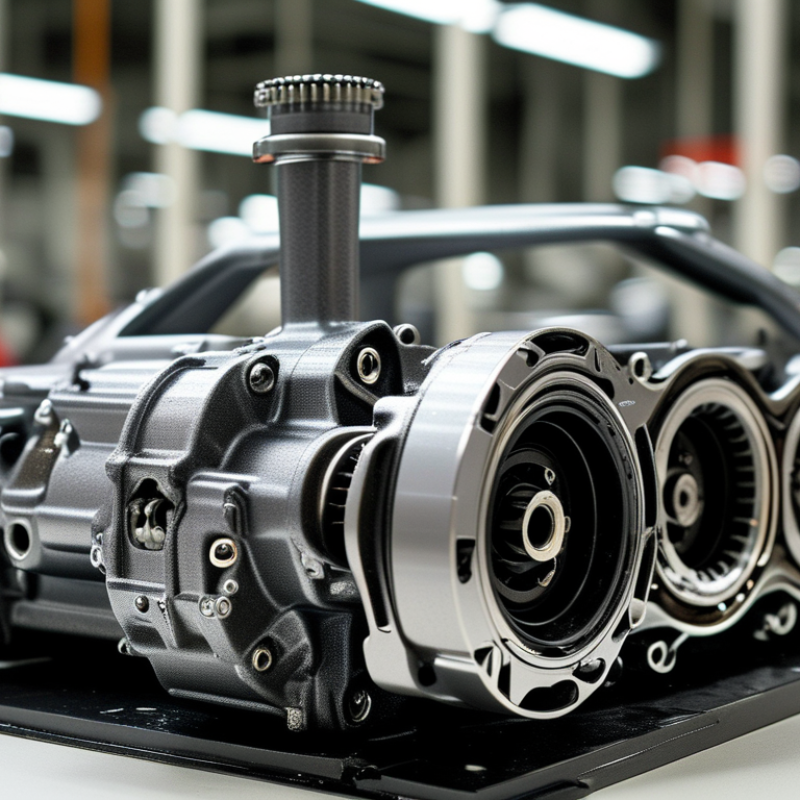
Choosing a car transmission starts with the vehicle’s use, not the lowest supplier quotation. Manual transmissions use a clutch pedal and fixed gears. They are often simpler to repair and can suit markets with strong mechanical service networks. However, frequent urban traffic may increase driver fatigue and clutch wear. Traditional automatic transmissions shift gears through hydraulic control and a torque converter. They offer smooth launches, especially on hills, but may require strict fluid maintenance and accurate electronic diagnostics.
Continuously variable transmissions use pulleys and a belt or chain instead of fixed gear steps. They can support smooth acceleration and efficient cruising. Their performance may feel unfamiliar to drivers expecting clear gear changes. Dual-clutch transmissions use two clutches for rapid shifts. They can deliver responsive driving, yet low-speed traffic may expose hesitation or heat sensitivity. Automated manual transmissions operate a manual gearbox with electronic actuators. Their structure can reduce mechanical complexity, although gear changes may feel abrupt.
The sourcing decision should match climate, road quality, payload, fuel expectations, and technician skills. Test units during cold starts, steep climbs, stop-and-go traffic, and long highway runs. Check service intervals, diagnostic access, replacement-part availability, and warranty terms.
One detail is easy to miss: a transmission that performs well in a showroom may behave differently under a full load. A clean specification sheet can still hide calibration issues. I would request independent road-test records, but I would not treat them as absolute proof. Real local testing remains necessary.
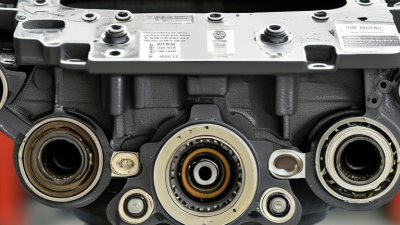
Choosing a transmission starts with the vehicle, not the catalog. A compact city car may suit a light automatic transmission. A heavy utility vehicle needs stronger torque capacity and cooling. I review engine torque, vehicle mass, axle ratio, cooling capacity, and expected load. These details expose mismatches that a price sheet can hide. A low-cost unit is not economical if it overheats on steep roads.
Market conditions change the decision. In dense cities, frequent stopping demands smooth low-speed control and dependable heat management. In regions with rough roads, dust, or long distances between service centers, durability becomes more important. Service networks matter as much as purchase price. Ask whether trained technicians, diagnostic tools, and replacement parts are available locally. Fuel quality, weather, traffic, and import documentation can affect long-term performance. Requirements differ across markets. I have seen sourcing teams compare only currency prices, then underestimate storage and service costs.
Driving behavior should be measured honestly. Frequent stop-start travel favors smooth control and effective thermal management. Long highway routes demand stable cruising and efficient gear ratios. Mountain routes place greater stress on cooling and shift control. Ask drivers about payload, terrain, towing, and daily distance. Their answers may challenge the original specification. That is useful. A test vehicle under local conditions can reveal noise, delay, or heat that laboratory data misses. I would leave room for uncertainty, because real drivers rarely follow ideal usage patterns.
How to Choose the Right Car Transmission for Global Sourcing?
Comparing Transmission Performance, Cost, and Reliability
Choosing a transmission for global sourcing requires more than comparing gear counts. Performance depends on vehicle weight, road gradients, climate, and the expected duty cycle. An automated unit may shift smoothly during testing, yet struggle under repeated hauling in high temperatures. Measure launch response, shift timing, thermal control, and efficiency with loaded vehicles. Use the same route and payload for fair comparisons. Small test differences matter.
Purchase price is only one cost. Freight, import duties, installation, calibration, maintenance, and spare parts can change the final figure. Reliability should be measured through warranty data, service records, oil analysis, and controlled endurance tests. Ask suppliers for failure patterns, testing conditions, and recommended service intervals. A spreadsheet can still lie. I have seen low-cost options become expensive after frequent clutch adjustments and delayed parts delivery. Still, laboratory results cannot fully predict every market’s road conditions.
Tips: Compare total landed cost over five years, not the invoice alone. Request cold-start, high-temperature, and heavy-load test evidence. Check technician training and parts availability near the target market. Leave room for uncertainty; early sourcing assumptions are often incomplete. Recheck results after pilot vehicles operate through a full seasonal cycle.
| Transmission Type | Typical Gear Configuration | Indicative Mechanical Efficiency | Fuel-Economy Potential | Torque Capacity | Manufacturing Cost Level | Maintenance Complexity | Reliability Profile | Best-Fit Applications | Key Sourcing Considerations |
|---|---|---|---|---|---|---|---|---|---|
| Manual Transmission | Usually 5–7 forward gears with a driver-operated clutch | Approximately 95%–98% under steady operating conditions | High in skilled driving conditions; efficiency can decline in congested traffic | High mechanical durability when correctly specified; clutch is a wear item | Low | Medium | High mechanical simplicity; clutch and synchronizer wear require monitoring | Entry-level passenger cars, commercial vehicles, performance-oriented applications, and markets with strong manual-transmission demand | Verify clutch-life targets, synchronizer durability, local repair capability, and driver usage patterns |
| Torque-Converter Automatic | Commonly 6–10 forward gears with hydraulic torque conversion and lock-up operation | Approximately 86%–94%, depending on gear count, calibration, and lock-up strategy | High when paired with multiple ratios and an effective lock-up clutch | High; suitable for passenger vehicles, SUVs, and many light commercial vehicles | Medium to High | Medium to High | High when fluid temperature, lubrication, and shift calibration are properly controlled | Mainstream passenger cars, SUVs, vehicles requiring smooth launches, and higher-load applications | Assess thermal management, fluid specification, shift quality, towing requirements, and regional service equipment |
| Continuously Variable Transmission (CVT) | Variable-ratio pulley or toroidal system without fixed conventional gear steps | Approximately 88%–94% in typical operating conditions | Very high in urban and steady-speed driving because the engine can remain near an efficient operating range | Medium; belt, chain, pulley, and fluid limits must be matched to engine torque | Medium | Medium to High | Medium to High; highly dependent on fluid quality, thermal control, and calibration | Compact passenger cars, hybrid-related applications, and vehicles prioritizing smoothness and fuel economy | Confirm torque margin, belt or chain durability, fluid availability, overheating protection, and customer acceptance of engine sound characteristics |
| Dual-Clutch Transmission (DCT) | Two clutches controlling separate odd- and even-gear shafts; commonly 6–8 forward gears | Approximately 90%–97% under favorable conditions | Very high at steady speed and during rapid shifts; low-speed efficiency depends on clutch control | Medium to high; wet-clutch designs generally support higher thermal loads than dry-clutch designs | Medium to High | High | Medium; mechatronic units and clutch packs require precise thermal and software management | Sport-oriented passenger cars, compact vehicles, and applications requiring quick gear changes | Evaluate launch durability, stop-and-go performance, mechatronic serviceability, software validation, and clutch cooling capacity |
| Automated Manual Transmission (AMT) | Conventional manual gearset with electronically or hydraulically actuated clutch and shift mechanisms | Approximately 92%–97% | High on open roads; urban smoothness depends strongly on actuator and shift calibration | Comparable to the underlying manual transmission; clutch wear remains a primary concern | Low to Medium | Medium | Medium; mechanical parts are simple, but actuators and control software add failure points | Cost-sensitive passenger cars, small commercial vehicles, and fleet applications | Check shift-cycle durability, actuator replacement cost, hill-start behavior, diagnostic tools, and local technician training |
| Hybrid Power-Split Transmission | Planetary power-split device combining an internal-combustion engine with electric motor-generators | Approximately 90%–97% for the transmission and electric power path, depending on operating point | Very high in urban traffic and mixed driving when regenerative braking and engine control are optimized | Medium to high; limited by planetary gears, electric machines, battery output, and thermal capacity | High | Medium | High when battery cooling, power electronics, lubrication, and control systems are validated | Urban passenger vehicles, low-emission fleets, and applications with frequent stop-and-go operation | Assess battery sourcing, high-voltage safety, thermal management, power-electronics support, warranty provisions, and technician certification |
| Single-Speed Electric Drive Unit | Fixed-ratio reduction gear connected to an electric motor; no conventional multi-speed shifting | Approximately 93%–98% at the drive-unit level under favorable conditions | Very high drivetrain efficiency; total vehicle efficiency also depends on battery, climate control, speed, and driving conditions | High initial motor torque, but gear reduction, bearings, cooling, and inverter limits must be considered | Medium to High | Low routine mechanical maintenance; high-voltage systems require specialist procedures | High because of the low number of moving parts, subject to motor, inverter, bearing, and software quality | Battery-electric passenger cars, urban delivery vehicles, and light commercial fleets | Verify inverter efficiency, battery-voltage compatibility, reduction-gear noise, sealing, cooling, cybersecurity, and high-voltage service capability |
Note: Efficiency figures are indicative engineering ranges rather than guaranteed vehicle-level results. Actual performance, cost, and reliability vary with vehicle mass, engine or motor output, gear ratios, thermal management, control software, duty cycle, climate, maintenance, and regulatory requirements. Cost levels are relative sourcing estimates for comparable production volumes and do not include vehicle integration, tooling, certification, or after-sales support costs.
Choosing the right car transmission for global sourcing requires more than comparing prices. Supplier quality should lead every decision. In sourcing reviews, I examine process controls, inspection records, and traceability before discussing volume. A polished website proves little. Ask for material certificates, torque-test results, warranty data, and recent customer references. During a factory visit, check machining areas, calibration labels, assembly cleanliness, and storage conditions. Small oil stains may signal larger process weaknesses. Do not ignore them.
Compatibility must be confirmed at vehicle level. Match gear ratios, torque capacity, mounting points, control systems, and cooling requirements. Request dimensional drawings and sample units for controlled fit checks. Test shifting under cold starts, heavy loads, and repeated stop-and-go driving. A transmission can fit physically yet fail electronically. That mistake is expensive. I also compare supplier tolerances with the vehicle maker’s service specifications, not informal assurances. Independent testing can expose noise, heat buildup, or premature wear before shipment.
Compliance documents should match the destination market and shipment configuration. Review safety requirements, labeling, customs data, restricted-material declarations, and recycling obligations with qualified specialists. Keep revision-controlled records for every component and software-related change. Certificates may be genuine but outdated. That deserves attention. I once treated a complete document package as proof of readiness; it was not. The missing validation step delayed approval and weakened negotiating leverage. Build inspection checkpoints into the purchase contract, with clear remedies for failed samples.
This 100-point sourcing scorecard prioritizes supplier quality, vehicle compatibility, and regulatory compliance. Quality checks include documented quality systems, production traceability, and warranty controls. Compatibility covers transmission type, torque capacity, mounting dimensions, and electronic integration. Compliance requires complete technical files, emissions and safety documentation, origin records, and restricted-substance declarations.
A final sourcing decision should survive more than a favorable quotation. It must fit the vehicle’s torque range, duty cycle, climate, and service network. My early shortlist was too price-driven. I nearly overlooked cold-start test data. That mistake could have caused expensive field failures. Price matters, but failure cost matters more. Keep the shortlist small.
Request traceable test records, dimensional drawings, material specifications, and end-of-line inspection results. Ask how suppliers control gear noise, oil leakage, shift quality, and heat distortion. A sample may perform well on a bench yet fail after repeated towing or dusty-road operation. Arrange independent validation when data is incomplete. Test under the target market’s temperature and load conditions. Include serial-level records. They reveal patterns.
Compare landed cost, tooling ownership, minimum order quantities, lead times, spare-part access, and warranty response. Confirm that documentation supports customs clearance and required certifications in each destination market. Audit production capacity, process changes, subcontracting, and corrective-action speed. I would also score communication quality, although it is difficult to measure fairly. One weak supplier response can signal future delays. Still, a polished presentation proves little. Add clear acceptance limits to the purchasing agreement, then approve a controlled pilot shipment. Recheck packaging after ocean-vibration testing. A damaged connector can erase months of planning.
© 2025 Grandmark International. All rights reserved.
© 2020 Grandmark. Grandmark International. All rights reserved. Proud shareholder of Temot International.