grandmark logoGrandmark International
@alexaseleno
Skip to main content

China Top 10 Clutch Brake Suppliers for Global Buyers

Choosing a reliable clutch brake supplier requires more than comparing prices or browsing polished product pages. Buyers need proven engineering, stable production, and responsive technical support. This guide introduces China’s top 10 clutch brake suppliers for global buyers, focusing on practical evidence rather than promotional claims.

The evaluation considers manufacturing experience, product range, material control, testing procedures, customization capability, and export communication. A dependable supplier should explain torque ratings, operating temperature, friction materials, mounting dimensions, and expected service life clearly. Factory audits, sample testing, quality certificates, and traceable inspection records can reveal more than a company profile. Look for details.

These suppliers serve applications such as industrial machinery, agricultural equipment, elevators, conveyors, and specialized drive systems. Their performance may depend on load cycles, installation accuracy, moisture, dust, and maintenance conditions. Buyers should request drawings, test data, packaging details, and realistic delivery schedules before placing an order. A sample is often worth more than a promise.

No ranking can fit every purchasing situation. A supplier with excellent custom engineering may not offer the lowest unit price. Another may provide fast delivery but limited after-sales support. This guide recognizes that limitation and encourages independent verification. Requirements differ across markets, and compliance expectations can also vary. Reliable decisions come from matching supplier capability with the exact clutch brake application, not from selecting the most impressive advertisement. Mistakes can happen. Careful questions reduce them.
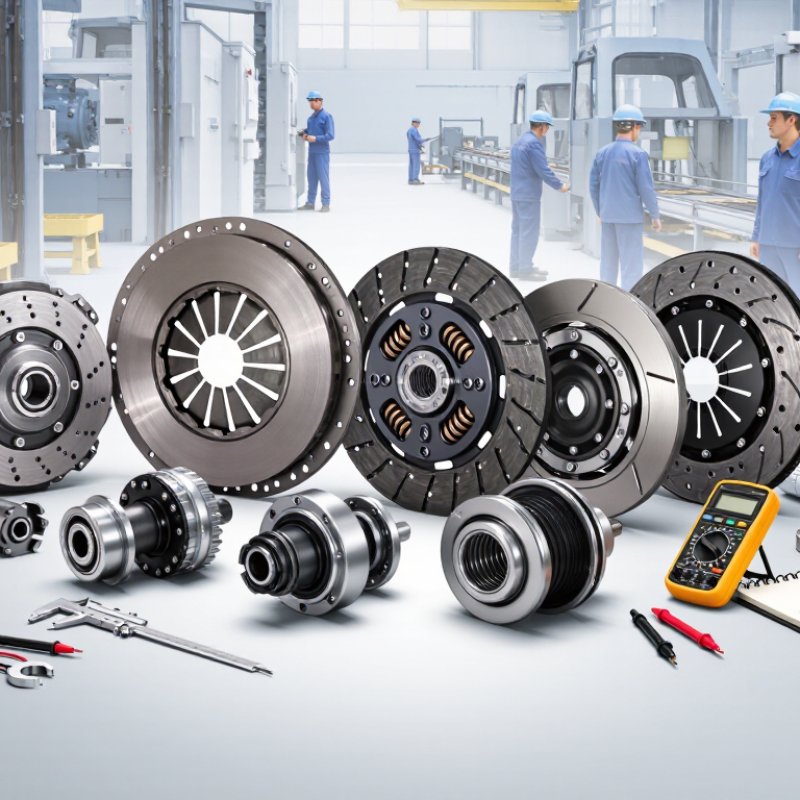
China Top 10 Clutch Brake Suppliers for Global Buyers

What Clutch Brakes Are and Why Global Buyers Need Reliable Suppliers

What Clutch Brakes Are and Why Global Buyers Need Reliable Suppliers

A clutch brake is a friction disc fitted to a transmission input shaft. When the driver fully depresses the clutch pedal, it slows the rotating shaft. This helps engage first gear or reverse without grinding. The part is common in heavy-duty manual transmissions, where repeated loading creates heat, vibration, and surface wear. Small errors matter. An uneven friction surface can cause difficult shifting, noise, or premature replacement.

Global demand remains substantial. The International Organization of Motor Vehicle Manufacturers reported 93.5 million motor vehicles produced worldwide in 2023. Meanwhile, the International Energy Agency recorded nearly 14 million electric car sales in 2023. This transition may reduce some manual-transmission demand, but commercial vehicles and existing fleets still require dependable clutch components.

Buyers should request friction-material data, dimensional inspection records, torque testing, and batch traceability. Supplier quality systems should also follow recognized controls, such as ISO 9001-based procedures. A low purchase price can become expensive after installation delays, warranty claims, or roadside failures.

Not every supplier explains its test method clearly. That is a warning sign.

In practice, buyers should compare performance evidence, production experience, and after-sales responsiveness, not catalog photos alone. Surface finish and fit are easy to underestimate. They should not be.
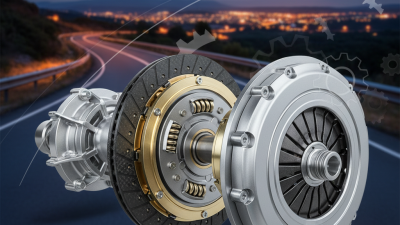
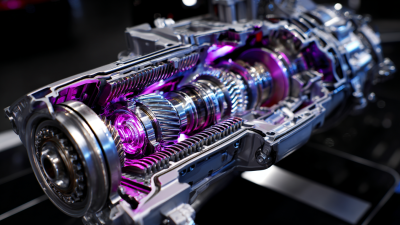
Key Criteria for Evaluating Clutch Brake Manufacturers in China

China Top 10 Clutch Brake Suppliers for Global Buyers

Evaluating clutch brake manufacturers in China requires more than comparing unit prices. During supplier audits, inspect machining areas, assembly lines, and testing stations. Look for clean workspaces, controlled storage, and traceable production records. A reliable manufacturer should explain material grades, friction coefficients, heat treatment, and tolerance limits clearly.

Request samples from the same production process, not specially prepared units. Test engagement speed, stopping torque, wear, noise, and temperature stability under realistic loads. Ask for test reports, calibration records, and inspection standards. Certifications can support credibility, but they should match the actual factory and product scope. Verify them independently.

Engineering support also matters. Experienced suppliers can review drawings, mounting dimensions, duty cycles, and operating environments. They should identify design risks before mass production. Communication speed is useful, but technical accuracy matters more. I have seen polished samples hide inconsistent batch quality. A factory visit may reveal gaps that documents do not show. No factory is perfect. The important question is how openly it handles failures, corrective actions, and delayed deliveries. Confirm tooling ownership, spare-part availability, packaging protection, and after-sales response times before signing a long-term agreement. Cost still matters, yet the cheapest clutch brake may create higher downtime and replacement expenses.

China Top 10 Clutch Brake Suppliers for Global Buyers

Key Criteria for Evaluating Clutch Brake Manufacturers in China

Rank Anonymous Supplier Profile Primary Manufacturing Focus Typical Torque Range Quality & Compliance Evidence Customization Capability Typical Lead Time Export Readiness Recommended Documents Buyer Evaluation Priority
1 Profile 01 Pneumatic clutch brakes for industrial presses and packaging machinery Approx. 100–2,000 N·m ISO 9001 certificate; documented friction-material and dimensional inspection High; torque, bore, mounting flange and sensor options 4–8 weeks for standard configurations Suitable for containerized and consolidated export shipments 2D/3D drawings, test report, packing list and certificate of origin Technical verification
2 Profile 02 Electromagnetic clutch brakes for automation and motion-control equipment Approx. 0.5–500 N·m ISO 9001; coil resistance, insulation and braking-torque testing High; voltage, shaft interface and response-time adjustments 3–7 weeks depending on coil specification Commonly supports OEM export packaging and labeling Electrical test data, dimensional report and installation manual Electrical safety
3 Profile 03 Spring-applied, electrically released brakes for hoists and industrial drives Approx. 20–3,000 N·m ISO 9001; load, holding-torque and release-cycle records Medium to high; release voltage, mounting and friction-disc changes 5–10 weeks Requires confirmation of destination-market electrical requirements Load test report, wiring diagram, maintenance instructions and spare-parts list Safety-critical review
4 Profile 04 Tooth clutches and clutch brakes for indexing and positioning systems Approx. 10–1,500 N·m ISO 9001; gear profile, backlash and repeatability inspection High; tooth profile, bore, flange and proximity-sensor integration 5–9 weeks Suitable for project-based international orders Gear inspection report, CAD files and repeatability test results Precision control
5 Profile 05 Toque-limiting and overload-protection clutch brake assemblies Approx. 5–800 N·m ISO 9001; slip-torque calibration and endurance-test documentation Medium; preset torque, hub design and mounting arrangement 4–8 weeks Good suitability for replacement and retrofit programs Calibration certificate, torque curve and replacement-part data Calibration control
6 Profile 06 Clutch brakes for textile, printing and converting machinery Approx. 2–600 N·m ISO 9001; runout, friction-surface and thermal-cycle checks High; compact dimensions, bore tolerances and heat-dissipation options 3–6 weeks for repeat models Experienced with spare-parts and small-batch shipments Material declaration, dimensional report and service instructions Replacement compatibility
7 Profile 07 Hydraulic clutch brake units for heavy-duty machinery Approx. 500–10,000 N·m ISO 9001; pressure, leakage, torque and fatigue testing Medium to high; hydraulic pressure, shaft and housing configurations 8–14 weeks Requires project-level logistics and installation coordination Pressure test certificate, hydraulic schematic and FAT report Heavy-duty validation
8 Profile 08 Compact clutch brake modules for servo and robotic equipment Approx. 0.2–150 N·m ISO 9001; low-inertia, response-time and thermal-rise testing High; compact packaging, connector and encoder-interface options 4–9 weeks Suitable for air freight and engineering sample programs Performance curves, connector pinout and EMC-related information Compact integration
9 Profile 09 Friction-disc clutch brakes for agricultural and mobile equipment Approx. 50–4,000 N·m ISO 9001; wear, contamination and operating-temperature testing Medium; spline, flange, friction lining and sealing modifications 6–12 weeks Requires confirmation of local machinery and environmental requirements Wear test, material declaration and environmental operating limits Durability testing
10 Profile 10 Standardized clutch brake components for distributors and maintenance stock Approx. 1–1,000 N·m ISO 9001 or equivalent documented quality system; batch inspection records Low to medium; standard dimensions with selected OEM adaptations 2–6 weeks for stocked or repeat items Well suited to mixed-SKU and distributor orders Product catalog, dimensional drawings, inspection report and warranty terms Cost and availability

Note: Torque ranges and lead times are typical industry reference ranges for comparable clutch-brake products, not guarantees for any individual manufacturer. Buyers should verify certification validity, material composition, braking performance, sample results, production capacity, warranty terms and destination-market compliance before placing an order.

China’s Top 10 Clutch Brake Suppliers and Their Product Strengths

China Top 10 Clutch Brake Suppliers for Global Buyers

China’s top ten clutch brake suppliers show different product strengths. Some focus on passenger vehicles, while others serve trucks, agricultural machinery, and industrial equipment. The China Association of Automobile Manufacturers reported 30.16 million vehicle sales in 2023. This scale supports broad production experience and faster component development.

Several suppliers specialize in high-temperature friction plates, reinforced clutch covers, hydraulic release bearings, and compact brake assemblies. Others provide dual-mass flywheel systems for smoother gear changes. According to OICA, global vehicle production reached 93.5 million units in 2023. That volume increases demand for stable friction performance, repeatable torque transfer, and reliable thermal control. In practical audits, buyers should inspect dynamometer data, wear testing, salt-spray results, and batch traceability. Paper compliance is not enough.

Some factories hold IATF 16949 certification and operate automated balancing, pressing, and inspection lines. Their strongest advantage is often flexible customization for different engine outputs and installation spaces. Yet capability can vary between product lines. A supplier may produce excellent clutch discs but weaker release systems. This is where buyer experience matters. Requesting samples from regular production is wiser than reviewing polished prototypes. Independent testing also helps verify claims on noise, vibration, durability, and stopping distance. The selection process remains imperfect, especially when long-term field data is limited.

Quality Standards, Customization, and Production Capabilities to Compare

Choosing among the China top 10 clutch brake suppliers requires more than comparing prices. Global buyers should examine material certificates, dimensional reports, and brake performance data. A reliable supplier can explain its inspection process clearly.

Look for testing against recognized quality systems and traceable production records. Ask how friction materials, steel plates, springs, and fasteners are checked. Sample testing should include torque, wear, heat resistance, and noise under realistic working conditions. Request recent batch records, not only polished presentation files. Details matter.

Customization is equally important. Confirm whether engineers can adjust spline sizes, spring rates, friction formulas, and mounting dimensions. Production capability should cover tooling design, CNC machining, heat treatment, assembly, and final inspection. A practical audit should review equipment, operator training, and process controls. Ask for pilot-run samples before approving mass production. Small errors can become costly quickly.

Capacity claims also need evidence. Compare monthly output, lead times, spare tooling, and quality support during peak orders. Communication is part of reliability. Technical questions should receive specific answers, drawings, and measurable tolerances. No factory is perfect. Some suppliers may have strong machining but weaker documentation, while others may offer customization with slower delivery. Buyers should record these gaps and decide which risks their application can tolerate.

How Global Buyers Can Select and Purchase from the Right Supplier

Choosing among China’s top clutch-brake suppliers requires more than comparing unit prices. Fortune Business Insights valued the global automotive brake system market at about USD 28.8 billion in 2023 and expects strong growth through 2032. This expansion increases supplier competition, but it also raises quality risks. Buyers should confirm production experience, export records, engineering capacity, and traceable material sources before requesting quotations.

Ask each supplier for drawings, torque curves, friction-temperature data, and endurance-test results. ISO 9001 certification is useful, but it is not proof of product performance. Request sample batches from the same production line used for mass orders. Then test engagement smoothness, heat resistance, noise, and wear under realistic loads. Small details matter. A 0.2-millimeter fit error can affect installation and service life.

Purchase terms deserve equal attention. Compare minimum order quantities, tooling ownership, spare-part support, inspection procedures, and delivery guarantees. The World Bank’s Logistics Performance Index shows that cross-border delivery reliability differs greatly between markets, so transport planning should begin before signing. A low factory price may become expensive after rework, customs delays, or rejected samples. I would not rely on polished presentations alone. One weakness remains: laboratory data may not represent dusty, humid, or overloaded field conditions. Require independent inspection when the application is safety-critical, and record every technical change in writing.